




Featured News Headlines
- 1 What Is an Altcoin? In-Depth Guide (2025)
- 2 Definition of Altcoin
- 3 Types of Altcoins
- 4 Advantages of Altcoins
- 5 Risks and Drawbacks of Altcoins
- 6 How to Buy Altcoins
- 7 Tips for Altcoin Investment
- 8 Most Popular Altcoins (As of 2025)
- 9 Altcoin vs. Bitcoin: Key Differences
- 10 The Future of Altcoins: What’s Next?
- 11 Why Altcoins Matter
What Is an Altcoin? In-Depth Guide (2025)
What is an altcoin? This is one of the most frequently asked questions among newcomers to the world of cryptocurrencies. Since the launch of Bitcoin, hundreds of alternative digital currencies have entered the market, attracting the attention of investors. In this comprehensive guide, we will explain what altcoins are, the different types, their advantages and risks, how to purchase them, and their potential future in the financial ecosystem.
Definition of Altcoin
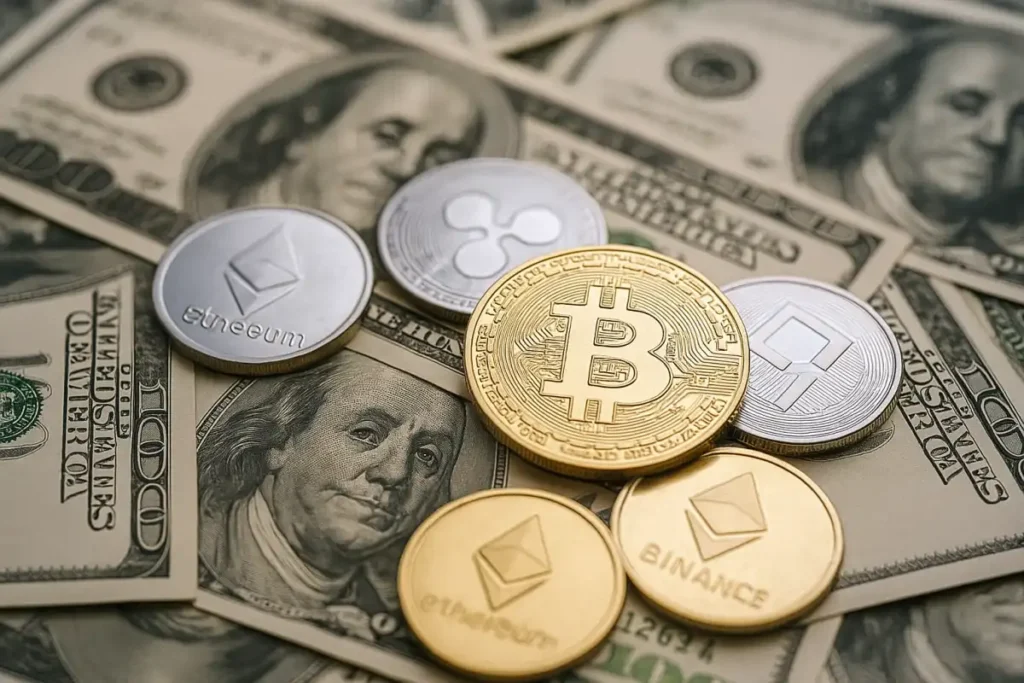
Altcoin stands for “alternative coin” and refers to all cryptocurrencies other than Bitcoin. Ethereum, Ripple (XRP), Litecoin, Cardano, Solana, Polkadot, and thousands of others fall into this category.
In Simple Terms:
An altcoin is a digital asset developed as an alternative to Bitcoin, often built with its own blockchain technology or based on smart contract platforms.
Bitcoin, launched in 2009, was the first cryptocurrency. However, as technology evolved and new needs emerged—such as faster transaction speeds, lower costs, and broader use cases—developers began creating alternatives to Bitcoin, giving rise to what we now call altcoins.



Types of Altcoins
Altcoins can vary widely in terms of their technical structure and purpose. Here are the main categories:
1. Tokens
These do not have their own blockchain and instead run on another network—most commonly Ethereum (e.g., ERC-20 tokens).
2. Stablecoins
These coins are pegged to stable assets like the US Dollar. Examples include USDT (Tether), USDC, and DAI.
3. Utility Coins
These offer access to specific features or services on a platform. For instance, Binance Coin (BNB) can be used to pay for trading fees on the Binance exchange.
4. Governance Coins
These grant holders the right to vote on project decisions. Examples include UNI (Uniswap) and AAVE.
5. Meme Coins
These are community-driven coins that often start as jokes but gain traction via social media. Dogecoin and Shiba Inu are prime examples.
Advantages of Altcoins
Altcoins offer various benefits to both investors and developers:
More Affordable Investment Options
For those who find Bitcoin’s price too high, altcoins offer a more accessible entry point into crypto investment.
Innovative Technologies
Projects like Ethereum enable smart contracts and decentralized apps (dApps), pushing the boundaries of blockchain use.
Faster and Cheaper Transactions
Many altcoins offer faster processing times and lower fees compared to Bitcoin.
Diverse Use Cases
Altcoins are used in sectors such as gaming, NFTs, finance, metaverse applications, and cloud storage.
Risks and Drawbacks of Altcoins
As with any investment, altcoins come with potential risks:
High Volatility
Altcoin prices can swing wildly in a short time due to speculative trading.
Scam Projects
Some new altcoins turn out to be fraudulent or involve “rug pulls,” where developers disappear with investors’ funds.
Low Liquidity
Not all altcoins have high trading volumes, which can make buying or selling more difficult.
Regulatory Uncertainty
The legal framework surrounding cryptocurrencies is still developing, which adds uncertainty to altcoin investments.
How to Buy Altcoins
Here’s a step-by-step guide to purchasing altcoins:
1. Choose a Crypto Exchange
Pick a reputable platform like Binance, Coinbase, KuCoin, or a local exchange such as Paribu or BtcTurk.
2. Create an Account & Verify Your Identity
Most platforms require identity verification (KYC) before allowing trades.
3. Deposit Funds
Transfer fiat currency (like USD or TRY) or stablecoins (like USDT) into your account.
4. Purchase Your Desired Altcoin
Navigate to the trading section and buy the altcoin of your choice (e.g., ETH/USDT, ADA/TRY).
Tips for Altcoin Investment
Before investing in any altcoin, consider these factors:
- Development Team: Are the developers reputable and transparent?
- Whitepaper: Does the project have a clear and realistic roadmap?
- Community Support: Is the project active on platforms like Twitter, Telegram, and Reddit?
- Liquidity: How easy is it to trade the coin?
- Use Case & Vision: Does the altcoin solve a real-world problem and have long-term potential?
Most Popular Altcoins (As of 2025)
| Coin Name | Symbol | Use Case |
|---|---|---|
| Ethereum | ETH | Smart contracts & dApps |
| Binance Coin | BNB | Exchange fees & utility |
| Solana | SOL | Fast, scalable network |
| Cardano | ADA | Research-driven blockchain |
| Chainlink | LINK | Oracle solutions |
| Avalanche | AVAX | High-speed transactions |
| Polygon | MATIC | Layer-2 scaling for Ethereum |
Altcoin vs. Bitcoin: Key Differences
| Feature | Bitcoin | Altcoins |
|---|---|---|
| Market Dominance | Highest | Lower market cap individually |
| Innovation | Limited | Diverse and experimental |
| Risk Profile | Relatively lower | Often higher risk and higher reward |
| Transaction Speed | Slower | Often faster and cheaper |
The Future of Altcoins: What’s Next?
As of 2025, altcoin have evolved beyond simple Bitcoin alternatives. Many now serve as the foundation for Web3, DeFi, NFT marketplaces, and metaverse ecosystems. Projects integrating artificial intelligence, real-world asset tokenization, and cross-chain solutions are gaining traction.
Altcoins with strong utility, real-world use cases, and active development teams are likely to shape the next era of decentralized finance.
Why Altcoins Matter
Altcoins are essential to the growth and diversification of the cryptocurrency space. While they present unique opportunities for innovation and profit, they also carry higher risks compared to Bitcoin. Due diligence, research, and a long-term strategy are crucial when navigating the altcoin market.
Ultimately, understanding what an altcoin is goes beyond definitions—it’s about recognizing the transformative potential of blockchain technology across industries and applications.























Comments are closed.