



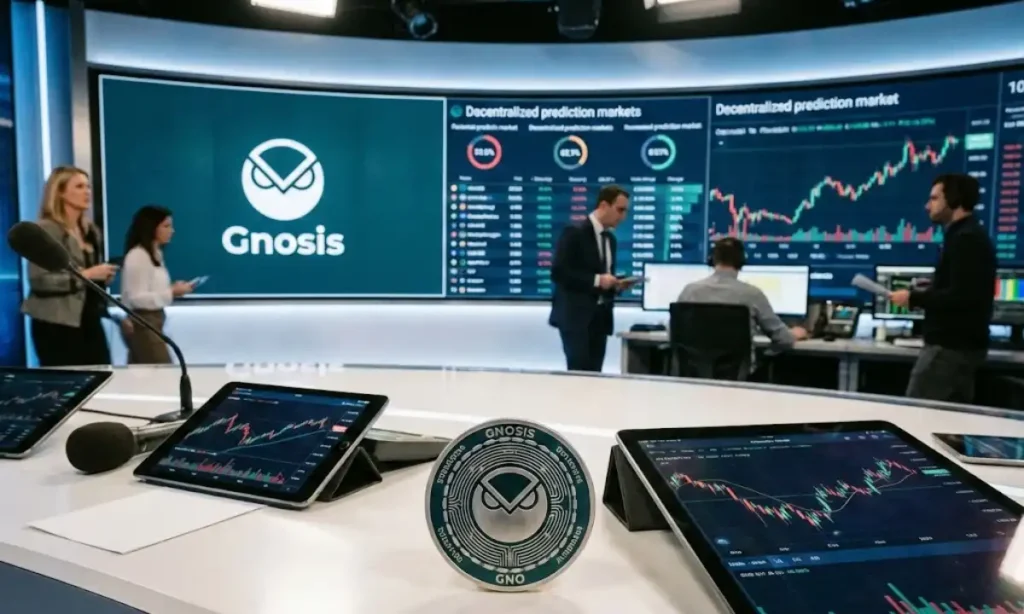

In the world of cryptocurrency, there is a distinct line separating assets driven purely by speculation and projects that solve genuine, large-scale problems. Gnosis (GNO) sits firmly on the technology and infrastructure side of this line, serving as a bedrock of security and innovation. If you’re tired of the high transaction costs (gas fees) on the Ethereum network or are curious about what true security means in the Decentralized Finance (DeFi) space, it’s time to get acquainted with Gnosis.
In this comprehensive guide, we will delve into the intricacies of what Gnosis is, what the GNO token is used for, the advantages of the Gnosis Chain, and how this robust project is shaping the future, all without getting lost in overly complex technical jargon.
Featured News Headlines
What is Gnosis (GNO)? The Foundational Overview
In its simplest form, Gnosis is a seasoned project developing decentralized infrastructure tools for the Ethereum ecosystem. It boasts its own bespoke blockchain network (the Gnosis Chain) and is governed by a massive, dedicated community.
The project initially launched in 2015 with the goal of creating decentralized prediction markets. However, it has evolved significantly over time, maturing into one of Ethereum’s most essential supporters and infrastructure providers. Today, Gnosis is defined by two primary structures:





- Gnosis Chain (formerly xDai): A highly performant blockchain network that is fully compatible with Ethereum, offering significantly faster and near-zero-cost transactions.
- Gnosis DAO: The enormous community and treasury that holds the reins of the project, with GNO token holders determining the direction of development and funding.
Why the Name “Gnosis”?
The name Gnosis, derived from the Greek word for “knowledge,” was originally an homage to the philosophical concept of “the wisdom of crowds” inherent in prediction markets. Today, that knowledge has been channeled into building secure and sustainable blockchain infrastructure.
The Gnosis Chain: Ethereum’s Express Lane
To fully grasp Gnosis, one must understand the critical xDai merger. In 2021, Gnosis merged with the popular payment network xDai to form the Gnosis Chain. Why is this network so vital?
While Ethereum is the main superhighway of the crypto world, it is often congested, and the tolls (gas fees) are expensive. The Gnosis Chain, by contrast, is like an express lane built right alongside that highway, operating under the exact same rules (EVM compatible) but allowing for frictionless traffic flow and fees expressed in mere pennies.
- EVM Compatibility: Any decentralized application (DApp) that runs on Ethereum can run on the Gnosis Chain with no code modification required.
- Payment Focus: Transaction fees are paid using stablecoins (e.g., xDAI), making costs predictable and negligible.
- Security: The Gnosis Chain maintains one of the most decentralized validator sets in the market, making the network highly resistant to censorship and attacks.
The Bedrock of the Gnosis Ecosystem
Gnosis is not just a single coin; it is a suite of products. Here are the critical components that underpin this ecosystem:
1. Gnosis Safe (Now Branded as: Safe)
Developed by Gnosis, this multi-signature (multisig) wallet technology is widely considered the gold standard for securing digital assets. It has proven so successful that it spun off into its own separate brand.
Simply put, imagine needing three different keys held by three different people to open a safe, rather than relying on one single point of failure. This is the essence of Gnosis Safe technology. Today, billions of dollars worth of crypto assets are secured using this wallet infrastructure, which originated within the Gnosis framework.
2. CoW Swap (MEV-Protected Exchange)
Another innovative product to emerge from the Gnosis ecosystem is CoW Swap. This decentralized exchange is designed to protect users from “MEV attacks” (front-running bots) by ensuring users execute their trades at the best possible price, prioritizing user fairness over predatory trading practices.
3. Gnosis DAO
This is the brain of Gnosis. The project’s treasury is one of the largest decentralized autonomous organization (DAO) treasuries in the entire sector. GNO token holders vote on proposals to allocate this massive budget and determine the strategic future of the project.
What is the GNO Token Used For?
GNO is the native cryptocurrency of the Gnosis ecosystem, serving as both a Governance and a Staking token. For investors and participants, GNO has the following core utilities:
- Governance Power: GNO holders participate in voting via the Gnosis DAO, steering the direction and feature development of the project.
- Staking (Network Security): Users who wish to help secure the Gnosis Chain can lock up (stake) their GNO, thereby earning passive rewards for validating transactions.
- Value Accrual: As the ecosystem grows, and the treasury’s value increases, the GNO token is inherently designed to reflect this growth.
Important Note: The GNO tokenomics have evolved. While initially a large portion of the supply was held by the core team, the shift toward the DAO structure means control is increasingly being decentralized to the community and the free market.
Advantages and Disadvantages of Gnosis
For a balanced review, we must examine both sides of the coin.
Advantages (+):
- Proven History: The project’s longevity, starting in 2015, minimizes the risk of sudden abandonment or a “rug pull.”
- Real-World Utility: Gnosis Safe and Gnosis Chain are used daily for thousands of real transactions and billions of dollars in asset management.
- Low Cost: Transaction fees are negligible compared to Ethereum’s mainnet.
- Strong Treasury: The DAO holds sufficient assets (ETH and GNO) to fund the project’s development for many years.
Disadvantages (-):
- Competition: Gnosis faces fierce competition from other Layer-2 and sidechain solutions like Arbitrum, Optimism, and Polygon.
- Complexity: The layered structure (Safe, CoW, Zodiac) can be challenging for a beginner investor to fully grasp.
- Marketing Focus: Being a technology-centric team, Gnosis tends to be less aggressive in marketing compared to more “hype-driven” coins, potentially leading to lower public visibility.
The Future of Gnosis (GNO): The Gnosis 3.0 Vision
The Gnosis team is not content to stand still. They are currently transitioning into a vision they call “Gnosis 3.0.” This vision aims to move Gnosis beyond being just a blockchain and position it as the connective bridge between payments and broader financial infrastructure.
Gnosis Pay is a standout project within this vision. It seeks to allow users to link their crypto wallet directly to a Visa debit card, enabling instant payments with their crypto assets at any retailer or restaurant (using the Gnosis Chain in the background). This represents a revolutionary step towards integrating cryptocurrencies into everyday life.
Conclusion
Gnosis (GNO) is not one of those projects that flare up and fade away like a flash in the pan. On the contrary, it is like the massive iceberg beneath the ocean’s surface—while the visible portion is just the token, beneath it lies a vast foundation of technology and security that helps keep the wider Ethereum ecosystem afloat.
If you are concerned with the future of digital payments and finding the most secure methods for safeguarding your assets, Gnosis is a project that deserves a prominent place on your watchlist.

























Comments are closed.