



Featured News Headlines
What is Caldera (ERA)?
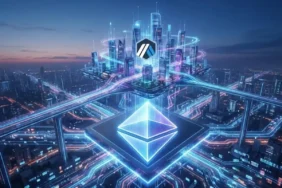
Caldera (ERA) is a blockchain infrastructure protocol that allows projects to seamlessly launch their own customisable, high-performance “Rollup” blockchains while leveraging Ethereum’s security and decentralisation. Simply put, Caldera is a Rollup-as-a-Service (RaaS) platform, offering projects the ability to set up their own dedicated Layer-2 solution as easily as purchasing a “service.”
Why Do We Need Rollups?
Rollups are a technology that achieves scalability by bundling and processing thousands of transactions on their own Layer-2, instead of on the main Ethereum chain (Layer-1). Transactions are executed quickly and cheaply on Layer-2, but the data is securely sent back to Ethereum in a batch, along with cryptographic proofs, for final verification. This guarantees speed and low cost without sacrificing the ultimate security of Ethereum.
Caldera takes this rollup technology to the next level. It makes it possible for every application, game, or DeFi protocol to have its own customised, optimised chain designed specifically for its unique needs.
Caldera’s Core Value Proposition
Caldera democratises the creation of application-specific chains (App-Chains), designed to meet the unique demands of a specific application or protocol.





- Customisation: Developers can tailor the execution environment (such as EVM or SolanaVM), transaction fees, sequencer operations, and the data availability (DA) layer (Ethereum, Celestia, Avail, etc.).
- High Performance: An application-specific chain does not have to share its resources with any other application, ensuring no congestion and offering a much higher transaction throughput (TPS).
- Ethereum Security: Every rollup created benefits from the proven security mechanisms of the main chain by posting transaction data back to Ethereum.
Caldera’s Technical Architecture: The Rollup Engine and the Metalayer
Caldera’s power stems from the seamless integration of two primary components: the Rollup Engine and the Metalayer.
1. The Rollup Engine: The Hub of Easy Deployment
Caldera’s Rollup Engine is a robust deployment system that eliminates the complex engineering process of launching a rollup. It allows a project to establish its own private Layer-2 in just a few clicks or API calls, rather than spending weeks on complicated infrastructure setups.
- Diverse Framework Options: Developers can choose from Optimistic Rollup frameworks (like Arbitrum Nitro, Optimism Bedrock) or Zero-Knowledge (ZK) Rollup solutions (like zkSync ZK Stack, Polygon CDK).
- Full Infrastructure Support: The Engine automatically provides not just the chain, but also all the auxiliary services required to run a blockchain, such as high-availability sequencer and RPC nodes, data indexers, and block explorers.
2. The Metalayer: The Internet of Rollups
It’s not enough for a rollup to be fast on its own; it must be able to communicate with other chains. Caldera’s most innovative solution is the Metalayer, a native connectivity and interoperability layer that links all Caldera chains—and external blockchains—together.
The Metalayer‘s key function is to enable liquidity sharing and seamless communication between different rollups in the ecosystem.
- Intent-Based Bridging: The Metalayer allows users and developers to define their “intent” to move assets or data from one chain to another in the fastest and most cost-effective way. The protocol automatically selects the best bridging solution in the background (using bridging partners like Across, Hyperlane, etc.).
- Fast Settlement: The messaging protocol within the Metalayer ensures that cross-chain communication and asset transfers are completed within seconds, thus eliminating a fragmented ecosystem experience.
With this structure, Caldera positions itself as the “Internet of Rollups.” This implies a frictionless flow of assets and data across chains.
Why is Caldera Important for a Web3 Developer?
Caldera is not just a technology; it presents a vision for the future architecture of Web3. The benefits it offers to developers and users are undeniable.
Advantages for Developers
- Economic Sustainability: Having a dedicated chain means transaction fees can directly benefit the application or be set in a way that is entirely user-friendly. This offers a superior business model.
- Control and Governance: Developers gain full control over their chain’s features, upgrade schedules, and bug fixes. They guarantee performance even during periods of high traffic.
- Infinite Scalability: Should the application grow, horizontal scaling becomes easy. For instance, a game can launch separate rollups for different game worlds or regions, ensuring performance is never saturated.
- Easy Interoperability: Thanks to the Metalayer, dedicated chains cease to be isolated islands. A developer doesn’t have to write complex bridging logic to create cross-chain applications.
Advantages for Users
- Low and Predictable Fees: The risk of encountering exorbitant transaction fees during peak network hours is eliminated.
- Lightning-Fast Transactions: Transactions that finalise in seconds elevate the user experience, especially in applications requiring high-frequency interaction, such as gaming and DeFi.
- Seamless Experience: The Metalayer makes asset transfers between chains almost invisible, ensuring the user doesn’t face the confusion of “which chain am I on?”
The ERA Token: The Fuel and Governance Tool of the Ecosystem
The native utility and governance token of the Caldera ecosystem is ERA. ERA is not merely a vehicle for speculation but a critical tool that supports the protocol’s security, operation, and decentralised governance.
The main functions of the ERA token are:
- Gas Fees (Metalayer): ERA is used to pay for transaction fees on the Metalayer, specifically facilitating cross-rollup interactions. This creates a constant demand mechanism for the token.
- Staking and Network Security: Validators, who help secure the network, stake their ERA tokens to participate in the network, verify cross-rollup messages, and earn rewards. This is the incentive mechanism for network security.
- Governance: ERA holders have a say in the future of the protocol. They can propose and vote on protocol upgrades, treasury allocations, and key protocol changes. This ensures Caldera evolves in a decentralised and community-driven manner.
ERA has a fixed supply of 1 billion tokens. This implies that the token may have deflationary potential, and its value could increase as the ecosystem grows, as the total supply will never rise.
The Caldera Ecosystem and Success Stories
Caldera does not just offer technical infrastructure; it hosts some of the biggest and fastest-growing projects in Web3. Over 60 chains, including Manta Pacific, ApeChain, Treasure, Kinto, and inEVM by Injective, utilise Caldera as their infrastructure.
Collectively, these chains have processed hundreds of millions of transactions and achieved hundreds of millions of dollars in total value locked (TVL). These successes are the clearest evidence that Caldera’s RaaS model is not just a theoretical concept but a practical and scalable solution. The preference of major projects in the gaming (ApeChain, Treasure) and DeFi (Manta Pacific) sectors for Caldera highlights the platform’s superiority in performance and customisation.
Conclusion and Future Perspective
Caldera (ERA) is undoubtedly positioned as a critical player in Ethereum’s scaling challenge. Its Rollup-as-a-Service (RaaS) model transforms chain deployment into a ‘plug-and-play’ experience for developers.
The future of Web3 lies not in a single monolithic blockchain, but in an “Internet of Infinite Blockchains” that are purpose-built and communicate seamlessly with one another. Caldera’s promise of speed and customisation via the Rollup Engine, and interoperability through the Metalayer, ensures it will play a central role in constructing this multi-chain future.
While the ERA token’s critical functions—from gas fees to governance—support the protocol’s long-term sustainability and decentralisation, Caldera’s vision stands on the verge of unlocking the true potential of Web3: a digital economy that is low-cost, instantaneous, and infinitely scalable.
Will Caldera’s innovative and modular approach become the new standard for scalable Web3 applications? As the ecosystem continues to expand, the answer will only become clearer.























Comments are closed.