




Featured News Headlines
What is Axelar (AXL)?
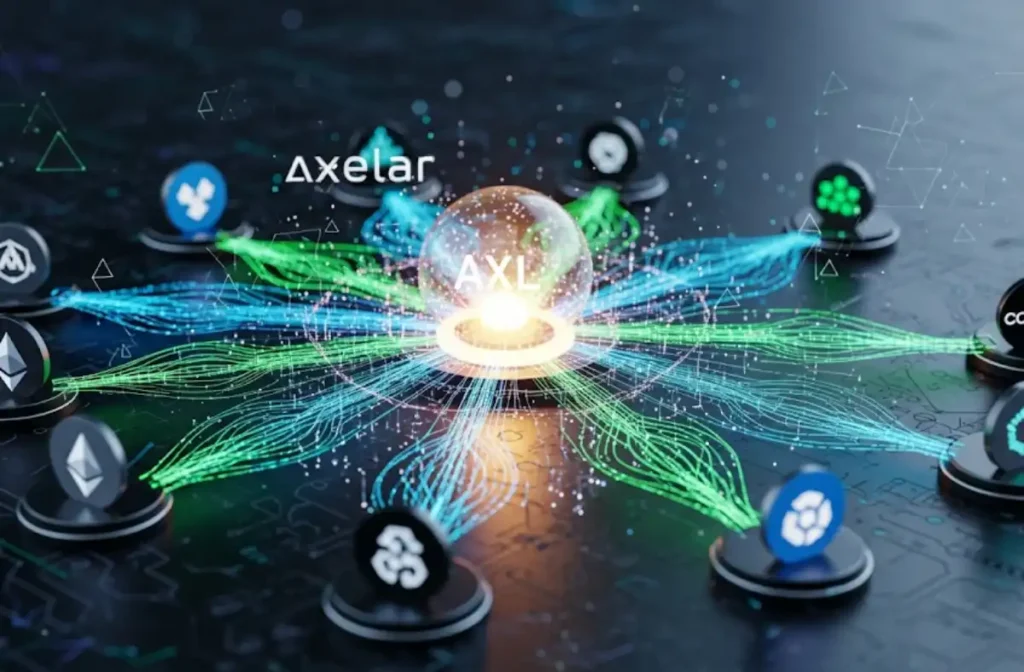
The world of cryptocurrencies and blockchain is evolving at a breakneck pace. The revolution, which began with Bitcoin, has led to the emergence of thousands of different blockchains, each with its own unique characteristics. Giants like Bitcoin, Ethereum, Solana, and Avalanche have all established their own distinct ecosystems. But how are these ecosystems supposed to communicate with one another? This is the critical question that Axelar (AXL) answers, acting as a revolutionary bridge protocol that enables cross-chain communication.
What is Axelar (AXL) and Why is it so Important?
Axelar is a cross-chain communication network that allows different blockchain networks to interact with each other in a secure and decentralised manner. To put it in simpler terms, Axelar makes it possible for a token on Ethereum to be used in a decentralised finance (DeFi) protocol on Avalanche, or for an NFT on Solana to be transferred to another network.
Axelar’s greatest significance lies in its ability to solve the fragmentation of the blockchain world. Today, each blockchain is like an isolated island. This situation leads to liquidity being spread across different networks, a complicated user experience, and makes it difficult for developers to build applications across multiple chains. Axelar creates a superhighway that connects these islands, linking the entire blockchain ecosystem.
How Does Axelar Work? Its Architecture and Core Components
Axelar is built on a complex structure, but its fundamental logic is quite straightforward. The network consists of three main components:





1. The Cross-Chain Network: This is Axelar’s central nervous system. Operating on a Proof-of-Stake mechanism, this network is managed by Axelar validators. The validators securely approve and transfer messages and transactions between different blockchains. This ensures the security and decentralisation of the entire system.
2. Gateway Contracts: Deployed on each connected blockchain, these smart contracts are the primary entry and exit points for all information coming from or going to the respective network. For example, when a transaction on Ethereum wants to cross over to the Axelar network, it is first detected by the Gateway Contract on Ethereum and then passed on to the Axelar network.
3. Application Programming Interface (API): Axelar provides a set of APIs and software development kits (SDKs) to allow developers to easily integrate their applications across different blockchains. This enables developers to create multi-chain applications (dApps) directly using Axelar’s tools, rather than having to deal with complex bridge protocols.
These three components ensure Axelar functions seamlessly. When a user wants to transfer a token from Ethereum to Avalanche, the transaction works as follows:
- The user sends the tokens to the Axelar Gateway on Ethereum.
- Axelar validators approve this transaction and record it on the Axelar network.
- The Axelar network sends an instruction to the Gateway on Avalanche.
- The Avalanche Gateway mints new tokens and sends them to the user’s wallet.
This process is both fast and secure, and the user doesn’t have to concern themselves with the complicated technical details.
The Role of the AXL Token: The Fuel for the Ecosystem
The native token of the Axelar ecosystem, AXL, plays a vital role in the system’s operation. The main functions of the AXL token are:
- Network Security and Staking: AXL holders can stake their tokens to contribute to the network’s security and earn rewards in return. This ensures the network remains decentralised and secure.
- Transaction Fees: AXL tokens are used to pay the fees for transactions performed between different blockchains. These fees ensure the network’s sustainability and reward the validators.
- Governance: AXL token holders have the right to vote on decisions related to the network’s future. This ensures that Axelar is managed in a decentralised manner.
The AXL token is not just an investment asset; it is a functional asset that ensures the Axelar protocol operates healthily.
Axelar’s Advantages and Future Prospects
Axelar stands apart from other bridging solutions with several key advantages:
- Security: As Axelar has a decentralised network of validators, it does not have a single point of failure. This offers a higher level of security compared to other bridge solutions.
- Scalability: Axelar has a modular structure where new blockchains can be easily integrated. This increases the network’s future growth potential.
- Developer-Friendly: Axelar provides comprehensive tools that make it easier for developers to create multi-chain applications. This encourages new projects to join the Axelar ecosystem.
Axelar’s future is closely tied to the blockchain world’s evolution towards a multi-chain structure. Developers, users, and institutions will want to access liquidity, assets, and services on different blockchains. As a fundamental infrastructure that meets this need, Axelar is poised to become an indispensable part of the crypto ecosystem.
In conclusion, Axelar (AXL) is much more than just a bridge that allows for token transfers. It is a decentralised, secure, and scalable communication network that connects different blockchains. The AXL token is the lifeblood of this network and ensures that the ecosystem operates in a secure, functional, and democratic way. In a multi-chain future, solutions like Axelar will play a critical role in unlocking the full potential of blockchain technology.































Comments are closed.