




Featured News Headlines
Fed Seeks Public Feedback on New Crypto-Friendly Payment Account Plan
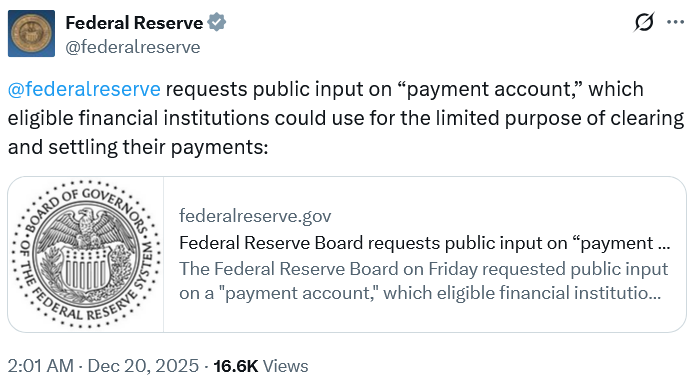
The US Federal Reserve is inviting public input on a new type of “payment account”, sometimes called a “skinny master account”, which could allow fintech and crypto-focused firms limited access to the Fed’s payments infrastructure under a carefully tailored approval framework.
Fed Aims to Balance Innovation and Safety
According to Fed Governor Christopher Waller, the new payment accounts are designed to support innovation while keeping the payments system safe. Waller previously recommended exploring these accounts to clear and settle certain transactions for eligible financial institutions, reflecting the rapid developments in the payments industry and the emergence of new banking models.
Waller emphasized that tailored approval could lower systemic risk, allowing most payment account applications to receive a streamlined review. However, not all Fed officials are aligned on the approach. Governor Michael Barr warned that without clear safeguards against money laundering and terrorist financing, granting such accounts—especially to firms outside direct Fed supervision—could pose risks.
Crypto Firms Could Gain a Foot in Traditional Banking
Several crypto and payment-focused firms, including Circle, Coinbase, Kraken, and Block, Inc., could potentially gain access to these payment accounts. Inclusion would mark a significant shift for the crypto industry, which has long faced obstacles in accessing traditional banking services. Critics argue last year’s policies under the Biden administration, dubbed Operation Chokepoint 2.0, deliberately restricted crypto companies from banking access.





Waller also noted that the Fed has been experimenting with blockchain-based payment technologies to modernize the US payment system.
Restrictions Compared to Master Accounts
Payment accounts will not enjoy the same privileges as full master accounts. They will not earn interest, will have balance caps, and will be ineligible for Fed credit, among other limitations.
Public feedback on the proposal will remain open for 45 days following its publication in the Federal Register, and Waller expects the feature to become operational by the fourth quarter of 2026.
This initiative represents a cautious yet notable step toward integrating crypto and fintech firms into the heart of the US financial system while maintaining regulatory safeguards.



























Comments are closed.