




Featured News Headlines
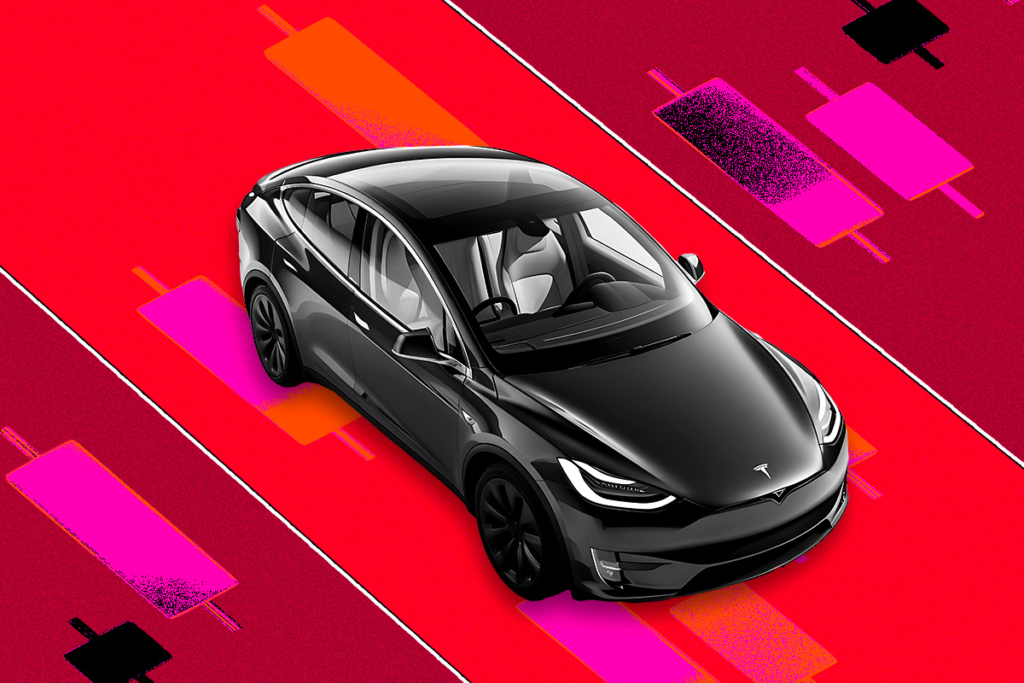
TSLA Stock Analysis: The Cult Phenomenon Behind Tesla’s Billion-Dollar Valuation
Tesla Stock Mystery – Understanding Tesla, Inc. (TSLA) has long been a puzzle for investors and analysts alike. Despite its prominence as a leading electric vehicle manufacturer, the stock’s price behavior often defies traditional valuation logic. A deep dive into Tesla’s business segments and growth promises suggests one key conclusion: TSLA may not fit neatly into any conventional category—and its valuation could largely be driven by cult-like investor dynamics.
A Reality Check on Tesla’s Core Business
To make sense of Tesla, it’s important to start with the hard facts. The company generates revenue from three primary segments: Automotive, Energy Generation and Storage, and FSD/AI-related technologies. While the automotive segment initially fueled growth, its momentum has slowed in recent years. Trading at 14.5x sales, Tesla’s car business is dramatically overvalued compared to industry peers—Ford (0.28x) and GM (0.35x)—indicating that the company cannot simply be classified as a car manufacturer.
Why Tesla Is Not an Energy Company
Tesla’s Energy Generation and Storage ambitions, spearheaded by CEO Elon Musk following the SolarCity acquisition, promised massive growth, including up to 20 gigafactories. While the company has completed five worldwide, revenue from this segment remains modest relative to Tesla’s market capitalization. Assigning even a generous multiple to energy sales still leaves a majority of Tesla’s $1.34 trillion valuation unexplained, suggesting energy alone cannot justify the stock’s astronomical price.
The Robotaxi Vision: Ambitious, Yet Elusive
Musk has repeatedly touted robotaxis as a future growth engine. The concept involves a fleet of autonomous Tesla vehicles, potentially including Cybercabs and private Tesla owners’ vehicles, functioning like an “Airbnb for cars.” Yet real-world implementation has faced hurdles. Pilot programs, such as those in Austin, still require human monitors, while competitors like Waymo have already deployed fully autonomous rides. Current revenues from robotaxis are negligible, though projections range from $75 billion to $951 billion by 2029-2030—numbers that would represent a tenfold increase in Tesla’s consolidated revenue. Analysts remain skeptical, noting that achieving even the lower estimate would demand unprecedented success in a compressed timeline.



Artificial Intelligence: FSD and Optimus
Tesla’s AI ambitions, including Full Self-Driving (FSD) software and Optimus robots, have been central to its futuristic narrative. However, FSD adoption is limited, with only 12% of Tesla owners opting in, and revenue growth from the software remains lackluster. Optimus robots, meanwhile, have yet to reach the market and face fierce competition and high capital costs. Considering the historical track record of capital-intensive ventures, these businesses alone cannot substantiate Tesla’s valuation.
The Cult Stock Phenomenon
Ultimately, Tesla’s stock may best be understood not through traditional metrics but as a “cult stock.” Unlike conventional investments, TSLA’s valuation hinges on the charisma of Elon Musk and the loyalty of his followers. Investors are not merely betting on product lines or business fundamentals—they are wagering on how well Musk can sell a vision of the future and whether his fanbase will embrace it. Conventional approaches such as discounted cash flow analysis, sales multiples, or earnings projections often fail to capture this dynamic, leaving many puzzled by Tesla’s stratospheric market cap.
Tesla’s story challenges the conventional understanding of what a company is and what drives its stock price. It is not simply a car company, an energy innovator, a robotaxi operator, or an AI leader. Rather, it is a fusion of ambitious projects, visionary promises, and a fervent investor following. For TSLA investors, the critical question is less about revenue growth and more about the enduring power of its founder’s influence over the market.
In the world of Tesla, facts alone may not tell the full story—the narrative, the hype, and the loyalty of followers are equally, if not more, important in determining the stock’s fate.

























Comments are closed.