




Featured News Headlines
- 1 Ørsted Stock Hits Historic Low Following $9 Billion Fundraising and Trump Blame
- 2 Trump’s Anti-Wind Stance Creates Industry Shockwaves
- 3 Presidential Policy Pivot Devastates Sector
- 4 Ørsted Fights to Complete US Projects
- 5 Market Reaction Reflects Deep Industry Concerns
- 6 Future Uncertain for Offshore Wind Giants
Ørsted Stock Hits Historic Low Following $9 Billion Fundraising and Trump Blame
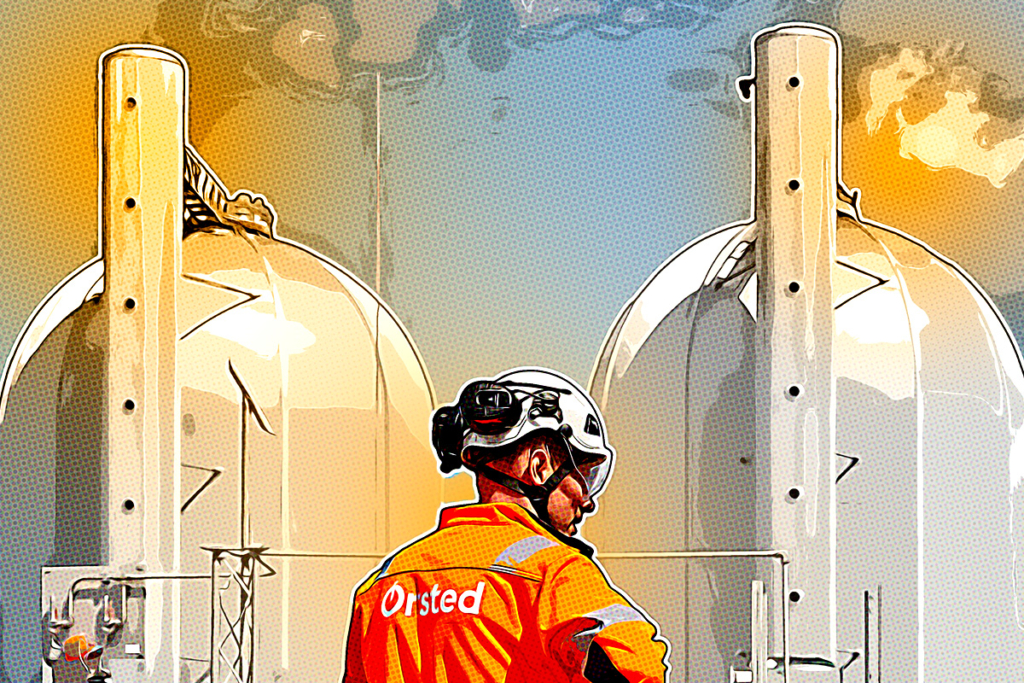
Ørsted Stock – Europe’s largest wind power company is pointing fingers at Donald Trump after announcing a massive $9 billion fundraising that sent its shares plummeting to historic lows. Denmark’s Ørsted saw its market value crash by almost one-third as investors digested the shocking news that the company’s entire business strategy has been thrown into chaos.
The dramatic collapse came after Ørsted told investors on Monday that an “extraordinary situation” in the industry meant it would need to tap shareholders to cover mounting costs. Trading at just 220.5 kroner ($25.58), the company’s shares have now fallen below its 2016 flotation price of 235 kroner, marking a devastating milestone for the renewable energy giant.
Trump’s Anti-Wind Stance Creates Industry Shockwaves
The root of Ørsted’s crisis lies in what the company calls “recent material developments in the US” that have completely upended its traditional financing model. The Danish firm typically covers project costs by selling stakes in each development once construction begins, but Trump’s hardline stance against wind power has dramatically slashed the values of its American projects.
The president’s antipathy toward offshore wind isn’t new – it dates back at least 14 years to a dispute over North Sea wind turbines that were visible from one of his Scottish golf courses. This personal grievance has now evolved into policy that’s reshaping an entire industry.





Trump recently claimed that windfarms represent “the worst form of energy, the most expensive form of energy” and also “kill the birds” – statements that have been thoroughly refuted by experts but continue to drive his administration’s aggressive approach to the sector.
Presidential Policy Pivot Devastates Sector
The contrast with the previous administration couldn’t be starker. While the Biden administration actively supported the burgeoning offshore wind sector, Trump sent immediate shockwaves through the industry by ordering a comprehensive review of offshore wind permitting and leasing on his very first day back in the White House in January.
This policy reversal dealt a crushing blow to an industry already struggling with supply chain problems stemming from the coronavirus pandemic and fast-rising interest rates that have made new project development exponentially more expensive.
The administration’s aggressive approach became crystal clear when it issued a stop-work order to a project led by Norwegian wind developer Equinor within months of Trump’s return to power. This move shocked industry commentators who had believed that projects with existing approvals would be protected from the sweeping industry review.
Ørsted Fights to Complete US Projects
Despite the challenging environment, Ørsted remains committed to completing its Sunrise Wind project off the coast of New York and the Revolution Wind project off Rhode Island. The company’s ambitious plans extend far beyond these immediate developments, with global initiatives designed to build enough offshore windfarms to power more than 8 million homes within the next two years.
The $9 billion fundraising initiative is designed to provide what CEO Rasmus Errboe calls “financial robustness” while the company navigates these turbulent waters. The fundraising effort will be backed by the Danish government, which maintains a 50% ownership stake in Ørsted, providing some stability amid the market turmoil.
Market Reaction Reflects Deep Industry Concerns
The market’s harsh reaction to Ørsted’s announcement reflects broader concerns about the renewable energy sector’s future under Trump’s presidency. The company’s share price collapse has sparked worry among investors who had bet on the continued growth of clean energy infrastructure.
Errboe acknowledged the severity of the situation, stating: “Ørsted and our industry are in an extraordinary situation with the adverse market development in the US on top of the past years’ macroeconomic and supply chain challenges.”
He added optimistically: “The rights issue will reinforce our ability to realise the full value potential of our existing portfolio and capture future value-creating opportunities in offshore wind.”
Future Uncertain for Offshore Wind Giants
The crisis at Ørsted illustrates the broader challenges facing renewable energy companies operating in an increasingly politicized environment. As one of the world’s pioneers in offshore wind development, the company’s struggles signal potential difficulties ahead for the entire sector.
With Trump’s administration showing no signs of softening its stance on wind power, companies like Ørsted must navigate an unprecedented combination of political hostility, economic headwinds, and operational challenges that threaten to reshape the global renewable energy landscape.































Comments are closed.