




Featured News Headlines
- 1 Can Nvidia Sustain Its Momentum Despite U.S.-China Trade Pressures?
- 2 AI Chip Dominance Amid Global Challenges
- 3 Strategic Price Adjustments Protect Margins
- 4 Capex and Production Expansion Remain a Priority
- 5 Mixed Analyst Outlook and Upcoming Reports
- 6 Institutional AI Infrastructure Pivot Signals Resilience
- 7 Can Nvidia Sustain Its Growth?
Can Nvidia Sustain Its Momentum Despite U.S.-China Trade Pressures?
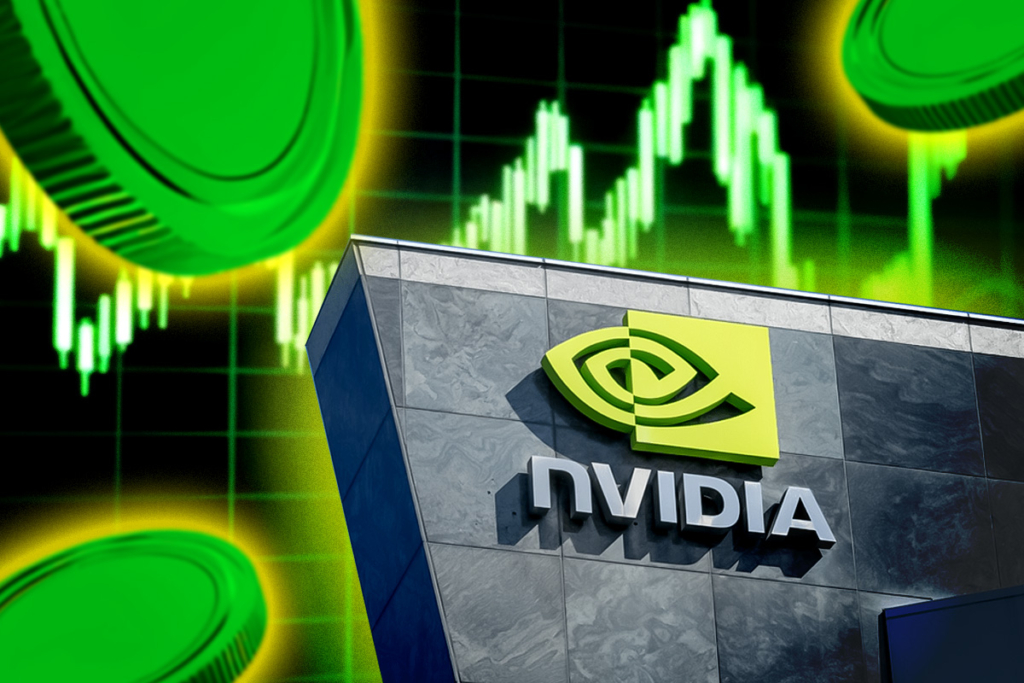
Nvidia Stock – Shares of Nvidia Corp. (NASDAQ: NVDA) have seen a remarkable 6.1% gain over the past 90 days, recently propelling the company to a staggering $5 trillion market valuation. This milestone comes as CEO Jensen Huang confirmed the company has already secured over $500 billion in orders for its next-generation Blackwell and Rubin AI chips. Collaborations with major players like Deutsche Telekom and Hyundai Motor further highlight Nvidia’s expanding influence in the AI sector. Despite this meteoric rise, SoftBank has exited its stake, reflecting continued market recalibrations.
Over the last six months, Nvidia’s stock has climbed 65.6%, vastly outperforming benchmarks like the S&P 500 and Nasdaq, solidifying its position as the dominant AI chipmaker.
AI Chip Dominance Amid Global Challenges
While Nvidia is thriving, it faces headwinds from U.S.-China trade relations, including export restrictions that led to a $5.5 billion charge on the H20 AI chip earlier in 2025. Analysts warned the restrictions could have caused up to a $9 billion revenue impact, with $700 million hitting Q1 results and the remainder spread across Q2 and Q3.
Additionally, new U.S. tariffs and potential Chinese retaliatory measures have threatened supply chain costs, especially for globally sourced components. Meanwhile, competition is intensifying from Huawei’s Ascend chips, creating margin pressures. Despite these challenges, Nvidia’s profitability remains robust, thanks in part to strategic pricing adjustments.



Strategic Price Adjustments Protect Margins
In response to rising manufacturing costs and tariffs, Nvidia has raised prices 10%-15% on some of its most popular GPUs. Gaming processors saw price hikes of 5%-10%, while high-end AI GPUs jumped up to 15%. These adjustments have helped maintain earnings stability even amid external pressures, demonstrating Nvidia’s ability to navigate a complex global trade environment while sustaining growth.
Capex and Production Expansion Remain a Priority
Nvidia continues to invest heavily in capital expenditures, focusing on hyperscaling its production to meet growing demand in AI and data center applications. This strategy positions the company to maintain its market dominance and ensure it can supply the next generation of AI hardware to institutional clients and global partners alike.
Mixed Analyst Outlook and Upcoming Reports
Analysts have offered divergent outlooks, with some raising price targets while others caution against uncertainties in U.S.-China trade relations and potential stricter regulations. Nvidia’s Q2 report delivered strong results on both the top and bottom lines, though guidance fell short of high expectations. Investors are now looking toward the Q3 report scheduled for November 19 to gauge whether the company can sustain its current momentum.
Institutional AI Infrastructure Pivot Signals Resilience
Nvidia’s pivot toward U.S.-based AI infrastructure investments highlights its strategic foresight. Even amid geopolitical and market pressures, the company’s emphasis on AI chips positions it for long-term relevance, especially as demand from data centers continues to grow. Analysts see these moves as a signal of resilience, reinforcing confidence in Nvidia’s ability to navigate both market volatility and global trade complexities.
Can Nvidia Sustain Its Growth?
Nvidia faces a challenging landscape shaped by trade restrictions, global tariffs, and intensifying competition, yet its robust profitability, strategic pricing, and massive AI chip orders underscore its market strength. With continued investment in production capabilities and strong institutional demand, Nvidia appears poised to sustain its recovery and potentially accelerate growth in the AI and data center sectors.
As the market watches, the upcoming Q3 earnings and evolving U.S.-China trade dynamics will be key to determining whether Nvidia can maintain its momentum and further cement its position as the leading AI chipmaker.






























Comments are closed.