




Ethereum’s Fusaka Upgrade: Faster L2s and Lighter Nodes Explained
Ethereum [ETH] continues its push for greater scalability, speed, and efficiency—key components in staying competitive as tokenization and internet capital markets gain traction. Following the successful rollout of the Pectra upgrade in May, the protocol is now steadily progressing toward its Fusaka upgrade, scheduled for mainnet launch in December 2025.
Holesky Testnet Cleared – What’s Next for Fusaka?
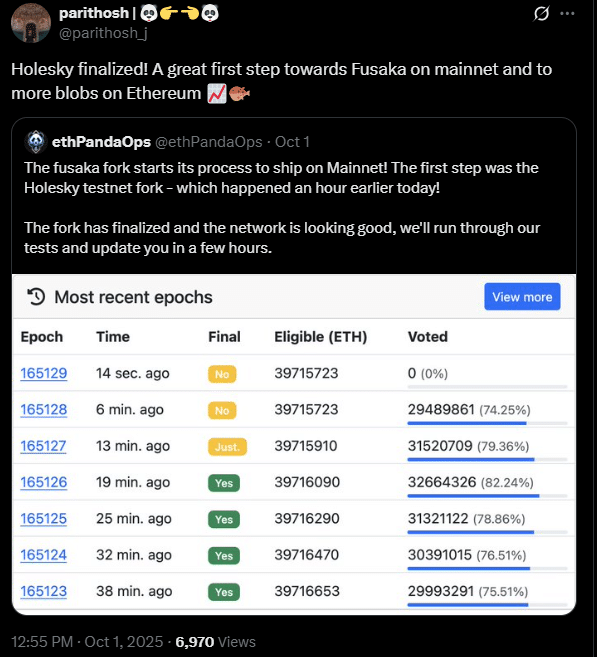
On October 1st, Ethereum developers confirmed that the Fusaka upgrade had passed the Holesky testnet, marking a significant milestone in the upgrade process.
Fusaka is designed to make Ethereum more scalable and cost-effective, particularly by enabling lighter nodes and cheaper Layer 2 (L2) transactions. According to the Ethereum protocol team:
“Lighter nodes will be able to sample data instead of downloading the entire blob data. This reduces storage needs and expands bandwidth.”





This method, known as data availability sampling, allows nodes to verify blocks without needing the full dataset—significantly lowering hardware requirements and enhancing network performance.
Additionally, Fusaka will raise Ethereum’s gas limit per block from 45 million to 150 million, more than a 3x increase. This change could dramatically boost transaction throughput, making L2 rollups cheaper and faster.
Why Scaling Now Is Critical
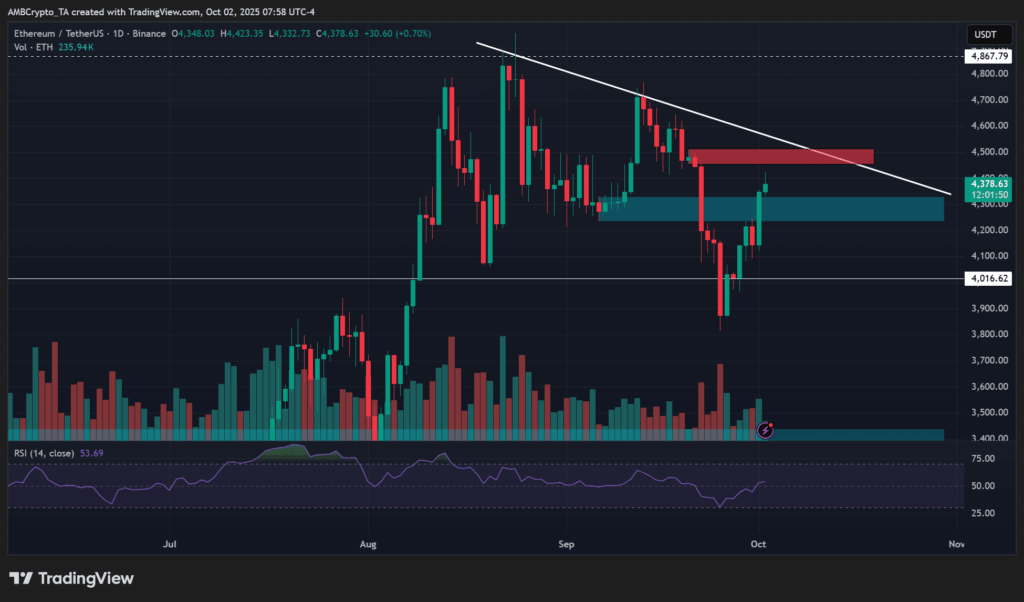
The need for Fusaka is rooted in Ethereum’s current performance ranking. According to data analytics platform Chainspect, Ethereum ranks 18th in terms of transaction throughput and speed. Meanwhile, Solana [SOL] has emerged as a leader, standing in second place with high-speed, low-latency infrastructure—a major advantage in hosting tokenized assets and real-time capital markets.
“To stay competitive, Ethereum must rival Solana in this aspect. And the ongoing scaling efforts will help close the gap,” notes the Ethereum Foundation blog.
With Fusaka, Ethereum aims to bridge this speed gap, giving developers and users an improved, lower-cost environment for scaling applications.


























Comments are closed.