




Bitcoin Under Threat: Szabo on Network Vulnerabilities and Legal Risks
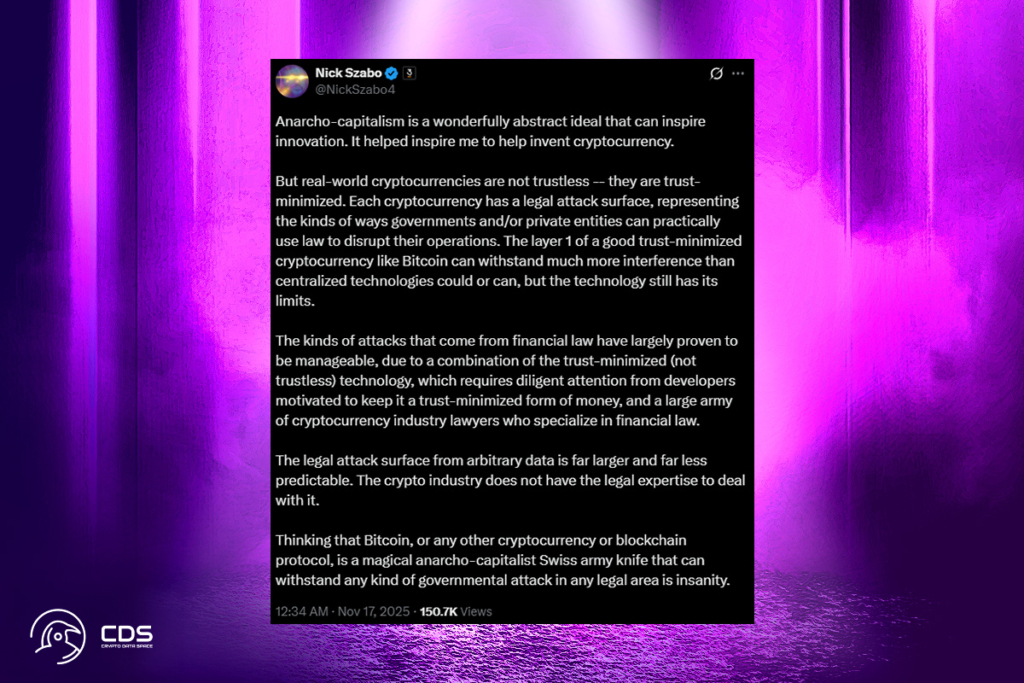
Nick Szabo, a pioneer of Bitcoin, claims that the cryptocurrency may not be as resistant to network attacks as most people believe. According to Szabo, the Bitcoin network reduces confidence. However, he claims that it is not totally unreliable and that companies and nation-states can still attack it.
Szabo clarified that each cryptocurrency and layer-1 network has a legal attack surface in a post on X on Sunday. Governments can interfere with them because of this weakness. He claimed that it is insane to believe that Bitcoin or any other blockchain protocol is a “magical anarcho-capitalist Swiss army knife.” Such a concept is predicated on the idea that it is impervious to any form of governmental assault in any legal domain.
Szabo Highlights Potential Miner & Node Pressure

Szabo stated that Bitcoin miners, node operators, and wallet service providers could face consequences in a reply post. Such acts could be coordinated in legal systems that respect the rule of law, he continued. In particular, Szabo was discussing “arbitrary data” and the power to exclude particular items. This would happen if regulators compelled network users to influence the network. It is related to the ongoing Bitcoin Cores vs. Knots controversy, which has lasted for months and concerns whether non-financial media like images, movies, and audio belong in the Bitcoin ecosystem.
Chris Seedor Criticizes Szabo: Bitcoin’s Legal Risks Overstated
Several Bitcoiners, notably Chris Seedor, CEO of Seedor, a company that stores Bitcoin seeds, condemned Szabo’s remarks. Szabo was overestimating the influence of speculative “legal boogeymen,” according to Seedor. He maintained that if authorities had the power, they would have blocked PGP, Tor, and other protocols.





Bitcoin’s resilience was never about predicting every possible domain of law — it was about minimizing technical points where coercion can bite,
Seedor
For more up-to-date crypto news, you can follow Crypto Data Space.



























Comments are closed.