





Featured News Headlines
AVAX Price Analysis: New Uptrend Begins After Breakout
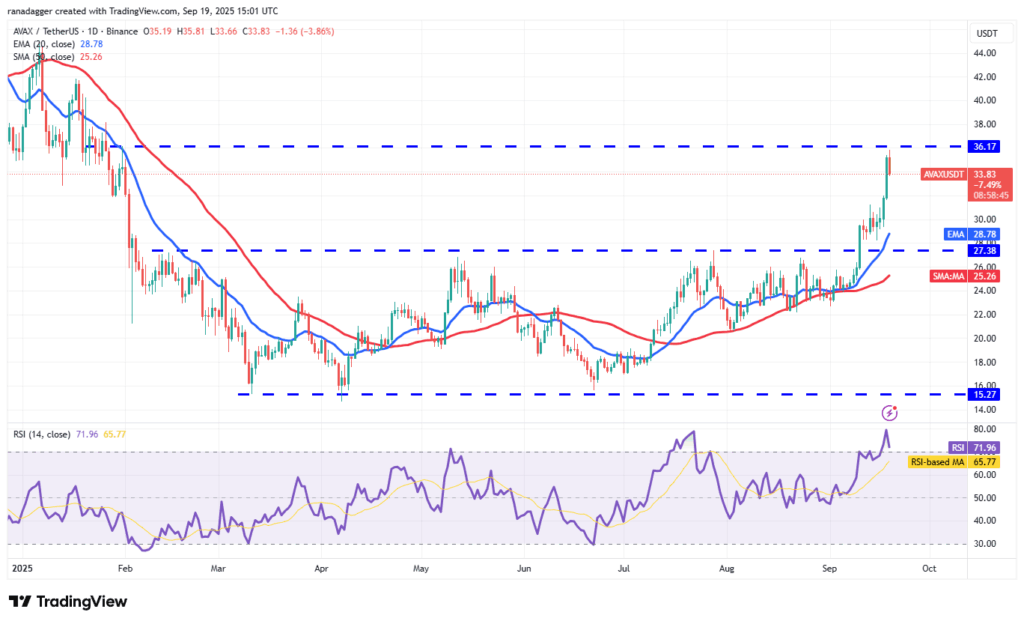
Avalanche (AVAX) recently experienced a notable breakout from a significant trading range between $15.27 and $27.38, occurring on September 10. This move suggests the potential beginning of a fresh upward trend in the price of AVAX, capturing the attention of market observers.
Overbought RSI Signals Possible Short-Term Consolidation
Following the breakout, the Relative Strength Index (RSI) surged into the overbought territory, which often signals that the asset might face a period of consolidation or a minor correction before continuing its upward trajectory. This is a typical behavior in strong rallies where buyers temporarily pause to reassess market conditions.
Resistance at $36.17 Challenges Upward Momentum
The immediate hurdle for AVAX bulls lies at the overhead resistance level of $36.17, where sellers appear to be actively defending their positions. This price point is critical because it will determine whether the bullish momentum can be sustained or if a temporary pullback might occur.
Shallow Pullback Could Indicate Bullish Strength
A slight retracement that holds above the 20-day Exponential Moving Average (EMA), currently at $28.78, would suggest that buyers remain confident and intend to maintain their positions. Such a scenario often precedes further gains as bulls accumulate strength for the next leg higher.





Potential Targets Beyond Resistance
Should AVAX buyers successfully push above the $36.17 resistance, the next key price targets include $39.49 and subsequently $45. These levels correspond with the technical pattern’s projected targets and represent potential milestones for the ongoing rally.
Bearish Scenario: Breakdown Below 20-Day EMA
On the other hand, if Avalanche fails to hold its recent gains and drops below the 20-day EMA, this could signal a short-term shift in market sentiment. A decline beneath this support level may invalidate the current bullish outlook, at least temporarily, opening the door for further downside pressure.































Comments are closed.