




Featured News Headlines
What Is an ASIC?
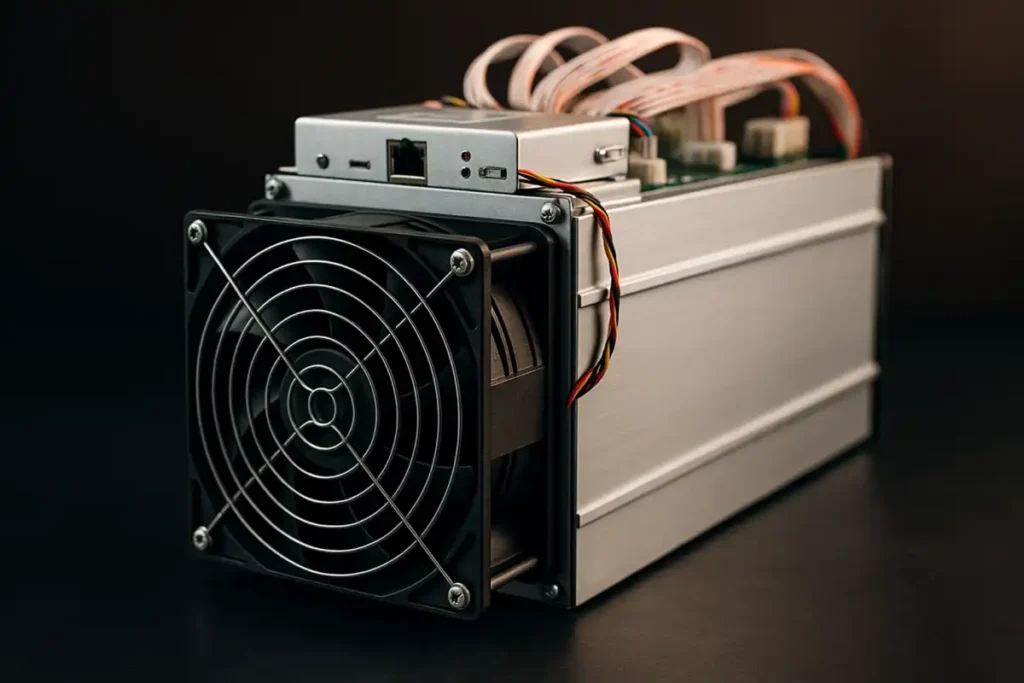
ASIC stands for Application-Specific Integrated Circuit. These are hardware components designed for a specific task. In the world of cryptocurrency, ASICs are custom-built machines optimized for a particular hashing algorithm—most notably, Bitcoin’s SHA-256. Compared to general-purpose hardware like CPUs or GPUs, ASICs offer significantly higher performance and efficiency.
Understanding ASIC Resistance
ASIC resistance refers to a blockchain network’s design that prevents ASIC miners from gaining a significant advantage over general-purpose hardware. This concept ensures that mining remains accessible to a broader group of individuals using CPUs and GPUs, rather than being dominated by specialized hardware.
In essence, ASIC-resistant algorithms aim to maintain decentralization and fairness by minimizing the competitive edge provided by expensive, high-powered mining equipment.
Why Is ASIC Resistance Important?
1. Protecting Decentralization
ASICs are costly and often owned by large mining firms. This creates a centralized mining environment where only a few participants control a majority of the network’s hash power. ASIC-resistant algorithms distribute mining power more evenly, promoting true decentralization.





2. Ensuring Fairness
With ASIC resistance, mining becomes more inclusive. Anyone with a standard computer setup can contribute to securing the network and earn rewards, not just those who can afford industrial-grade equipment.
3. Preventing Network Attacks
When mining power is centralized, there’s a risk of 51% attacks, where a single entity gains control over the majority of the network. ASIC-resistant networks are better protected against such scenarios.
Popular ASIC-Resistant Algorithms
Below are some well-known algorithms designed to resist ASIC mining, along with examples of cryptocurrencies that use them:
| Algorithm | Used By | Key Characteristics |
|---|---|---|
| RandomX | Monero (XMR) | CPU-optimized, regularly updated to resist ASICs |
| Equihash | Zcash (ZEC) | Memory-intensive, GPU-friendly |
| Ethash | Ethereum (pre-Merge) | Initially GPU-friendly; later challenged by ASICs |
| CryptoNight | Older Monero versions | Focused on CPU mining |
| KawPow | Ravencoin (RVN) | GPU-friendly, resistant to ASIC development |
Note: Ethereum transitioned to a Proof of Stake system in 2022, ending mining altogether.
Challenges of ASIC Resistance
While ASIC resistance offers many benefits, it also comes with notable challenges:
- Frequent Updates Required:
ASIC manufacturers are continuously evolving. To remain resistant, algorithms often need regular upgrades—something that requires time and consensus. - Lower Efficiency:
General-purpose hardware is typically less efficient than ASICs. As a result, ASIC-resistant networks may consume more electricity for the same amount of computational work. - Community Divides:
Disagreements over ASIC resistance can lead to forks or internal conflict within a blockchain’s developer and user base.
Notable ASIC-Resistant Projects
Monero (XMR)
Monero is a privacy-focused cryptocurrency that takes ASIC resistance very seriously. Using the RandomX algorithm, it frequently updates its protocol to ensure miners with CPUs retain equal opportunities.
Ravencoin (RVN)
Ravencoin is a Bitcoin fork designed to support peer-to-peer asset transfers. Its KawPow algorithm allows GPU miners to participate effectively, keeping ASIC hardware at bay.
Vertcoin (VTC)
Vertcoin markets itself as “the people’s coin” by making mining accessible to individuals. It uses Lyra2REv3, a memory-intensive algorithm designed specifically to counter ASIC usage.
The Future of ASIC Resistance in Crypto
ASIC resistance plays a vital role in supporting decentralization and fairness in blockchain networks. However, as hardware continues to evolve, maintaining resistance becomes increasingly complex. Developers are now experimenting with dynamic and hybrid mining algorithms that adapt over time to counter ASIC dominance.
As the crypto ecosystem grows, ASIC resistance is expected to remain a critical—and often controversial—topic, especially for newer projects aiming to prioritize decentralization.
Conclusion
ASIC resistance is both a technical strategy and a philosophical stance. It empowers individual miners, protects against monopolization, and promotes a more democratic blockchain environment.
Yet, it is not a one-time solution. Ongoing development, community support, and vigilance are required to keep ASICs at bay. As blockchain technology advances, the tug-of-war between efficiency and decentralization will likely continue.
For any cryptocurrency project that values inclusivity and network integrity, ASIC resistance remains a pillar worth preserving.
FAQs
What does it mean when a coin is ASIC-resistant?
Is GPU mining still profitable in ASIC-resistant networks?
Why are ASICs considered controversial in crypto mining?































Comments are closed.