




Featured News Headlines
- 1 What is Origin Protocol (OGN)?
- 2 The Foundations of Origin Protocol: Genesis and Vision
- 3 The OGN Token’s Role: Governance and Value Accrual
- 4 Origin Protocol’s Flagship Products
- 5 OGN and Protocol Economics: The Buyback and Staking Loop
- 6 Security and Corporate Structure
- 7 The Future of Origin Protocol and Its Roadmap
- 8 Conclusion: Why Does Origin Protocol (OGN) Matter?
What is Origin Protocol (OGN)?
The world of cryptocurrency and Decentralised Finance (DeFi) is packed with innovative projects that fundamentally reshape traditional banking and financial transactions. Among these projects, one platform stands out, particularly for its yield-generating products and its native token, the Origin Token (OGN): Origin Protocol. But what exactly is Origin Protocol (OGN), and how does it create value within the decentralised financial ecosystem?
In this detailed guide, we will conduct an in-depth examination of Origin Protocol’s evolution from its inception to the present day, explore the unique features of its flagship products—Origin Ether (OETH) and Origin Dollar (OUSD)—analyse the critical role of the OGN token within the ecosystem, and look at the project’s vision for the future.
The Foundations of Origin Protocol: Genesis and Vision
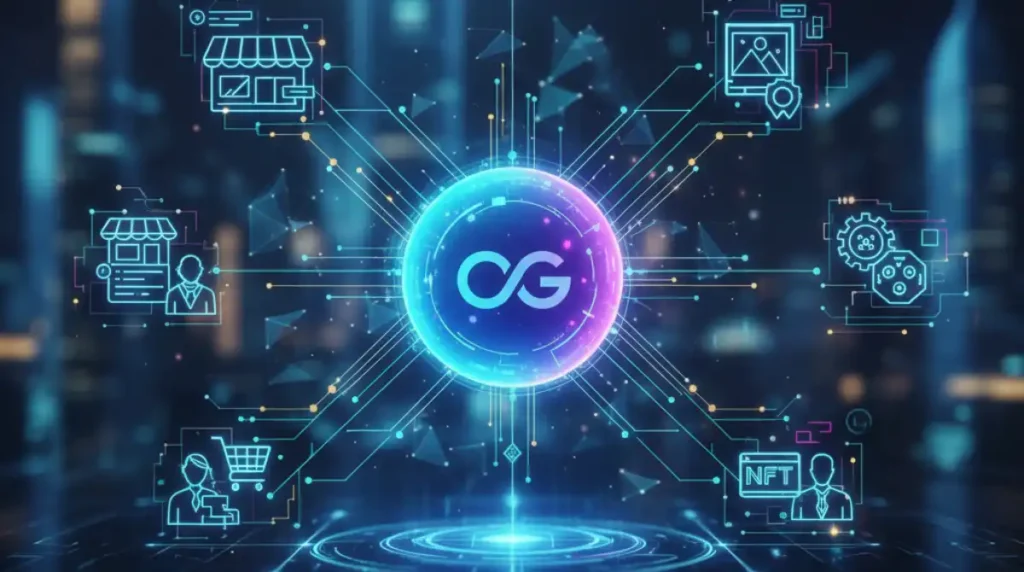
Origin Protocol was initially established in 2017 with the goal of building decentralised e-commerce and sharing economy applications that promote peer-to-peer (P2P) commerce. The core vision was to eliminate intermediaries, allowing users to gain complete control over their own data and transactions. During this early period, the platform focused on developing decentralised marketplace technologies and even supported the infrastructure that gained popularity with the rise of the NFT market.
However, with the rapid growth of DeFi and the ascension of liquidity pools, Origin Protocol strategically shifted its focus towards innovative yield-generating products within the decentralised finance sector. Today, Origin Protocol is positioned as an Ethereum-based DeFi platform focusing on yield-bearing tokens, governance, and the tokenisation of real-world assets.





The Strategic Pivot: From Marketplaces to Yield Products
Origin Protocol’s evolution demonstrates its remarkable ability to adapt quickly within the crypto space. The platform successfully leveraged its experience from marketplace technologies and its robust engineering foundation, redirecting those strengths into the much larger and more dynamic field of DeFi. The most tangible outcomes of this transition have been the launch of its flagship products: Origin Dollar (OUSD) and Origin Ether (OETH).
The OGN Token’s Role: Governance and Value Accrual
The Origin Token (OGN) is a versatile cryptocurrency built on the ERC-20 standard, central to the Origin Protocol ecosystem. OGN’s function extends beyond a mere medium of exchange, forming the backbone of the platform’s governance and value accrual mechanisms.
1. Governance Authority
OGN holders gain a voice in shaping the future of the platform by staking (locking up) their tokens. Staked OGN is converted into a governance token known as xOGN. Users can choose to lock their tokens for a period ranging from one month to one year, with those opting for longer lock-up periods receiving greater governance weight (voting power).
This governance system allows the community to vote on critical matters such as the protocol’s yield strategies, performance fees, and design updates for new products. Consequently, Origin Protocol maintains a structure that is truly governed and directed by a decentralised community.
2. Value Accrual and Protocol Fees
Perhaps the most compelling aspect of OGN is the mechanism through which it shares the value generated by the protocol. Origin Protocol’s flagship products, OETH and OUSD, allow users to earn passive yield, but they levy a certain performance fee on these earnings.
100% of these fees are used for OGN buybacks and distribution to stakers:
- A portion of the protocol fees is used to purchase OGN tokens from the open market.
- These repurchased OGN tokens are distributed as rewards to users who have staked their OGN (xOGN holders).
This mechanism provides a direct value stream to OGN, boosting demand for the token and creating deflationary pressure by reducing the circulating supply. As the adoption and Total Value Locked (TVL) of OETH and OUSD increase, the protocol revenue—and consequently the value directed to OGN stakers—also grows proportionally. This transforms OGN into not just a governance token but a yield-bearing asset that profits from the economic success of the protocol.
Origin Protocol’s Flagship Products
The most significant factor setting Origin Protocol apart in the DeFi landscape is the innovative range of yield-generating tokens it has introduced.
1. Origin Dollar (OUSD): The Auto-Yielding Stablecoin
Origin Dollar (OUSD) was one of the first yield-bearing stablecoins on the market. Unlike traditional stablecoins, OUSD allows holders to earn a return automatically without needing to lock up their tokens or navigate complex DeFi protocols.
OUSD’s Unique Mechanism:
- Passive Yield: As users hold OUSD in their wallets, the token quantity increases over time. The yield is reflected directly in the wallet balance through the rebase of the token itself.
- Diversified Strategy: The stablecoins held as collateral (USDC, USDT, DAI, etc.) are deployed across various vetted and low-risk DeFi strategies (e.g., lending protocols like Compound and Aave, or liquidity pools).
- Gas-Free Earning: Since the yield is distributed through a rebasing mechanism, users do not incur any transaction (gas) fees to claim their rewards.
OUSD offered a revolutionary solution for DeFi users seeking to earn a stable, risk-managed return simply by holding a stablecoin.
2. Origin Ether (OETH): Liquid Staking with Enhanced Yield
Origin Ether (OETH) is Origin Protocol’s newest and fastest-growing product. OETH functions as a Liquid Staking Token (LST) but differentiates itself by aggregating multiple sources of yield.
OETH’s Superior Yield Mechanism:
- Ethereum Staking Yield: The Ether (ETH) deposited into OETH is staked via leading liquid staking protocols like Lido and Rocket Pool, earning the base staking reward.
- Enhanced DeFi Strategy Yield: Beyond the base staking reward, OETH is optimised across various supplementary DeFi protocols (e.g., liquidity pools and lending markets on platforms like Curve, Convex, Morpho, and Pendle) to maximise staking returns.
- Auto-Compounding: Similar to OUSD, OETH is a “rebase” token. All accrued yields are automatically added to the OETH balance in ETH terms. Users do not need to manually claim rewards or pay transaction fees.
OETH aims to provide ETH holders with the ability to stake their Ether while remaining liquid, offering a higher and more optimised yield compared to standard LSTs on the market through the use of sophisticated DeFi strategies. This allows ETH holders to maximise their capital efficiency.
OGN and Protocol Economics: The Buyback and Staking Loop
Origin Protocol’s economic model is built on sustainably increasing the value of the OGN token. At the heart of this model is the process of channelling protocol revenue back to OGN holders.
The Buyback Cycle
- Revenue Generation: The OETH and OUSD protocols charge a 20% performance fee on the yield they generate.
- OGN Buyback: A significant portion of these performance fees is used to repurchase OGN tokens from the open market. This generates constant demand for OGN, reducing the circulating supply and providing natural support for the token price.
- Distribution to Stakers: The repurchased OGN is then distributed as rewards to users who have staked their OGN (xOGN holders).
Staking and Governance Interaction
When users stake OGN, they not only gain a share of the protocol’s revenue but also acquire voting rights over the protocol’s future. Long-term lock-up incentives encourage OGN holders to commit to the platform for the long haul. This enhances the protocol’s stability and helps manage circulating liquidity by ensuring a substantial portion of the token supply is locked up.
This robust, self-reinforcing cycle defines the Origin Protocol flywheel:
High-Yield Products (OETH/OUSD)→Increased TVL→High Protocol Revenue→More OGN Buybacks→Higher OGN Staking Yield→More OGN Staked→Increased OGN Value
Security and Corporate Structure
In the world of DeFi, security is paramount. Origin Protocol has taken serious steps to address this concern:
Audits and Transparency
All of Origin Protocol’s smart contracts are regularly audited by leading security firms in the industry. These audits aim to ensure code safety and minimise potential vulnerabilities.
Key Security Mechanisms
- 48-Hour Timelock: Before any significant code changes are implemented in the protocol, users are given a 48-hour window to withdraw their funds. This acts as an extra layer of security, making it harder to execute a malicious proposal or attack.
- Bug Bounties: The platform runs bug bounty programmes for researchers who identify and report potential security flaws, promoting proactive security.
Founding Team and Experience
Origin Protocol is led by an experienced team whose members have held key roles at tech and finance giants such as Google, YouTube, Dropbox, and Coinbase. Founders Josh Fraser and Matthew Liu have deep roots in the Web3 and crypto ecosystems. This blend of corporate experience and deep technical expertise enhances the platform’s credibility.
The Future of Origin Protocol and Its Roadmap
Origin Protocol is constantly tracking innovations in the DeFi space and is not content to rest on the success of its current flagship products. Future plans typically focus on the following key areas:
1. Cross-Chain Expansion
Origin Protocol aims to take its yield-bearing products beyond Ethereum, making them accessible on other major Layer-2 (L2) and Layer-1 (L1) blockchains. For instance, the integration of Origin Ether (OETH) with popular L2 solutions like Arbitrum and Base has allowed it to reach a broader user base with lower transaction fees.
2. Real-World Asset Tokenisation (RWA)
The protocol’s vision extends beyond crypto assets to bridging DeFi with tangible assets by enabling NFT-based ownership of physical goods and traditional financial assets. This would bring real-world yield into the DeFi ecosystem, increasing the diversity and depth of Origin’s yield strategies.
3. New Yield Products and Integrations
Origin maintains its commitment to offering users the best possible yield rates on the market by keeping up with the latest DeFi trends and increasing integrations with new liquid staking and lending protocols. For example, opportunities presented by projects like EigenLayer hold the potential for additional “restaking” yields for OETH holders.
Conclusion: Why Does Origin Protocol (OGN) Matter?
Origin Protocol (OGN) has carved out a solid niche in the DeFi landscape by focusing on one of the most critical needs in decentralised finance: passive and optimised yield.
OGN is not merely a cryptocurrency; it is the backbone of an ecosystem that feeds on the success of its high-yield products (OETH and OUSD), boasts a strong governance structure, and operates via a self-sustaining economic flywheel. Through decentralised governance, a transparent buyback mechanism, and a commitment to continuous product innovation, Origin Protocol has proven itself to be a long-term player in the DeFi space, offering crypto asset holders an opportunity to earn passive income while helping to shape the platform’s future.
For investors and DeFi users, Origin Protocol (OGN) is more than just an investment vehicle; it is an innovative technology platform driving the future of decentralised finance.


























Comments are closed.