




Featured News Headlines
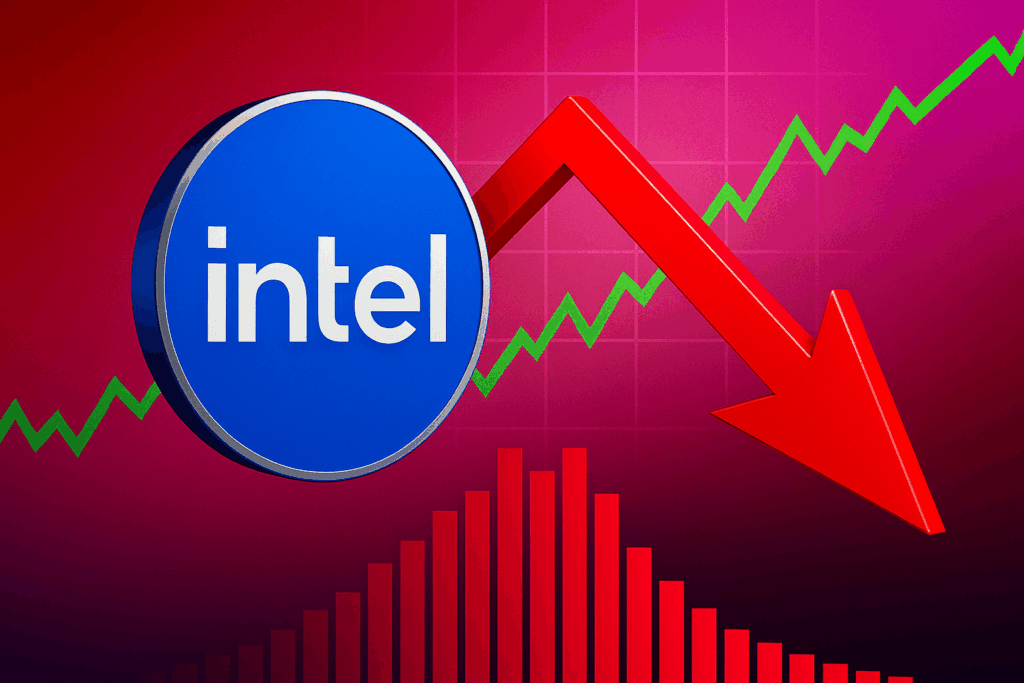
Why Intel Stock Dropped Despite Strong Monthly Gains
Intel Corp. (INTC) closed the latest trading session at $28.76, marking a 2.77% decline from the previous day. While the broader market saw modest gains—the S&P 500 rose 0.44%, the Dow added 0.14%, and the Nasdaq climbed 0.7%—Intel lagged behind, reflecting investor caution ahead of the company’s upcoming earnings report.
Despite this daily drop, Intel’s stock performance over the last month has been notably strong, with a 19.27% increase. This rally has outpaced both the Computer and Technology sector, which gained 9.59%, and the S&P 500, which advanced 4.03% in the same timeframe.
Upcoming Earnings: Key Figures to Watch
Market focus is now shifting toward Intel’s upcoming financial results. Analysts are anticipating the company to report earnings per share (EPS) of $0, which represents a 100% increase from the same quarter a year ago when the company posted negative earnings. Revenue is projected to come in at $13.12 billion, a 1.26% decrease compared to the prior-year quarter.
For the full fiscal year, Zacks Consensus Estimates forecast earnings of $0.15 per share, which would be a 215.38% year-over-year increase, while full-year revenue is expected at $52.2 billion, representing a 1.69% decline from last year. These figures underscore the uneven path of recovery as Intel navigates a shifting semiconductor landscape.




Analyst Revisions and Zacks Ranking
Changes in analyst estimates often reflect near-term trends and broader sentiment. As stated in the original report:
“Recent revisions tend to reflect the latest near-term business trends. With this in mind, we can consider positive estimate revisions a sign of optimism about the business outlook.”
However, over the past 30 days, Intel’s Zacks Consensus EPS estimate has remained unchanged, signaling a relatively stable outlook—neither overly bullish nor bearish. As a result, Intel currently holds a Zacks Rank of #3 (Hold).
The Zacks Rank system, which ranges from #1 (Strong Buy) to #5 (Strong Sell), has been used as a predictive tool for stock performance since 1988. According to Zacks:
“Stocks rated #1 have produced an average annual return of +25% since 1988, verified by third-party audits.”
Although Intel is not currently in the top tier of Zacks-ranked stocks, it remains a stock of interest due to its industry position and valuation metrics.
In terms of valuation, Intel is trading at a forward P/E ratio of 204, significantly higher than the industry average of 39.71. This suggests that investors are pricing in a sharp recovery in earnings, or perhaps assigning a premium due to Intel’s scale and strategic importance.
The PEG ratio—which incorporates expected earnings growth into the valuation—provides another perspective. Intel’s PEG ratio stands at 28.57, compared to the industry average of 4.59. This elevated PEG implies that, based on current growth expectations, Intel may be trading at a considerable premium.
It’s worth noting that valuation metrics alone do not determine the trajectory of a stock but do play a crucial role in investor decision-making.
Industry Context: Semiconductor Outlook
Intel operates within the Semiconductor – General industry, which is part of the broader Computer and Technologysector. Currently, this industry holds a Zacks Industry Rank of 44, placing it in the top 18% of over 250 tracked industries.
According to Zacks:
“The top 50% rated industries outperform the bottom half by a factor of 2 to 1.”
This ranking reflects ongoing strength in the semiconductor space, driven by demand for AI chips, server processors, and other advanced technologies.




























Comments are closed.