




Featured News Headlines
- 1 What is Litecoin (LTC)?
- 2 The Genesis of Litecoin: Why Was It Necessary?
- 3 Litecoin’s Core Technical Features: What Does It Offer Over Bitcoin?
- 4 Litecoin’s Historical Journey and Key Developments
- 5 Why Is Litecoin Still Relevant?
- 6 How to Acquire Litecoin
- 7 What Does the Future Hold for Litecoin?
- 8 Should Litecoin Be in Your Crypto Portfolio?
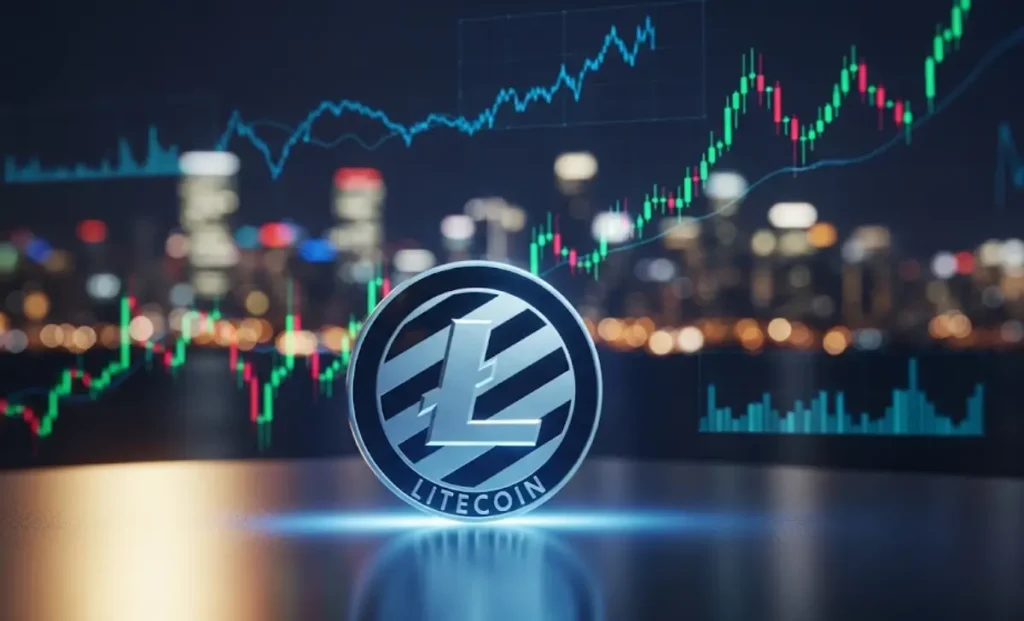
What is Litecoin (LTC)?
When most people first step into the world of cryptocurrency, Bitcoin is the most prominent name that comes to mind—the undisputed king of the digital asset realm. However, within this vast and dynamic ecosystem, another pioneer has been quietly forging its own path, often residing in Bitcoin’s shadow: Litecoin (LTC). Dubbed “the silver to Bitcoin’s gold,” Litecoin holds a special place in crypto history as one of the very first altcoins ever developed. But what exactly is Litecoin? How does it differ from Bitcoin? And why does this digital asset continue to capture the interest of investors and tech enthusiasts alike?
In this comprehensive guide, we will embark on a deep dive into every aspect of Litecoin, from its fundamental principles and technical specifications to its history and future outlook. This isn’t just a simple definition; it’s a practical guide to understanding Litecoin’s role, potential, and value in the cryptocurrency landscape.
The Genesis of Litecoin: Why Was It Necessary?
The story of Litecoin dates back to the early days of Bitcoin. When Satoshi Nakamoto launched Bitcoin in 2009, it was hailed as a revolutionary technology. Over time, however, some limitations of the Bitcoin network became apparent: transaction speeds were slow, and the hardware used for mining was becoming increasingly expensive and energy-intensive.
It was at this juncture that Charlie Lee, a former Google engineer, created Litecoin with the conviction that he could offer a better solution to Bitcoin’s core issues. Lee’s goal was to build a more practical and accessible cryptocurrency for everyday transactions while maintaining Bitcoin’s robust and secure foundation. He launched Litecoin in 2011 as a “fork” of the Bitcoin protocol. This fork meant that Litecoin shared many commonalities with Bitcoin, but it also introduced key differences that set it apart.




Litecoin’s Core Technical Features: What Does It Offer Over Bitcoin?
To truly grasp Litecoin, we must focus on three main technical features that distinguish it from Bitcoin. These features support Litecoin’s claim to be a “faster, lighter” version of its predecessor.
1. Faster Block Generation Time
One of Litecoin’s most significant features is its much faster block generation time compared to Bitcoin. While a new block is created on the Bitcoin network roughly every 10 minutes, this process takes only 2.5 minutes on Litecoin. This means that transactions are confirmed much more quickly. Theoretically, the Litecoin network can process four times as many transactions as Bitcoin in the same amount of time. This speed difference makes Litecoin more appealing for scenarios like small, daily purchases.
2. A Different Mining Algorithm: Scrypt
Bitcoin uses a mining algorithm called SHA-256. Over time, this algorithm led to the development of specialised, high-performance mining hardware known as ASICs (Application-Specific Integrated Circuits). This has led to the centralisation of mining, making it an operation primarily for large companies or hardware owners.
To counter this centralisation, Charlie Lee opted to use a different mining algorithm for Litecoin, called Scrypt. Because Scrypt is a memory-intensive algorithm, it was initially more resistant to ASIC devices. This encouraged mining using CPUs and GPUs (computer processors and graphics cards), aiming to make the network more decentralised by allowing more people to mine with their personal computers. Although ASIC devices for Scrypt have since been developed, this initial philosophy underscored Litecoin’s focus on accessibility.
3. A Higher Total Supply
While Bitcoin’s total supply is capped at 21 million coins, Litecoin’s total supply is 84 million. This is exactly four times that of Bitcoin. The higher supply results in a lower per-unit price for LTC compared to BTC, which can potentially make it more widely distributed. Many investors may view Litecoin as a more accessible investment vehicle due to its lower unit price.
Litecoin’s Historical Journey and Key Developments
Since its founding in 2011, Litecoin has experienced its share of ups and downs in the crypto market. Despite being overshadowed by Bitcoin in its early years, it successfully built its own community and carved out a solid position. Some notable events in Litecoin’s history include:
- The 2013-2014 Bull Run: During this period, Litecoin, alongside Bitcoin, saw significant price increases, solidifying its “silver to Bitcoin’s gold” moniker.
- SegWit (Segregated Witness) Integration: In 2017, Litecoin was one of the first major cryptocurrencies to successfully implement SegWit, a protocol upgrade designed to increase transaction capacity and lower fees. This development served as a testing ground and a reference point for Bitcoin, which also adopted the technology later on.
- The Lightning Network: After implementing SegWit, Litecoin also successfully integrated the Lightning Network, a layer-2 scaling solution designed for micropayments and instant transactions. This further enhanced Litecoin’s potential as a medium of exchange.
- MimbleWimble (MWEB): One of Litecoin’s most important technical developments in recent years has been the implementation of MimbleWimble Extension Blocks (MWEB), a protocol focused on privacy and scalability. This aims to increase user transaction privacy and reduce the size of the blockchain. MWEB, which was activated on the mainnet in 2022, is a significant step towards making Litecoin a privacy-oriented cryptocurrency.
Why Is Litecoin Still Relevant?
With thousands of cryptocurrencies in existence today, there are a few key reasons why Litecoin continues to maintain its popularity and relevance:
- A Reliable and Proven Network: Having operated smoothly since 2011, Litecoin is one of the oldest and most trusted cryptocurrency networks. This longevity is a major trust factor for investors and developers.
- Potential as a Payment Instrument: Thanks to its fast transaction times and low fees, Litecoin is positioned as an ideal payment instrument, especially for everyday purchases and international money transfers.
- Active Development: Even after Charlie Lee sold all his LTC in 2017, the Litecoin Foundation and its community have continued to work on the network’s development. Innovations like MimbleWimble ensure that Litecoin remains technologically relevant.
- Market Position: Litecoin consistently ranks among the top 20 cryptocurrencies by market capitalisation. This indicates that it plays a significant role in the crypto ecosystem and has broad acceptance.
How to Acquire Litecoin
Acquiring Litecoin is quite straightforward. Most major cryptocurrency exchanges allow for LTC trading. Here are the basic steps:
- Choose a Reputable Exchange: Open an account on a globally recognised and trusted cryptocurrency exchange like Binance, Coinbase, or Kraken.
- Verify Your Identity: Complete the necessary Know Your Customer (KYC) verification steps required by the exchange.
- Deposit Funds: Deposit funds into your account via bank transfer, credit card, or another cryptocurrency.
- Buy Litecoin: Use your deposited currency to purchase Litecoin on trading pairs like LTC/USD or LTC/GBP.
You can hold your Litecoin on the exchange or, for greater security, transfer it to a hardware wallet (like a Ledger or Trezor) or a software wallet.
What Does the Future Hold for Litecoin?
Litecoin’s future is closely tied to the future of cryptocurrencies in general. Its claim as a true alternative to Bitcoin is one of its strongest selling points. Its wider acceptance for global payments, the adoption rate of privacy-focused features like MWEB, and the broader use of the Lightning Network will be key factors in determining its future success.
However, the emergence of a new generation of fast and scalable blockchains (such as Solana or Avalanche) presents competition for Litecoin’s market share. Nevertheless, Litecoin’s proven reliability, strong community, and ongoing technical development will likely keep it a solid player in the crypto world for the foreseeable future.
Should Litecoin Be in Your Crypto Portfolio?
Litecoin (LTC) is more than just another altcoin; it is a technologically mature and time-tested asset that continues Bitcoin’s vision with a different approach. With its faster transactions, unique mining algorithm, and higher supply, it has successfully positioned itself as “the digital silver for everyday payments.”
While the crypto market is volatile and this should not be taken as investment advice, Litecoin’s long history, active development, and solid market position make it an attractive option for many investors. Litecoin is not just a cryptocurrency; it’s one of Bitcoin’s first and most successful “siblings,” having cemented its place in crypto history. With the expectation that it will continue to play a significant role in the future digital finance ecosystem, it may be worth considering adding LTC to your crypto portfolio.
















Comments are closed.