




Featured News Headlines
- 1 What is the Metaverse?
- 2 A Brief History of the Metaverse: From Fiction to Reality
- 3 How Does the Metaverse Work?
- 4 What Can You Do in the Metaverse?
- 5 Top Metaverse Platforms to Watch
- 6 The Metaverse Economy: Real Value in Virtual Spaces
- 7 Security and Privacy Concerns in the Metaverse
- 8 The Future of the Metaverse: A Digital Renaissance
What is the Metaverse?
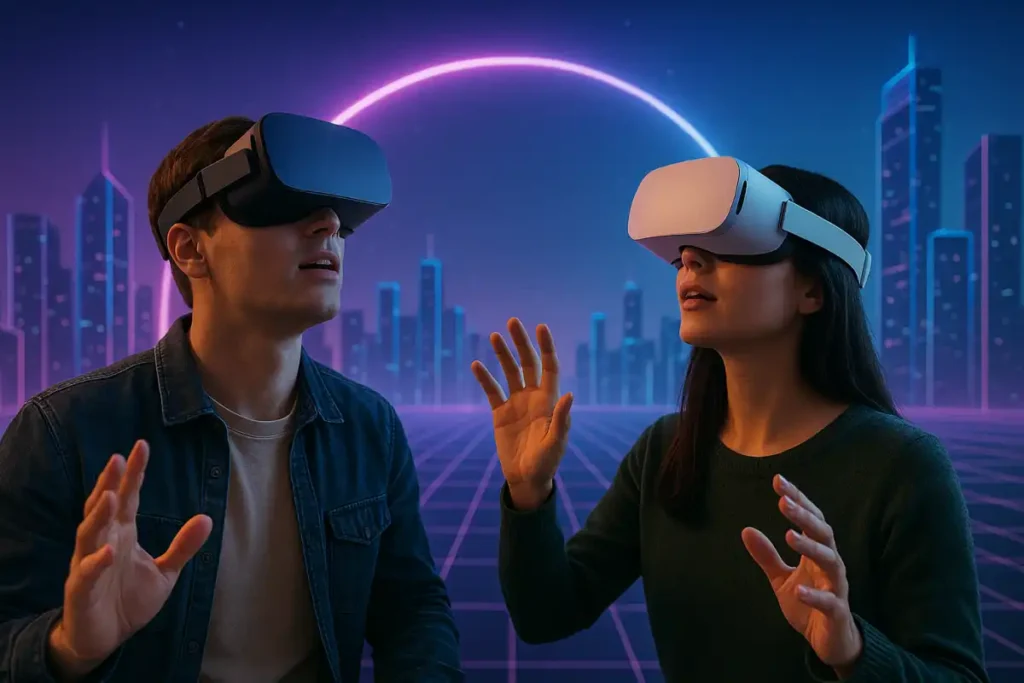
The Metaverse is a digital universe where physical and virtual realities merge, allowing users to interact through avatars in immersive environments. Powered by technologies like Virtual Reality (VR) and Augmented Reality (AR), it represents a radical shift in how we socialize, work, and play in the digital age.
Although the term first appeared in Neal Stephenson’s 1992 sci-fi novel Snow Crash, it has since evolved into a technological reality, particularly gaining global attention when Facebook rebranded itself as Meta in 2021.
A Brief History of the Metaverse: From Fiction to Reality
While the concept of the Metaverse has existed in literature and gaming for decades, real-world development accelerated dramatically in the early 2020s. Tech giants like Meta, Microsoft, Nvidia, and Apple have begun pouring billions into building interconnected virtual environments, signaling that the Metaverse is not just hype—but a vision actively being realized.
How Does the Metaverse Work?
The Metaverse is a convergence of several advanced technologies:





- Virtual Reality (VR): Transports users into fully immersive digital environments using headsets like Oculus Quest or HTC Vive.
- Augmented Reality (AR): Overlays digital content onto the real world—think Pokémon GO or smart glasses.
- Blockchain and NFTs: Ensure secure ownership of digital assets, such as virtual land or collectibles.
- Artificial Intelligence (AI): Powers intelligent avatars and dynamic virtual interactions.
- Cloud Computing: Delivers high-performance processing and scalability for seamless user experiences.
What Can You Do in the Metaverse?
The Metaverse is not just a playground for gamers—it’s a versatile space with applications across industries:
- Education: Universities and institutions are building virtual campuses and immersive classrooms.
- Remote Work: 3D virtual offices are replacing traditional video calls.
- E-commerce: Users can browse 3D stores, try on items virtually, and make purchases.
- Real Estate: Virtual land is being bought, sold, and developed on platforms like Decentraland and The Sandbox.
- Gaming: Immersive worlds such as Roblox, Fortnite, and Axie Infinity are major gateways into the Metaverse.
Top Metaverse Platforms to Watch
- Decentraland
Built on the Ethereum blockchain, Decentraland allows users to purchase and develop LAND parcels represented by NFTs. - The Sandbox
A community-driven platform where users can create, own, and monetize gaming experiences using the SAND token. - Roblox
Extremely popular among younger audiences, Roblox enables users to design, share, and explore custom-built games. - Meta Horizon Worlds
Developed by Meta, this social VR platform offers a space for collaboration, creativity, and interaction via Oculus devices.
The Metaverse Economy: Real Value in Virtual Spaces
The Metaverse is giving rise to a booming digital economy, where users can:
- Create and sell digital art as NFTs.
- Trade in-game assets and wearables.
- Earn revenue by hosting virtual concerts, exhibitions, or events.
- Rent or resell virtual properties and shops.
Example:
Rapper Snoop Dogg launched his own “Snoopverse” in The Sandbox. Virtual plots of land next to his estate have sold for tens of thousands of dollars.
Security and Privacy Concerns in the Metaverse
As the Metaverse grows, so do concerns over privacy and safety:
- Data Collection: Users’ behavior, preferences, and biometric data may be tracked and analyzed.
- Addiction Risk: Especially among youth, excessive time in virtual environments can lead to real-world detachment.
- Identity Fraud: Avatars can be used to disguise real identities, potentially facilitating cyberbullying or scams.
The Future of the Metaverse: A Digital Renaissance
According to industry experts:
- The Metaverse could contribute $5 trillion to the global economy by 2030.
- It’s poised to disrupt industries like education, healthcare, logistics, and entertainment.
- It may create entirely new job markets: avatar designers, virtual architects, VR experience consultants, and more.





























Comments are closed.