




Featured News Headlines
What are Real World Assets (RWA)?
The financial world has been transforming at an unprecedented pace over recent years. The digital asset revolution, which began with the emergence of Bitcoin, gained a new dimension with decentralised finance (DeFi). However, as this digital ecosystem has grown, the gap between the abstract nature of the virtual world and the tangible realities of the physical world has become more pronounced. This is precisely where the concept of Real World Assets (RWA) comes into play. RWA refers to the process of tokenising tangible values from the physical or financial world and integrating them into the blockchain ecosystem. This is a revolutionary development, not only for crypto enthusiasts but also for traditional financial institutions, investors, and even for every individual in our daily lives.
In this comprehensive guide, we will delve into what RWA is, why it is so important, how it works, its potential, and the challenges it faces. Our aim is to illuminate this seemingly complex topic with a professional and straightforward approach that everyone can understand.
What Exactly are Real World Assets (RWA)?
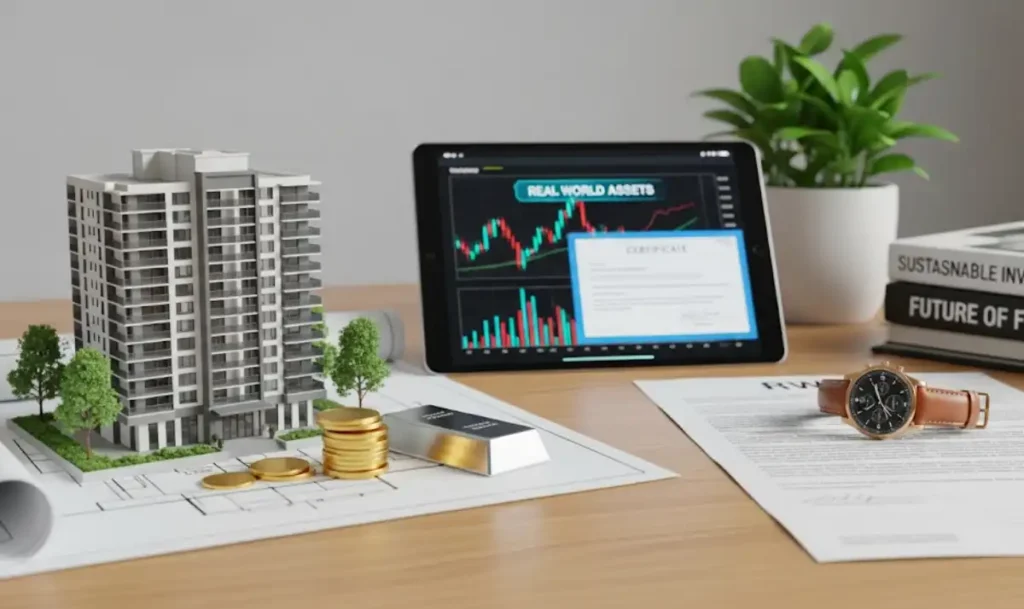
In simple terms, Real World Assets encompass anything with a tangible value in the physical or financial world that is brought onto the blockchain. These assets are a broad range of items or rights that are traded in traditional markets and represent a real-world value. They can range from physical goods to financial instruments.
Examples of RWA:
- Real Estate: Immovable properties like a house, office building, or a plot of land.
- Stocks and Bonds: Company shares or government bonds traded on traditional exchanges.
- Commodities: Physical goods such as gold, silver, or oil.
- Intellectual Property Rights: Patents, copyrights.
- Artworks: Valuable paintings or collectible pieces.
- Loans and Receivables: Financial documents such as loan agreements or invoices.
- Luxury Goods: Rare watches, fine wines, or classic cars.
Tokenising these assets on the blockchain creates a digital representation of each. This digital token represents the right of ownership of the physical asset.




Why are Real World Assets so Significant?
The importance of RWA goes beyond merely expanding the crypto world; it also offers solutions to long-standing problems in traditional finance. Let’s explore some key reasons why this topic is so critical.
1. Bringing Trust and Stability to the Crypto Ecosystem
Cryptocurrency markets are known for their high volatility. Prices can change by 20-30% in a matter of hours, which poses significant risks for investors. RWA tokens, deriving their value from tangible, stable assets like real estate or gold, provide a more predictable and reliable value base to the crypto ecosystem. This is a huge advantage, especially when used as collateral on DeFi platforms. Now, instead of just volatile assets like ETH or BTC, a tokenised piece of real estate, which holds a more stable value, can also be used as collateral.
2. Democratising Access to Traditional Assets
In traditional markets, investing in high-value assets (e.g., a piece of art or a luxury property) is typically limited to a select group with substantial capital. While investing in a home requires hundreds of thousands of dollars, tokenising these assets allows them to be fractionalised into smaller pieces, making them accessible to everyone. For example, a $1 million property could be divided into 100,000 tokens of $10 each. This enables individual investors to invest in these types of assets in small amounts.
3. Increasing Liquidity and Reducing Transaction Costs
Traditional assets often suffer from low liquidity. Selling a house can take months, and selling a piece of art can be similarly complex and time-consuming. RWA tokens, thanks to the fast and global transaction capabilities offered by the blockchain, significantly increase the liquidity of these assets. Furthermore, the high costs associated with traditional financial transactions, such as intermediaries, lawyers, and banks, are greatly reduced through the use of smart contracts and decentralised platforms.
4. Providing Transparency and Security
One of the biggest advantages of blockchain technology is the transparency it offers. Every transaction is recorded on an immutable and transparent ledger. This protects information like property ownership or the status of a loan from fraud. Through smart contracts, asset transfers can be executed automatically without the need for an intermediary, which enhances trust.
How Does the Tokenisation of Real World Assets (RWA) Work?
While the RWA tokenisation process may seem complex, its fundamental steps are quite logical. The process aims to securely link the physical asset with a digital token.
Step 1: Valuation and Legal Verification of the Physical Asset
First, the value of the asset to be tokenised is professionally determined. For real estate, this could be done by a certified appraiser. Then, the legal ownership and all legal documents (e.g., title deed) are verified. This step is crucial to ensure that the token represents a genuine, real-world asset.
Step 2: Digitalisation of the Asset (Tokenisation)
After the verification process is complete, the asset is converted into a digital token on a blockchain. This is typically done using a smart contract. This contract contains all the asset’s properties (value, ownership information, etc.) and defines how the token will be fractionalised, transferred, and managed.
Step 3: Collateral and Legal Linkage
One of the most important steps is establishing the legal link between the digital token and the physical asset. This is usually done through a trusted third party, such as a custodian or a notary. The physical asset is secured by the custodian, and the ownership rights of this asset are linked to the smart contract. This way, the token holder can legally prove their percentage of ownership in the physical asset.
Step 4: Trading and Management
Once created, the token can be freely bought and sold on crypto exchanges or DeFi platforms. The ownership of these tokens is transparently tracked on the blockchain. Smart contracts can automatically enable token holders to receive profits (e.g., rental income from a property) or vote on decisions (e.g., for the management of a project).
The Future and Potential of RWA
RWA has the potential to create a paradigm shift in the financial world. Experts predict that hundreds of billions of dollars worth of traditional assets will be brought onto the blockchain in the coming years. This will not only make financial transactions more efficient but also fundamentally change the functioning of the global economy.
Potential Use Cases:
- Commercial Real Estate Financing: Large office buildings or shopping centres can be tokenised to be opened up to a wider range of investors.
- Global Credit Markets: Small businesses in developing countries can tokenise their local assets to secure funding more easily from global capital markets.
- DeFi and Institutional Finance Integration: Traditional financial institutions (TradFi) can use RWA tokens as collateral to access DeFi’s liquidity pools. This could lead to the emergence of hybrid financial models that combine the best aspects of both worlds.
Challenges and Risks Faced
Despite the fascinating potential of RWA, there are also some significant challenges and risks on this journey.
1. Legal and Regulatory Uncertainty
One of the biggest challenges is the lack of a consistent global legal framework. Different countries are regulating tokenised assets differently, or have not yet regulated them at all. This uncertainty can create risks for investors and institutions. It is expected that as regulations in this area become clearer, more capital will flow into this sector.
2. Valuation and Security Issues
The digital valuation of a physical asset can be subjective and open to manipulation. Additionally, the reliability of the custodian securing the physical asset is a critical issue. If the custodian goes bankrupt or commits fraud, the value of the token could also be at risk.
3. Liquidity and Price Stability
While tokenisation increases liquidity, there may not always be enough buyers or sellers. Some RWA tokens, especially those representing niche assets, may still have low trading volumes.
The Meeting Point of the Traditional and Digital Worlds
Real World Assets (RWA) are one of the most significant developments that bring the potential of blockchain technology to the physical world, building a bridge between these two distinct ecosystems. RWA will not only optimise financial transactions but also democratise access to traditional assets and reshape the structure of the global economy.
It is important to remember that this concept is still in its early stages and there are legal, regulatory, and technological challenges that need to be overcome. However, despite these challenges, the opportunities RWA presents are limitless. By combining the established trust of traditional finance with the transparency and efficiency of blockchain, this new asset class is poised to become one of the cornerstones of the future financial system. Witnessing and being a part of this transformation is a unique opportunity for both investors and technology enthusiasts. RWA is bringing the abstract digital world together with tangible realities, rewriting the future of finance and the economy.














[…] a technology that isn’t just a speculative asset but one that provides tangible solutions for Real World Assets (RWA), you need to take a closer look at the XDC Network. In this guide, we will explore what XDC […]
[…] most significant trend in the crypto world for 2025 and beyond is undoubtedly the integration of Real World Assets (RWA). Vaulta is one of the most aggressive players in this process, which involves bringing bonds, […]
[…] Collateral Acceptance: The vision to accept RWAs (Real World Assets) as collateral, in addition to traditional crypto assets like BTC, ETH, and stablecoins, […]