




Featured News Headlines
- 1 Tesla Valuation Update: Canaccord Increases Target Amid EV Market Reset
- 2 Short-Term Adjustments, Long-Term Demand Themes
- 3 Technology and Autonomy Remain Central to the Equity Story
- 4 Updated Valuation Framework and Optionality Factors
- 5 Broader Analyst Views and Operational Developments
- 6 Autonomous Testing and Market Positioning
Tesla Valuation Update: Canaccord Increases Target Amid EV Market Reset
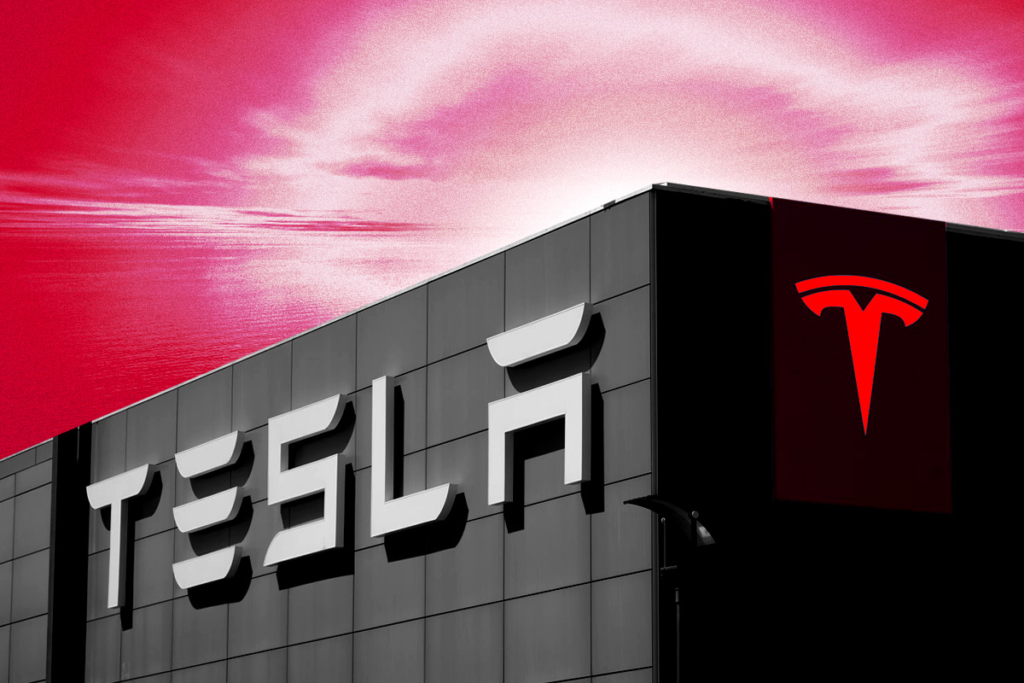
Canaccord Genuity has raised its price target on Tesla shares to $551, up from $482, while maintaining its existing rating on the electric vehicle manufacturer. The update comes as Tesla continues to trade near record levels, with shares recently priced at $488.77, roughly 1% below its 52-week high of $495.28. Over the past six months, the stock has delivered a 49.37% price return, highlighting sustained market interest.
Despite this strong performance, valuation metrics suggest caution. According to InvestingPro data, Tesla currently trades above its assessed Fair Value. The company’s price-to-earnings ratio stands at 337.22, reflecting elevated growth expectations embedded in the stock.
Short-Term Adjustments, Long-Term Demand Themes
Canaccord acknowledged that fourth-quarter 2025 vehicle delivery expectations have been revised lower, reflecting softer near-term demand assumptions. However, the firm emphasized that the ongoing reset in the U.S. electric vehicle market could ultimately support more stable and durable long-term demand.
The analysis also pointed to accelerating EV adoption in emerging markets as a key factor reinforcing Tesla’s multi-year growth outlook. While revenue declined 1.56% over the past twelve months, Tesla continues to maintain a solid balance sheet, holding more cash than debt, which analysts view as a stabilizing factor amid industry volatility.





Technology and Autonomy Remain Central to the Equity Story
Canaccord highlighted Tesla’s continued progress in Full Self-Driving (FSD) technology as an increasingly important component of its long-term narrative. The firm also referenced expectations for an expanded robotaxi fleet in 2026, which could influence sentiment as autonomous mobility developments advance.
The recently approved compensation package for CEO Elon Musk was noted as another element aligning executive incentives with long-term value creation. Analysts see this alignment as reinforcing Tesla’s strategic focus beyond short-term financial performance.
InvestingPro data indicates that analysts currently forecast earnings per share of $1.72 for fiscal 2025, underscoring expectations for gradual earnings expansion despite near-term delivery revisions.
Updated Valuation Framework and Optionality Factors
To arrive at its revised price target, Canaccord applied a multiple of approximately 46x to its estimated 2028 non-GAAP earnings per share of $11.98, an increase from its previous valuation framework of around 42x on $11.46. The firm noted that updates to its long-term model—particularly in energy storage assumptions—supported a modestly improved overall outlook.
In addition, potential developments surrounding Tesla’s Optimus humanoid robot program, expected to generate news flow in 2026, were cited as a factor that could enhance perceptions of Tesla’s optionality beyond automotive revenues.
Broader Analyst Views and Operational Developments
Elsewhere, Tesla has announced a $1.2 billion investment in battery cell production at its German gigafactory near Berlin. The facility aims to produce up to 8 gigawatt hours of battery cells annually by 2027, supporting Tesla’s broader European manufacturing strategy. The company has also launched a lower-priced Model 3 variant in Europe, a move intended to stimulate regional demand.
Analyst sentiment across Wall Street remains mixed. Truist Securities recently increased its price target to $444, citing Tesla’s positioning in artificial intelligence, while maintaining a more cautious stance. Goldman Sachs reiterated its Neutral rating with a $400 price target, pointing to regulatory concerns in California related to Tesla’s Autopilot marketing.
According to public filings, California regulators have issued a document that could result in a 30-day sales suspension if marketing changes are not implemented, though the order is currently stayed for 90 days.
Autonomous Testing and Market Positioning
Tesla has also begun testing its robotaxi service in Austin without safety monitors, marking a notable step in its autonomous vehicle roadmap. While still in early stages, the development highlights Tesla’s ongoing efforts to expand its technological capabilities and redefine its role within the broader mobility ecosystem.
Taken together, these developments illustrate the complex balance between near-term operational challenges, regulatory scrutiny, and long-term strategic ambitions shaping Tesla’s current market narrative.






























Comments are closed.