




Featured News Headlines
How Nvidia Responds to Rising Custom AI Chips
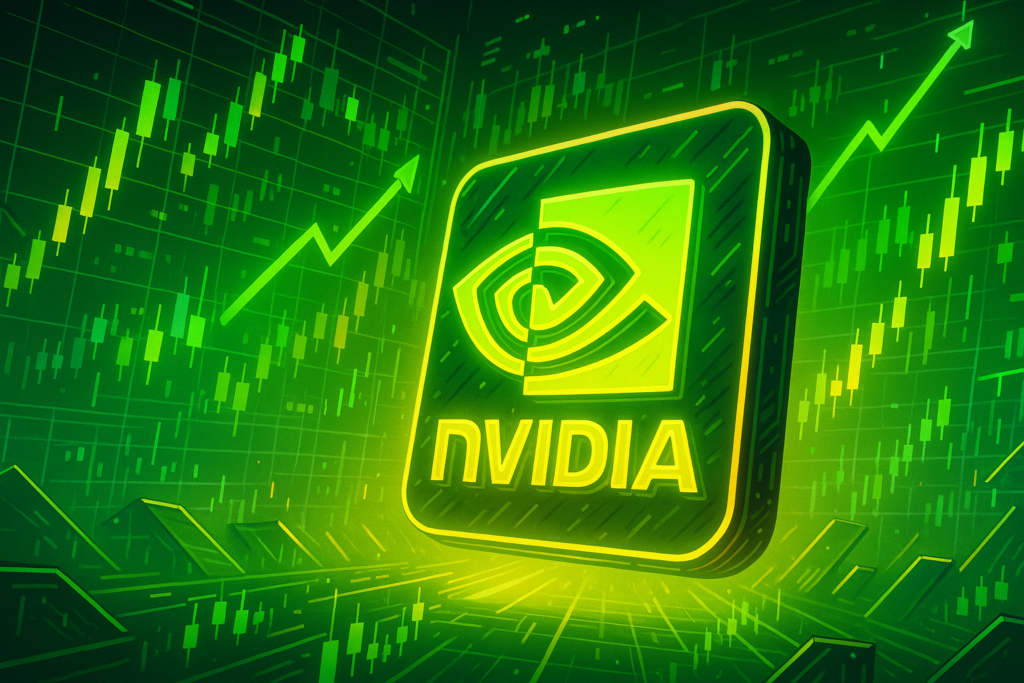
Nvidia (NVDA) experienced modest gains early Monday, as investors closely monitored developments in the AI chip sector. The semiconductor giant’s performance comes ahead of Broadcom’s (AVGO) highly anticipated earnings report, which could influence market sentiment in the coming days.
In early trading, Nvidia shares rose 0.4% to $183.07. Despite this small uptick, the stock has declined 8.4% over the past month, reflecting investor concerns about potential market share erosion from Broadcom’s custom chips. These chips, designed for major tech companies including Google’s Tensor Processing Units (TPUs), could challenge Nvidia’s dominance in the AI processor market.
Chip Industry Movements
Other players in the semiconductor space also saw positive movement. Advanced Micro Devices (AMD) climbed 1.1%, while Broadcom gained 2.3%. The industry appears poised for shifts as Broadcom prepares to release its quarterly financial results on Thursday.
Broadcom has traditionally avoided positioning itself as a direct competitor to Nvidia. However, during its previous earnings report in September, CEO Hock Tan indicated that the company’s custom chips could gradually capture market share from Nvidia’s graphics processing units (GPUs). Analysts and investors are eager to hear whether Tan will provide further updates, particularly regarding the broader commercialization of Google’s TPUs. Wider availability of these processors could increase Broadcom’s potential engagement with external customers.




Challenges of Switching Chip Providers
Transitioning to new chip architectures can be complicated. Barron’s previously highlighted that moving to different processors often requires software adjustments, which can frustrate users. As a result, custom processors have historically been restricted to internal company operations. However, industry experts suggest this trend may be shifting, as new AI workloads demand greater flexibility in hardware deployment.
Analysts at Susquehanna recently forecast that Nvidia’s share of the AI chip market could decline to 67% by 2030, down from its current level of over 80%. Broadcom is expected to be the primary beneficiary of this trend, potentially reaching nearly 14% market share. These predictions underscore a slowly evolving competitive landscape in the AI semiconductor sector.
Nvidia’s Strategic Response
Nvidia is actively preparing to counter the competitive threat. Citi analyst Atif Malik noted in a research update that Nvidia’s upcoming Rubin chip series will include a lower-cost GPU variant. This move could reduce the appeal of rival chips from Broadcom and Google.
Malik stated, “With estimated 3x reduction in total cost of ownership through the use of cost-efficient GDDR7 memory versus more expensive high-bandwidth memory, we believe Rubin CPX would give XPUs like TPU/Trainium a run for their money next year.” The analyst also maintained a positive outlook on Nvidia’s potential, reflecting confidence in the company’s ability to adapt to market shifts.
Market Implications
The semiconductor sector remains under close watch as Broadcom’s earnings approach. Investors are particularly interested in any signals regarding the scalability and market reach of custom chips, such as Google’s TPUs. The broader industry impact could be significant, as shifts in chip adoption patterns may reshape partnerships and technology deployment strategies across major tech companies.
Meanwhile, Nvidia’s ongoing innovation in GPU technology highlights the company’s efforts to maintain its competitive edge. By introducing cost-efficient alternatives in its Rubin lineup, Nvidia aims to address price sensitivity while sustaining performance standards, a critical factor as AI workloads become more pervasive and resource-intensive.
As the week progresses, the performance of Nvidia, Broadcom, and other key chip makers will offer insights into the evolving dynamics of the AI semiconductor market. While Broadcom seeks to expand its presence with custom processors, Nvidia continues to innovate with its next-generation GPUs.
The outcome of these developments will not only influence stock movement but also signal broader trends in AI hardware adoption, technology partnerships, and competitive positioning within the semiconductor industry.





























Comments are closed.