




Featured News Headlines
HAL Assures Operations Unaffected Despite Tejas Accident
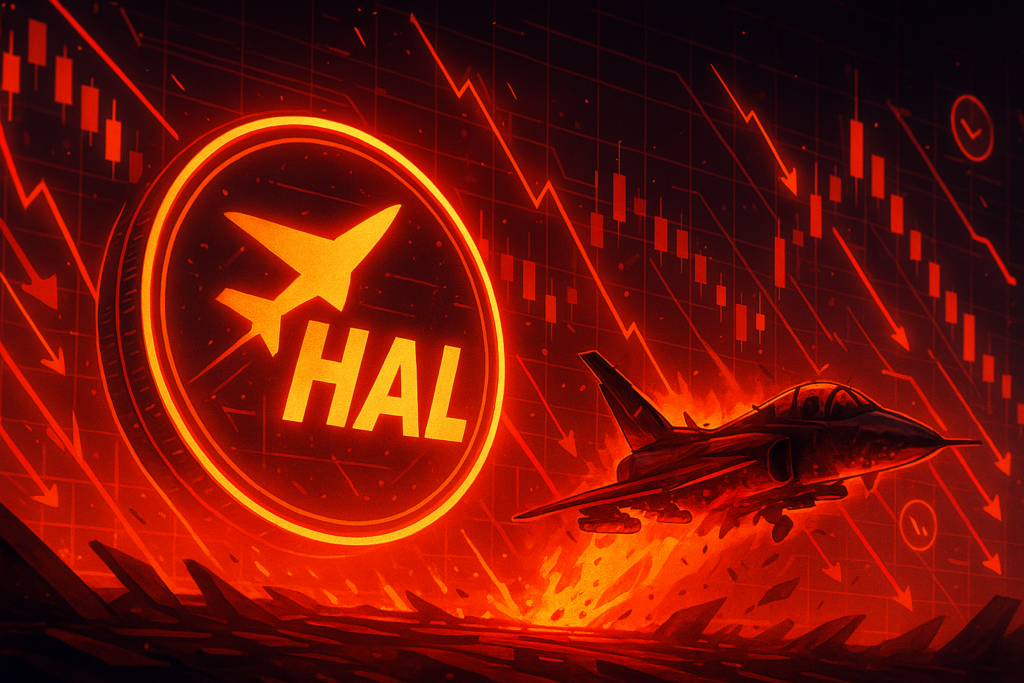
Shares of Hindustan Aeronautics Limited (HAL) fell sharply on Monday after a Tejas fighter jet crashed during a demonstration at the Dubai Air Show 2025. In early trade, HAL dropped as much as 8.48% to ₹4,205.25 on the BSE, while on the NSE, the stock fell up to 4.13% to ₹4,405.
The Tejas, built by HAL for the Indian Air Force, crashed during a low-altitude aerobatic display, resulting in the tragic death of pilot Wing Commander Namansh Syal. A Court of Inquiry by the Indian Air Force has been formed to determine the exact cause of the accident.
HAL Assures Business Operations Remain Unaffected
HAL emphasized that the crash does not affect the company’s ongoing operations, financial health, or future deliveries. In a regulatory filing dated November 24, HAL stated:
“The Company is extending its full support and cooperation to the agencies conducting the investigation. The Company will continue to keep the stakeholders informed of any material developments.”




The company reassured stakeholders that all business activities, production schedules, and commitments remain on track.
Analysts Highlight Short-Term Volatility
Market analysts noted that while the incident is tragic, it does not indicate structural flaws in the Tejas programme. Short-term fluctuations in HAL share price are expected as a result of heightened attention and media coverage.
“HAL enters this phase with one of the strongest order books in the company’s history, including the recent mega order for 97 Tejas units and ongoing demand for helicopters and engines. But the stock was priced for perfection. Trading at elevated valuation multiples, the market was assuming flawless execution and uninterrupted momentum in India’s defence-manufacturing push,” said Dasani, a defence market analyst.
According to analysts, although short-term uncertainty may influence sentiment, the long-term strategic outlook for HAL remains strong.
Context of Military Aviation Risks
Even the most advanced fighter jets worldwide, such as the F-35, have experienced multiple crashes during testing, training, or airshow demonstrations. In this context, analysts believe the Tejas incident is within the normal risk parameters for modern military aviation.
“This is not alarming — it is the reality of cutting-edge military aviation. We believe that the impact on short-term sentiment is not indicative of systemic programme failure,” said analysts at Choice Broking.
The crash highlights the inherent risks in operating high-performance aircraft but does not reflect on the overall reliability of HAL’s defence production or capabilities.
Export and Domestic Production Outlook
Following the incident, analysts expect a temporary slowdown in positive sentiment regarding HAL’s export prospects.
“We think the near-to-medium-term focus continues to be on domestic deliveries — particularly the ongoing production ramp-up for Tejas Mk1A. By the time export engagements scale up meaningfully, we expect the current situation to normalise and investor concerns to subside,” Choice Broking said.
The brokerage emphasized that domestic production schedules and the fulfilment of existing orders remain HAL’s primary operational focus, while exports are projected to expand once production stability is maintained.
Strong Fundamentals and Strategic Importance
Despite the recent accident, HAL’s long-term fundamentals remain robust. The company continues to benefit from strong order visibility, proven execution capabilities, and a critical role in India’s defence modernisation.
HAL’s order backlog currently stands at over 7.1 times FY25 revenue, providing a multi-year revenue runway and ensuring that production and operational plans are secured. Analysts underline that the Tejas programme continues to be a cornerstone of India’s indigenous fighter jet development and broader defence manufacturing strategy.
“The long-term India defence story remains intact, but near-term volatility around HAL shares is justified until greater transparency emerges,” analysts said.
The company’s extensive order book, ongoing deliveries of Tejas Mk1A jets, and continued demand for helicopters and engines position HAL as a strategic pillar in the nation’s defence infrastructure.





























Comments are closed.