





Tata Motors’ Game-Changing Demerger: Key Dates and Details Inside
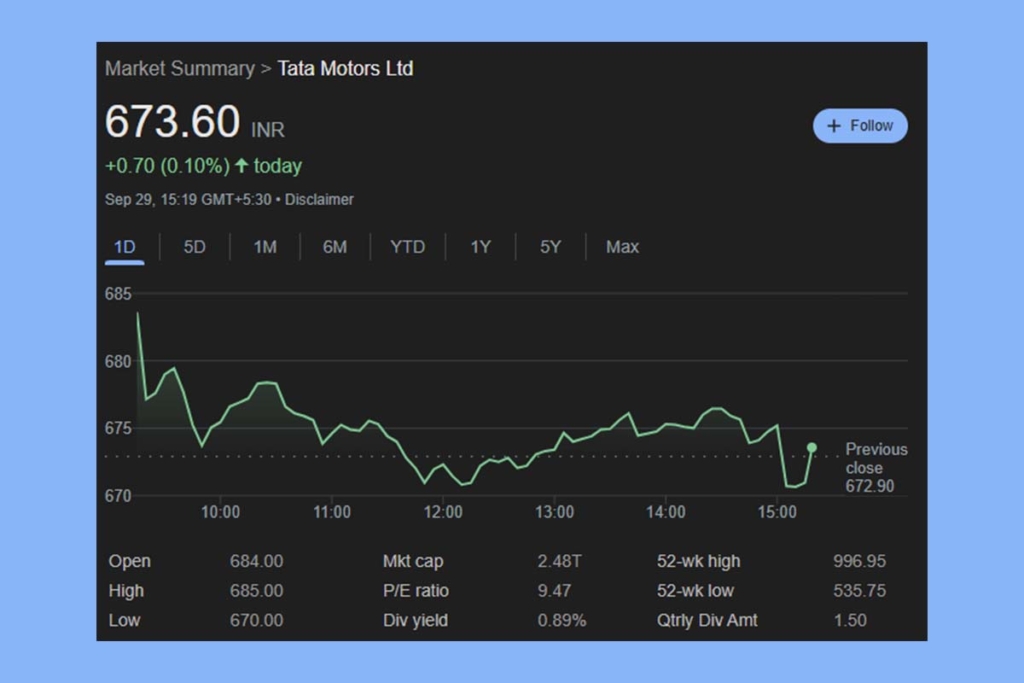
A major reorganization in the strategy of the automotive behemoth, Tata Motors’ much-awaited demerger, is about to go into effect. The action is intended to increase focus on electric vehicle (EV) development, increase shareholder value, and streamline operations. The record date and the share swap ratio are being keenly watched by investors since they have a direct bearing on holdings and possible profits. To make an informed conclusion, it is essential to comprehend the technical aspects of this demerger.
Share Swap Ratio and Investor Implications
The distribution of shares of the newly established company to current Tata Motors shareholders following the demerger is determined by the share swap ratio. To make the structure more transparent for investors, Tata Motors would, in this instance, split its electric vehicle business into a separate company. According to the previously disclosed arrangements, Tata Motors owners would get shares in the new EV-focused business in proportion to their existing holdings. This ratio is important since it influences the value of both the newly established company and the original Tata Motors stock.
Key Factors Driving the Share Swap Ratio Explained
Investors should be aware that the market capitalization, net asset value, and anticipated growth potential of the new company are some of the elements that affect share swap ratios. Analysts anticipate that by separating the legacy internal combustion engine industry from high-growth electric vehicle activities, this demerger will unleash value for shareholders.
For more up-to-date crypto news, you can follow Crypto Data Space.




































Comments are closed.