





Featured News Headlines
Ethereum Price Surge Faces Reality Check as Fed Rate Cut Uncertainty Grows
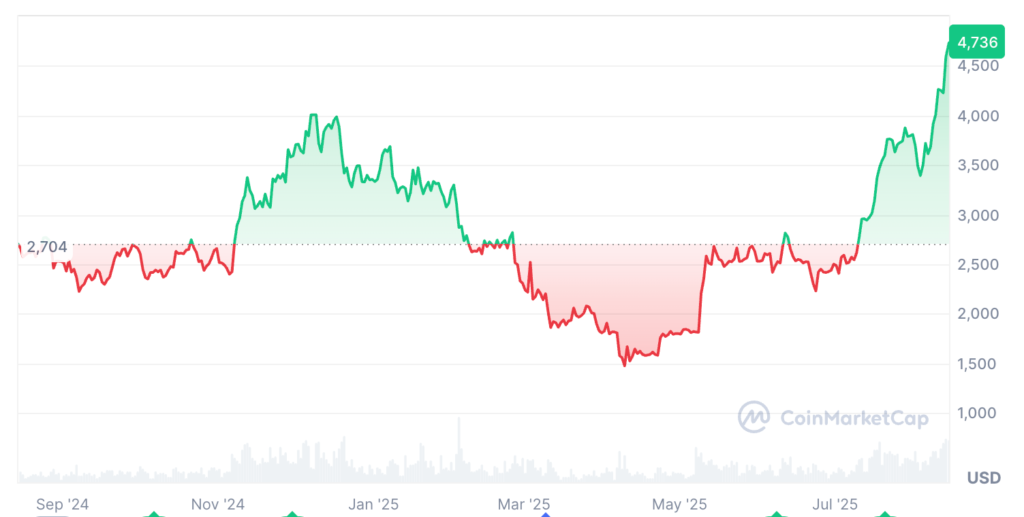
Ethereum’s impressive surge to over $4,700 has crypto analysts sounding alarm bells about dangerous market expectations tied to anticipated Federal Reserve rate cuts in September.
Market Banking on Fed Rate Cut Assumptions
The recent Ether rally has pushed the cryptocurrency to within just 2.80% of its 2021 all-time high, but this momentum is heavily dependent on one critical factor. Swyftx lead analyst Pav Hundal warns that the entire market movement is built on assumptions about Fed policy changes.
Market participants are showing overwhelming confidence, with 95.8% probability assigned to a September rate cut according to CME Watch Tool data. This level of certainty has created what analysts describe as a potentially precarious situation for cryptocurrency markets.
ETF Inflows Signal Institutional Confidence
Spot Ether ETFs recorded their largest single-day net inflows ever on Monday, with $1.01 billion flowing across all funds. The past week alone has seen Ethereum surge an impressive 30%, demonstrating the power of institutional demand driving price action.





Capriole Investments founder Charles Edwards remains bullish on Ether’s prospects, suggesting the cryptocurrency could “probably quite easily double” if Bitcoin reaches the $150,000 to $200,000 range. However, he acknowledges potential risks from unexpected Fed decisions or global economic disruptions.
Economic Uncertainty Clouds September Expectations
Not all economists share the market’s confidence about September rate cuts. Morgan Stanley’s Ellen Zentner suggests Fed officials might push back against market expectations, while Kansas City Fed President Jeff Schmid indicated current rates remain appropriate given economic momentum.
The latest July CPI data showed inflation holding steady at 2.7% year-over-year, unchanged from June but below forecasted 2.8%. This mixed economic picture adds complexity to Fed decision-making processes.
Edwards warns that unexpected policy changes could cause liquidity constraints where “capital just kind of freezes up and flows stop,” potentially triggering significant market corrections despite strong underlying fundamentals.































Comments are closed.