




Featured News Headlines
- 1 What is Towns Protocol (TOWNS)?
- 2 The Core Purpose and Philosophy of Towns Protocol
- 3 How Does Towns Protocol Work?
- 4 How Towns Protocol Differs from Traditional Platforms
- 5 Use Cases and Potential of Towns Protocol
- 6 The TOWNS Token and Ecosystem
- 7 The Future Vision: The Core of Web3 Social Networks
- 8 How to Get Started with Towns Protocol
- 9 Conclusion
What is Towns Protocol (TOWNS)?
In today’s digital age, communities thrive not only in physical spaces but also within the virtual realm. Web2 platforms, such as Facebook groups, Discord servers, and Reddit subreddits, have enabled billions of people to connect. However, these platforms, due to their centralised nature, suffer from fundamental issues: data privacy concerns, censorship, and the risk of platform owners’ decisions directly impacting users. Web3 technology offers a solution to these problems, creating a new vision of the internet that is decentralised and puts users in complete control of their data. One of the most significant components of this vision is the Towns Protocol (TOWNS).
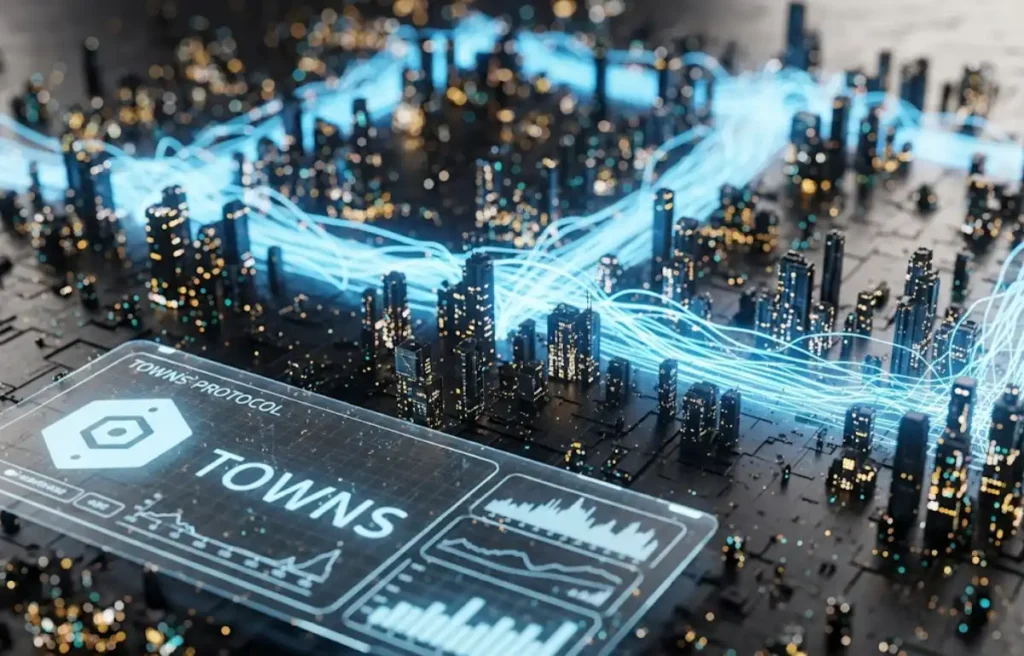
Towns Protocol is a Web3 project that aims to provide a decentralised communication and community infrastructure. As its name suggests, it allows for the creation of virtual “towns” or communities. Yet, unlike traditional platforms, these towns are entirely under the control of their users. In this comprehensive guide, we’ll delve into what Towns Protocol is, how it works, the advantages it offers, and why it holds such importance for the wider Web3 ecosystem.
The Core Purpose and Philosophy of Towns Protocol
At its heart, Towns Protocol empowers communities to build their own digital homes. This is more than just a chat application; it provides an infrastructure where community members can gather to make decisions, organise events, and create value. The philosophy of TOWNS is built on three core principles:
- Decentralisation: Community data is not stored on a single, central server. Instead, it is held on a distributed network using blockchain technology and decentralised storage solutions like the InterPlanetary File System (IPFS). This eliminates the risk of censorship and allows communities to set their own rules.
- User Control: On traditional platforms, user data belongs to the platform company. With TOWNS, data is entirely under user control. All that’s required to join a community is connecting a wallet, and users can move or delete their data whenever they choose.
- Innovation and Flexibility: Rather than being a monolithic chat platform, Towns Protocol has a modular structure, enabling the development of new features and applications on top of it. This allows developers to build custom tools, games, or financial applications specifically for these communities.
How Does Towns Protocol Work?
The architecture of Towns Protocol is based on a clever combination of blockchain and decentralised storage technologies. Here are the key components:





1. On-Chain Components:
- Community Registries: Each “town” or community is registered on the blockchain via a smart contract. This contract holds the community’s name, rules, members, and other essential information.
- Membership Management: Membership in a community is typically tied to an NFT (Non-Fungible Token) or a wallet address. For instance, joining a DAO (Decentralised Autonomous Organisation) community might require holding a specific governance token. Towns manages these membership mechanisms on-chain.
- Governance: TOWNS allows communities to establish their own governance processes. Members can vote on important decisions (e.g., adding new rules, allocating funds). These voting processes take place on the blockchain to ensure transparency and security.
2. Off-Chain Components:
- Content and Message Storage: Large volumes of data, such as chat messages, images, and videos, are not recorded directly on the blockchain. Instead, they are uploaded to decentralised storage systems like IPFS. The blockchain then stores only a “hash” (a cryptographic fingerprint) that points to this data. This approach prevents the blockchain from becoming slow and expensive while ensuring the data remains distributed and resistant to censorship.
- Peer-to-Peer Communication: TOWNS uses peer-to-peer networks for messaging, allowing participants to communicate directly with one another rather than through a central server. This minimises the risk of censorship and enhances data security.
How Towns Protocol Differs from Traditional Platforms
Towns Protocol offers an alternative to popular platforms like Discord, Slack, or Telegram. However, the differences it presents are not merely technological but also philosophical.
| Feature | Towns Protocol | Discord/Slack/Telegram |
| Control | Completely under the control of community members. | Under the control of the platform company. |
| Data Ownership | Users own their data. | Data belongs to the platform company. |
| Censorship | Resistant to censorship due to its decentralised structure. | Censorship can be applied based on company policies. |
| Security | Ensured by transparent blockchain and cryptographic technologies. | Data is stored on centralised servers; security is the platform’s responsibility. |
| Monetisation | Communities can create value by minting their own tokens or NFTs. | The platform makes money through advertising and data sales. |
This table clearly outlines Towns’ place in the Web3 world. TOWNS is more than just a communication tool; it provides an infrastructure where communities can create economic value and govern themselves.
Use Cases and Potential of Towns Protocol
Towns Protocol has a wide range of applications, holding immense potential, particularly within the Web3 ecosystem:
- DAO Communities: DAOs are organisations governed in a decentralised manner. TOWNS provides an ideal platform for members of these organisations to gather, hold discussions, participate in votes, and manage projects.
- NFT Collections: NFT projects are often built around strong communities. TOWNS allows NFT holders to connect in private channels, organise exclusive events, and make collective decisions about their collection.
- Gaming Communities: Web3 gaming introduces a new model where players own in-game assets (NFTs). TOWNS provides the perfect environment for these gaming communities to develop strategies, host tournaments, and manage the in-game economy.
- Content Creator Communities: Content creators can use Towns to communicate directly with their followers without the threat of censorship. The platform could also offer monetisation opportunities through features like subscription-based models or access to exclusive content.
The TOWNS Token and Ecosystem
Like any Web3 protocol, Towns Protocol may have its own native token (TOWNS) or integrate with tokens from different blockchains. These tokens typically serve the following functions:
- Governance: Token holders may have the right to vote on the future of the protocol.
- Payment: They can be used as a means of payment for specific services within the platform (e.g., premium features).
- Incentives: Users who contribute to securing the network or creating content may be rewarded with tokens.
The Future Vision: The Core of Web3 Social Networks
Towns Protocol has a vision that extends far beyond being a simple instant messaging app. Its goal is to build the social layer of the Web3 ecosystem. TOWNS offers a foundational block that enables communities to interact in a decentralised manner, create economic value, and determine their own destinies.
Decentralised social networks are one of the most talked-about topics in Web3. TOWNS stands out as one of the most promising projects in this space. The flexibility, security, and control it provides for developers, community managers, and everyday users could play a critical role in the mass adoption of Web3.
How to Get Started with Towns Protocol
To use or explore Towns Protocol, all you typically need is a Web3 wallet (e.g., MetaMask). You can visit the platform’s website or use a Web3 browser to browse existing communities, create a new one for yourself, or, if you’re a developer, start interacting with the protocol.
Conclusion
Towns Protocol (TOWNS) is a groundbreaking project that is redefining communities and social interaction in the Web3 world. With its decentralised, censorship-resistant, and user-focused structure, it offers a powerful alternative to traditional social platforms. By empowering communities to build their own digital “towns,” it gives tangible form to Web3’s core values of ownership, control, and freedom.
Whether you’re a DAO member, an NFT collector, or simply someone looking for a decentralised communication tool, Towns Protocol has the potential to play a significant role in the future of Web3. This guide aimed to help you understand what TOWNS is and why it’s so important. Remember, the power of decentralised communities will be more decisive than ever in the construction of our digital future.


























Comments are closed.