




Featured News Headlines
- 1 What Is a Governance Token? The Future of Decentralised Decision-Making in Blockchain
- 2 What Is a Governance Token?
- 3 How Governance Tokens Work
- 4 Why Use Governance Tokens?
- 5 Use Cases of Governance Tokens
- 6 Leading Governance Tokens in the Market
- 7 Advantages of Governance Tokens
- 8 Challenges and Drawbacks
- 9 How to Acquire Governance Tokens
- 10 The Link Between Governance Tokens and DAOs
- 11 The Future of Governance Tokens
- 12 Conclusion
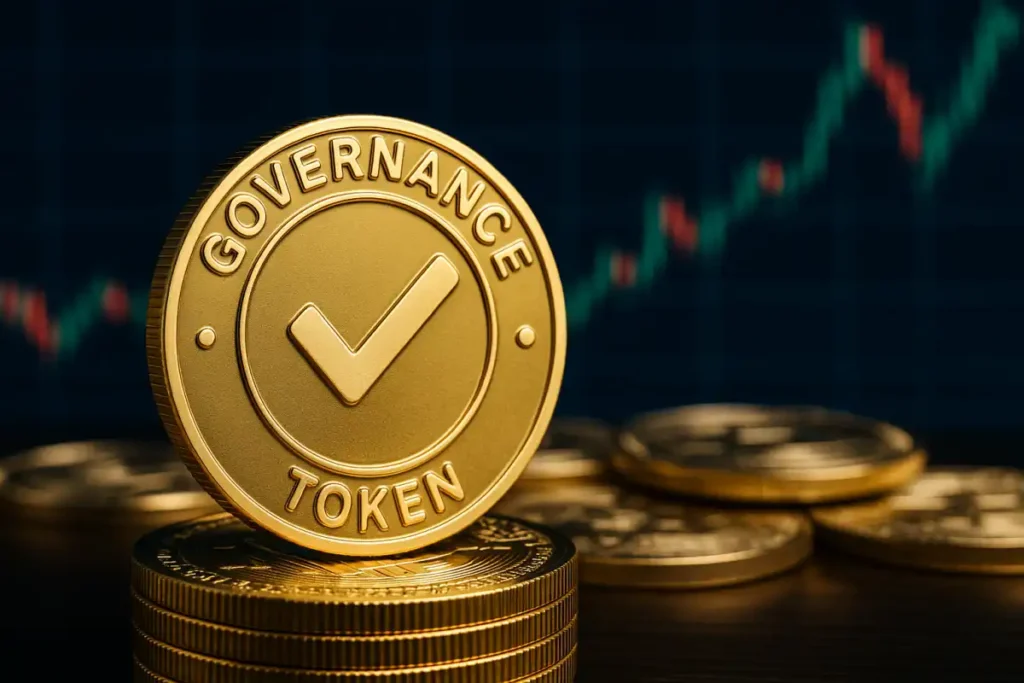
What Is a Governance Token? The Future of Decentralised Decision-Making in Blockchain
As blockchain technology evolves, it’s not only transforming how we transfer value, but also how decisions are made in digital communities. One of the most significant innovations in this space is the concept of the governance token. Governance tokens enable users to actively participate in the management and development of decentralised projects. In this article, we’ll explore what governance tokens are, how they work, their advantages and drawbacks, and how they are being used in leading blockchain ecosystems.
What Is a Governance Token?
A governance token is a type of cryptocurrency that grants holders the right to vote on key decisions within a blockchain project. These tokens are particularly common in DeFi (Decentralised Finance) and DAO (Decentralised Autonomous Organisation) systems.
Token holders can typically vote on:
- Project upgrades and proposals
- Allocation of treasury funds
- The addition of new features or assets
- Protocol parameter adjustments
In essence, holding a governance token means having a voice in the future direction of a blockchain project.




How Governance Tokens Work
Governance tokens are usually built on smart contract platforms like Ethereum. They allow decentralised communities to propose, debate, and vote on changes to the protocol.
Here’s a simplified version of the process:
- A member of the community or development team proposes a change (a proposal).
- The proposal is published for review.
- Token holders vote on whether to approve or reject the proposal.
- If a proposal receives majority support, the protocol executes the change.
Some systems use a one-token-one-vote model, while others use quadratic voting or time-weighted mechanisms to ensure more balanced influence.
Why Use Governance Tokens?
There are several reasons why governance tokens have become a popular choice for decentralised projects:
1. Decentralisation
Governance tokens align with the core principle of decentralisation by eliminating the need for central authorities or corporate boardrooms.
2. Community Engagement
Users who invest in a project gain not only financial benefits but also direct involvement in decision-making processes.
3. Transparency
All decisions and voting outcomes are recorded on the blockchain, ensuring full transparency and auditability.
Use Cases of Governance Tokens
Governance tokens are used in a wide range of scenarios, including:
- Protocol upgrades and forks
- Treasury management
- Developer funding approvals
- Minting or burning of tokens
- Strategic partnerships or integrations
In short, governance tokens allow communities to steer both operational and strategic aspects of a protocol.
Leading Governance Tokens in the Market
1. Uniswap (UNI)
Uniswap is a decentralised exchange on Ethereum. UNI token holders vote on protocol changes, fee structures, and treasury usage.
2. Compound (COMP)
COMP token holders can adjust interest rate models and risk parameters in the Compound lending protocol.
3. Aave (AAVE)
Aave allows token holders to vote on asset listings, borrowing limits, and liquidity incentive strategies.
4. MakerDAO (MKR)
MakerDAO governs the DAI stablecoin. MKR holders vote on risk management parameters and protocol upgrades.
Advantages of Governance Tokens
- Democratic Decision-Making – All holders have the right to propose and vote, fostering inclusivity.
- Incentivised Participation – Engaged users help secure the future of the protocol while potentially increasing their token’s value.
- Innovation Friendly – Governance can adapt protocols quickly to new opportunities or risks.
Challenges and Drawbacks
- Voter Apathy – Many token holders do not participate in votes, leading to low turnout and skewed outcomes.
- Plutocracy Risk – Wealthier participants with more tokens can dominate the governance process.
- Slow Decision-Making – Too much consensus-building can hinder urgent upgrades.
How to Acquire Governance Tokens
You can typically obtain governance tokens through:
- Purchasing on decentralised exchanges (e.g., Uniswap, SushiSwap, PancakeSwap)
- Providing liquidity or participating in staking programmes
- Earning airdrops for early or loyal community engagement
The Link Between Governance Tokens and DAOs
Governance tokens are often the backbone of DAOs — decentralised organisations that operate without traditional management structures. In a DAO, all rules, decisions, and funding allocations are controlled by smart contracts and voted on by token holders.
DAOs represent the next phase of Web3, and governance tokens are the key to their democratic, community-led architecture.
The Future of Governance Tokens
As Web3 matures, governance models will likely become more sophisticated, blending decentralised input with real-world efficiency. More protocols are expected to adopt governance tokens to ensure user loyalty and long-term project sustainability.
The growth of DAOs and tokenised communities suggests that governance tokens will become integral to the internet’s next era.
Conclusion
Governance tokens redefine how power is distributed in the digital age. They empower users to shape the tools they use and share in the value they create. Whether you’re an investor or an active community member, holding a governance token means holding influence.
If you’re ready to move beyond passive investing and into active participation, governance tokens are your gateway to the decentralised future.
























Comments are closed.