





Ethereum Validators Disrupted by Prysm Bug: What You Need to Know
Ethereum Validators Disrupted by Prysm Bug – Shortly after the Fusaka network upgrade, the Ethereum network experienced a sharp decline in validator participation due to a bug in the Prysm consensus client. Version v7.0.0 of the client generated outdated states while processing old attestations, a flaw highlighted by Prysm core developer Terence Tsao. This prevented some nodes from functioning correctly. As a temporary fix, developers recommended running the client with the “–disable-last-epoch-targets” flag.
At epoch 411,448, data from Beaconcha.in showed only 75% sync participation and 74.7% voting participation, marking a 25% drop in votes. While this remained just below the two-thirds threshold needed to maintain network finality, it raised concerns about potential disruptions to layer-2 bridges, rollup withdrawals, and exchange confirmations.
Network Recovery and Client Impact
By the time of writing, Ethereum had rebounded to nearly 99% voting participation and 97% sync participation, demonstrating a swift recovery. The drop in votes largely affected Prysm validators, whose share fell from 22.71% to 18%, reflecting the bug’s concentrated impact.
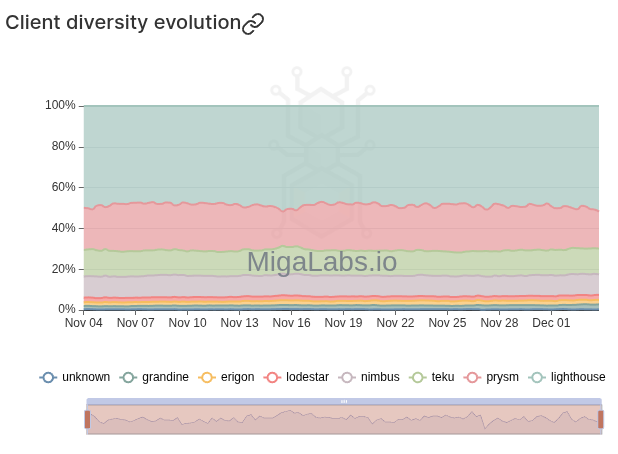
Previous incidents, such as the May 2023 loss of finality, underscore the risk: similar bugs in Prysm and Teku clients caused finality failures twice within 24 hours. At that time, Prysm ran on over two-thirds of consensus nodes, showing how a single client’s issues can threaten the network.





Client Diversity Remains a Concern
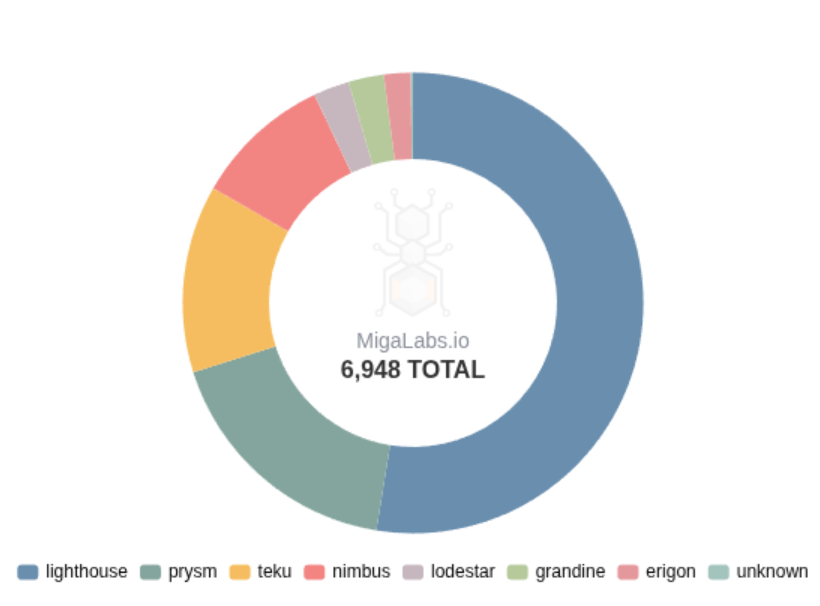
Despite improvements since 2022, Ethereum’s consensus client diversity is still insufficient. Current MigaLabs data indicates Lighthouse controls 52.55% of nodes, while Prysm holds 18%, a deterioration from pre-incident levels. Educator Anthony Sassano warned that “if Lighthouse had experienced the bug instead, the network would’ve lost finalization,” emphasizing the ongoing need for broader client distribution to safeguard Ethereum’s stability.


























Comments are closed.