



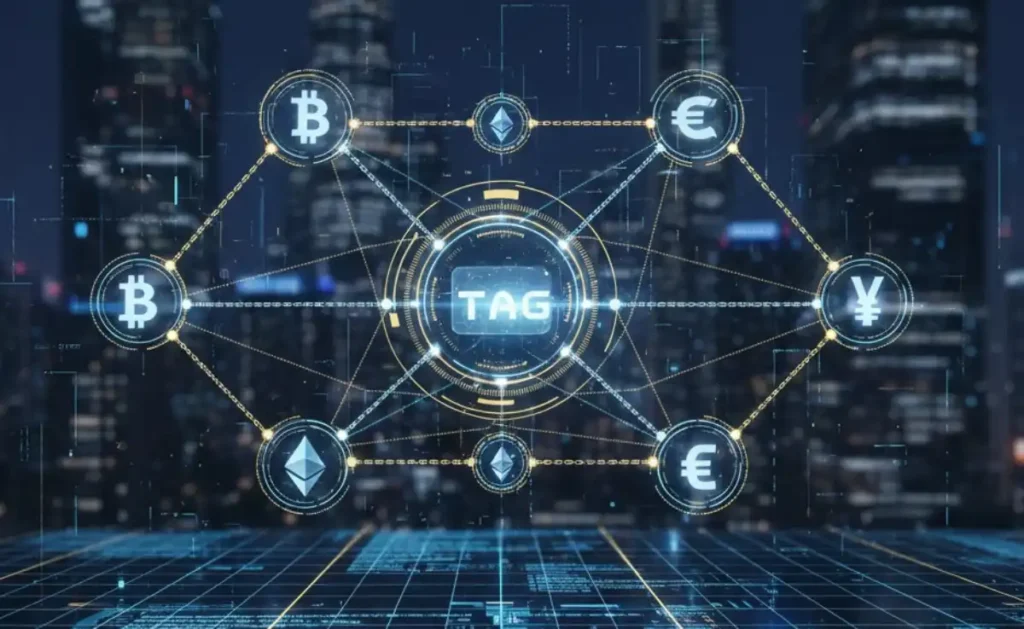

The cryptocurrency market is far more than just financial transactions; it is a rapidly deepening ecosystem built upon blockchain technology. Within this ecosystem, a new concept, protocol, or digital asset emerges every day. A vital part of this innovative structure is the Tagger (TAG) project, which has recently garnered significant attention. But what exactly is Tagger (TAG) in the crypto world, and what problems does it aim to solve?
Featured News Headlines
What is Tagger (TAG) at its Core?
While Tagger (TAG) is a term that may appear in several different contexts, in the cryptocurrency ecosystem, it generally refers to specific projects known as Tagger (TAG) or the Tag Protocol (TAG). The primary focus of these projects is centered on data management, labeling, and decentralized Artificial Intelligence (AI) platforms.
Specifically, according to one of its current and popular definitions, Tagger (TAG) is a blockchain-based decentralized AI data platform designed to address inefficiencies in the development of Artificial Intelligence (AI) applications. Tagger aims to fill the AI data gaps by facilitating the processes of data labeling, verification, and trading.
To better grasp this concept, it is important to differentiate it from the more general financial indicator “TAGGER,” which might refer to the market capitalization of a cryptocurrency’s circulating supply. Here, we will focus solely on the project.





Tagger’s (TAG) Objective and Core Innovation
The Tagger (TAG) project aims to solve a fundamental problem in the big data and Artificial Intelligence (AI) sectors: Access to quality, accurate, and labeled data. AI systems require impeccable datasets for training. Using traditional methods, the collection, labeling, and verification of this data is both expensive and time-consuming.
Core Innovations:
- Decentralized Workflows: Tagger disperses the data labeling and verification processes across a global network of participants, eliminating reliance on a single central entity. This speeds up the process and enhances transparency.
- Crowdsourced Labeling: The platform incentivizes and rewards individuals and experts for completing data labeling tasks. As a result, large datasets are processed quickly and efficiently.
- Blockchain-Based Ownership Tracking: One of the most significant innovations is the tracking of data ownership and usage rights on the blockchain. Data contributors receive rewards in TAG tokens for their labeling and verification work and may also be entitled to a share of the data’s future usage. This establishes an equitable revenue model for data producers and labelers.
This structure might also be part of a broader Tag Protocol vision, which allows even social media hashtags (tags) to be converted into Non-Fungible Tokens (NFTs), enabling users to monetize and own these digital assets. The core idea here is the function of adding value to digital interactions and data.
The Role and Utility of the TAG Token
At the heart of the Tagger ecosystem is its native cryptocurrency, the TAG token. This token is the lifeblood of the ecosystem and fulfills several fundamental functions:
- Reward Mechanism: All users who contribute to data labeling, verification, and platform security are rewarded with TAG tokens. This is a vital element that encourages network participation.
- Transaction Fuel: All transactions occurring within the platform—for example, accessing a dataset, data trading, or service usage—require the TAG token.
- Governance: In future stages, TAG holders may gain the right to vote on the project’s future and critical decisions. This strengthens the platform’s decentralization.
- Staking: Users can lock up their tokens to contribute to the network’s security and, in return, earn passive income.
Tagger’s (TAG) Significance in the Cryptocurrency Market
Projects like Tagger (TAG) demonstrate that cryptocurrency is moving beyond being merely a digital currency to becoming a comprehensive technology that offers solutions to real-world problems.
Contribution to the Digital Data Revolution:
- Transparency and Accuracy: The blockchain ensures that every step of the data labeling processes is immutable and transparent. This significantly enhances data quality, which is of critical importance in AI projects.
- Democratization of the Data Economy: It distributes the data power, which is often concentrated in the hands of major tech companies, to the individuals who contribute to the labeling process. This allows everyone to share in the data economy.
- Accelerating AI Development: By providing a supply of high-quality, quickly labeled data, it enables machine learning models to be trained much faster and more cost-effectively.
What to Know Before Investing in TAG?
Like any cryptocurrency, Tagger (TAG) is subject to market volatility and technological risks. Before making any investment decision, it is crucial to carefully review the project’s technical documentation (whitepaper) and evaluate its roadmap.
- Market Cap and Supply: A cryptocurrency’s market capitalization is calculated by multiplying its circulating supply by its current price. Regularly tracking Tagger’s (TAG) statistics is essential for understanding market movements.
- Exchange Listings: The exchanges where TAG is listed and its trading volume provide information about the project’s liquidity and popularity.
- Ecosystem Development: The size of the community behind the project, developer activity, and real-world partnerships are indicators of the project’s long-term success.
In conclusion, Tagger (TAG) stands out in the crypto world with an innovative and visionary approach that merges Artificial Intelligence with the blockchain. Thanks to its decentralized data labeling and ownership tracking, it holds the potential to play a significant role in the data-centric economy of the future.





























Comments are closed.