




Featured News Headlines
What is Radworks (RAD)?
The internet has become the most fundamental infrastructure of the modern world. However, it has gradually moved away from its initial ideal of decentralization and freedom, evolving into centralized structures controlled by large tech corporations (Web2 giants). This shift has brought with it risks of censorship, data security concerns, and issues of ownership over developers’ work.
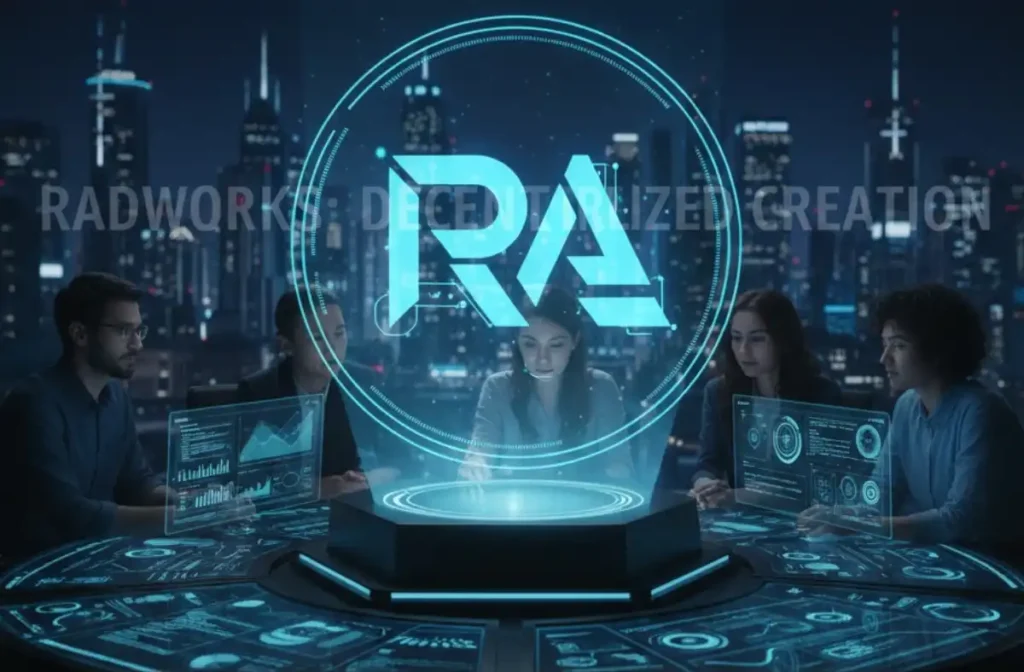
It is precisely at this juncture that Radworks (RAD) steps onto the stage. Radworks is a community-driven organization operating on Web3 principles that stands against this centralized trend. Its core mission is to finance and support the technologies necessary to build a more free, resilient, and decentralized internet.
So, what exactly is Radworks, how does it operate, and why does it hold such a significant position in the Web3 world? In this detailed guide, we will deeply explore all the layers of Radworks, its underlying technologies, the role of its native token RAD, and the future potential of the ecosystem.
The Core Definition and Philosophy of Radworks
What is Radworks?
Radworks is a Decentralized Autonomous Organization (DAO) ecosystem that finances and develops innovative, permissionless, and decentralized technologies supporting a freer internet. Unlike the traditional corporate model, Radworks makes its decisions through the votes of its community members, encouraging participation from everyone in its governance.





The organization’s mission is to create the tools and infrastructure that enable developers and creators in the Web3 space to share and collaborate on their work without censorship concerns, ensuring that ownership rights remain with them.
The Need for Decentralization
The existence of Radworks stems from the fundamental problems of the current internet:
- Centralized Control: Popular code-hosting platforms, such as GitHub, are under the control of a single company. This carries the risk of projects being censored or removed based on that company’s policies.
- Data Ownership: Users and developers are often forced to transfer the real ownership of the data and code they produce to centralized platforms.
- Funding Challenges: Open-source projects often struggle to find a sustainable funding model.
Radworks aims to offer peer-to-peer (P2P) and blockchain-based solutions to these problems through the projects it supports.
The Core Building Blocks of the Radworks Ecosystem
Radworks functions as an umbrella organization, housing multiple projects that serve its mission of decentralization. The most prominent of these projects are:
Radicle: The Decentralized Code Collaboration Network
Radicle, the flagship project of Radworks, can be described as a decentralized alternative to GitHub.
- Technology: Radicle is built upon Git, the world’s most widely used version control system. However, instead of using a central server, it pairs code repositories directly between developers’ computers (P2P).
- How it Works: Developers share their code via a specific replication protocol called Radicle Link. In this way, code is not hosted on a single server but is distributed across multiple nodes in the network. This architecture ensures superior resistance to censorship. Deleting a code repository would require deleting copies across the entire network, which is virtually impossible.
- Ownership: Developers maintain complete sovereignty over their code and can manage their projects in a permissionless environment.
Drips: Peer-to-Peer Funding and Streaming Solution
Addressing the major challenge of sustainable funding for open-source projects, Drips is another vital component of the Radworks ecosystem.
- Purpose: Drips enables developers and creators to receive their income peer-to-peer (P2P), in real-time, and through a continuous streaming model.
- Financial Flow: Users can continuously stream their funds in small increments (drips) to support projects or developers. This creates a more sustainable and predictable income stream than traditional one-off donation models.
- Use Case: It offers an innovative financing mechanism not just for coding projects but also for supporting digital content creators and communities in general.
The RAD Token and the Governance Model
The lifeblood of the Radworks ecosystem and the key to its governance mechanism is its native cryptocurrency, the RAD token.
The Roles of the RAD Token
RAD is an ERC-20 standard token running on the Ethereum blockchain, and it has a multi-layered role within the ecosystem:
- Governance: RAD holders participate in the fundamental decision-making processes of the Radworks DAO. This grants them the right to vote on critical matters such as where funds are allocated, whether new projects should be admitted to the ecosystem, or protocol upgrades. This makes Radworks a truly community-governed entity.
- Network Security and Incentivisation: The token is used to incentivize and reward the nodes that contribute to the security of the Radicle network.
- Fees and Discounts: It can be used as a means of payment for certain protocol services, and token holders can benefit from discounts on these services.
- Proof of Ownership: RAD is not just a currency but also digital proof that you are part of the Radworks ecosystem and have a say in the project’s future.
Radworks DAO: Decentralized Decision-Making
Radworks embraces decentralization not only in its technology but also in its organizational structure. The Radworks DAO is the body through which the entire ecosystem is governed.
- The DAO’s Treasury is managed by the decisions of RAD token holders.
- An on-chain governance mechanism (for example, structures similar to Compound-Governor) is utilized. This ensures that the voting and decision-making processes are transparent, immutable, and open to scrutiny by everyone.
- This model prevents any single central authority from making decisions unilaterally, making it difficult for the project to deviate from its founding principles.
Advantages of Radworks and Its Position in Web3
Radworks has become a significant part of the Web3 vision with the decentralized solutions it provides.
Censorship-Resistant Code Development
Its greatest advantage is that projects cannot be censored or removed by central authorities. Radicle grants developers sovereign data ownership. Since the code is distributed across the P2P network and not on a single server, developers can be confident that their work will not be lost or closed off by a corporate decision.
Developer-Focused Funding
The Drips protocol ensures that open-source coders can receive sustainable compensation for their labour. This is vital for the emergence of higher-quality and continuously developed open-source software. Radworks thus builds a decentralized model for the creator economy.
Security and Transparency
Built upon the security and immutability provided by the Ethereum blockchain, Radworks protocols offer a high level of transparency. Furthermore, the codebase itself is open-source, which means it is open to community scrutiny and can be continuously improved.
The Future and Potential of Radworks (RAD)
The future of Radworks is directly linked to the overall growth of the Web3 ecosystem and the increasing demand for decentralized solutions.
Expanding Ecosystem
Radworks is not limited to just Radicle and Drips; it has the potential to continuously finance and incubate new projects that serve the vision of a freer internet. The DAO structure allows for rapid support of new and innovative ideas.
Institutional Adoption
The need for decentralized and censorship-resistant code hosting could eventually become critical even for large corporations and governments. Radworks offers one of the most reliable and technically robust solutions to this need. Its use of a familiar infrastructure like Git makes the transition easy for developers.
The Value of the RAD Token
The value of the RAD token is largely dependent on the network’s usage and its importance in governance. The more developers adopt and use Radicle and Drips, the more the revenue from network fees will increase, generating more value for token holders. Active participation in governance also adds a functional value to the token, beyond mere speculation.
The Movement for a Free Internet
Radworks (RAD) is not just another cryptocurrency project; it is the embodiment of a philosophical struggle for the future of the internet. By establishing a decentralized, censorship-resistant, and community-governed coding and funding ecosystem, it allows developers and creators to reclaim ownership of their work.
If you believe in decentralization, open source, and the free spirit of the internet, the mission of Radworks and the innovative solutions it offers represent one of the brightest and most important endeavours in the Web3 world. Owning the RAD token means being part of this movement and having a say in shaping the free future of the internet. From developer tools to financial streaming, Radworks is meticulously weaving the infrastructure of a free internet.




























Comments are closed.