




Featured News Headlines
- 1 What is Port Finance (PORT)?
- 2 A New Lease of Life for Decentralised Finance (DeFi): Why Port Finance?
- 3 The Core Features That Make Port Finance Unique
- 4 The PORT Token: Governance and Value
- 5 How Port Finance Works: Step-by-Step Operation
- 6 Port Finance and the Future Potential in the Solana DeFi Ecosystem
What is Port Finance (PORT)?
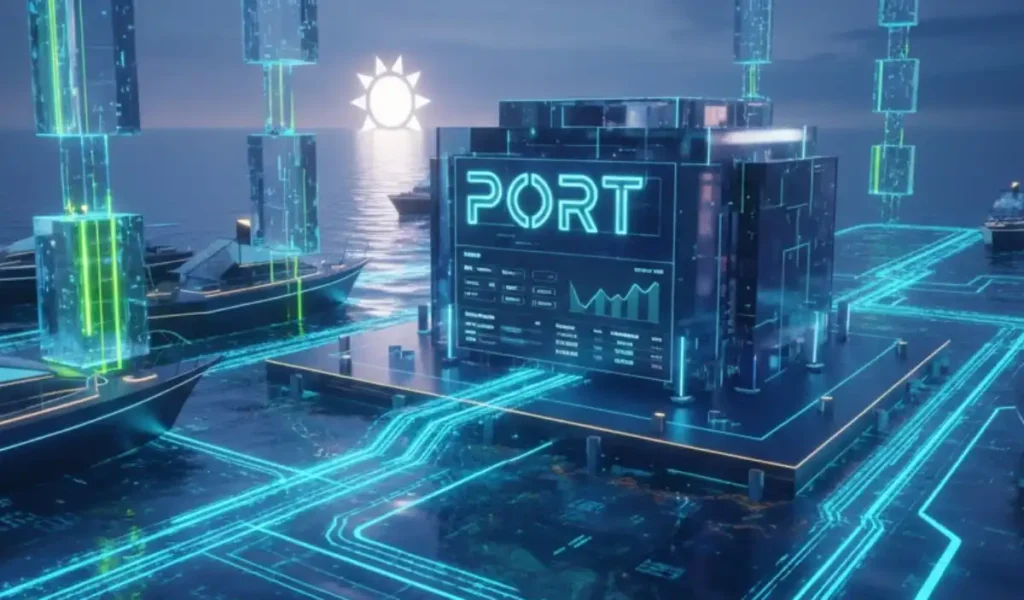
Port Finance (PORT) stands as one of the most remarkable and critical components within the rapidly expanding Solana blockchain ecosystem. As part of the Decentralised Finance (DeFi) movement, which is fundamentally changing access to financial services in the crypto world, Port Finance is a revolutionary protocol that enables users to lend and borrow crypto assets. In this guide, we will delve into what Port Finance is, its crucial role on Solana, its unique features, and the inherent value of the PORT token.
A New Lease of Life for Decentralised Finance (DeFi): Why Port Finance?
The vision of Decentralised Finance (DeFi) is to eliminate intermediaries from the traditional banking system, making financial services accessible to everyone. Lending and borrowing form the core pillars of this ecosystem. While Ethereum pioneered this space, it has grappled with issues like high transaction fees (gas) and network congestion. This is precisely where Port Finance and its host blockchain, Solana, step in.
Solana offers a radical solution to the scalability problems faced by DeFi, boasting the capacity to handle thousands of transactions per second and providing nearly zero transaction costs. Port Finance leverages this technical prowess to promise users a lending and borrowing experience that is significantly faster, cheaper, and more efficient than traditional DeFi platforms.
Key Concepts: What is Port Finance?
Simply put, Port Finance is a non-custodial money market protocol operating on the Solana blockchain.





- Non-Custodial: Users never relinquish control of their assets to the Protocol. The funds remain in their wallets and only interact through smart contracts.
- Money Market Protocol: Users can deposit crypto assets (e.g., SOL, USDC, mSOL) into the protocol to earn interest (becoming lenders) or use these assets as collateral to borrow (becoming borrowers).
- Solana Native: It has been specifically designed to take full advantage of Solana’s high performance.
Port Finance’s primary objective is to allow Solana users to put their idle crypto assets to work and offer those needing liquidity the opportunity to borrow under favourable conditions.
The Core Features That Make Port Finance Unique
Port Finance is more than just a lending platform; it possesses several critical features that allow it to stand out in the competition:
1. Dynamic Interest Rate Model
The protocol dynamically adjusts interest rates based on the supply and demand within each asset pool. When liquidity in a pool decreases (meaning borrowing demand increases), interest rates rise. This mechanism attracts new lenders (liquidity providers) to the system, thereby restoring balance. Conversely, when rates fall, borrowing becomes more appealing. This automation is key to maintaining market efficiency.
2. Interest Yield for Liquidity Providers
Users who deposit supported cryptocurrencies (such as SOL, USDC, USDT, BTC) into Port Finance earn interest on their deposited assets. This interest is derived from the interest paid by borrowers and rewards the act of providing liquidity to the protocol.
3. Leveraged Borrowing
Port Finance enables the creation of leveraged positions by allowing the borrowed asset to be used again as collateral. For instance, a user can collateralise SOL, borrow USDC, and then use that USDC to buy more SOL, thus increasing their collateral. This feature offers experienced investors the potential to maximise capital efficiency.
4. Deep Integration with the Solana Ecosystem
Port Finance accepts not only basic crypto assets but also Liquid Staking Derivatives native to Solana (such as stSOL from Lido or mSOL from Marinade Finance) as collateral. This integration allows users to gain borrowing power without forfeiting their staking yields (as the derivatives already accrue staking rewards). This represents one of the most powerful innovations within Solana DeFi.
The PORT Token: Governance and Value
The native token of the Port Finance protocol is PORT. PORT is not merely a speculative asset but forms the foundation of the protocol’s decentralised governance structure.
Governance
PORT holders have a say in the protocol’s future. Critical decisions, such as changes to interest rate models, the addition of new collateral types, liquidation thresholds, and fee structures, are made through votes cast by PORT holders. This signifies that Port Finance is a truly decentralised and community-driven project. The token ensures that the project is governed not only by code but also by the will of its users.
Value Flow
The value of the PORT token is directly tied to the protocol’s success. The more liquidity the protocol attracts and the more lending/borrowing transactions are executed, the greater the network fees and, consequently, the potential demand for PORT. As is the case in some DeFi protocols, mechanisms allowing PORT token holders to benefit from a portion of protocol revenues may be implemented in the future through community voting.
How Port Finance Works: Step-by-Step Operation
Using Port Finance is much simpler than applying for a loan at a traditional bank and involves a few fundamental steps:
1. Lending (Supplying)
- Wallet Connection: A Solana-compatible wallet (e.g., Phantom, Sollet) is connected to the protocol.
- Asset Deposit: The user selects the asset they wish to lend (e.g., USDC) and deposits it into the protocol.
- Earning Interest: The moment the asset is deposited, the user automatically becomes a lender and starts earning interest based on the dynamic interest rate. The user receives pTokens (e.g., pUSDC) which represent their deposited amount plus accrued interest.
2. Borrowing (With Collateral)
- Collateral Deposit: To borrow, the user deposits an accepted asset (e.g., SOL) as collateral into the protocol. The protocol determines a borrowing limit based on the collateral value (usually via a Collateral Ratio).
- Borrowing: The user selects and borrows the desired asset (e.g., USDC), ensuring they do not exceed their borrowing limit.
- Repayment and Liquidation Risk: Interest begins to accrue on the user’s loan. If the value of the collateral drops and the loan-to-value ratio crosses a critical threshold (liquidation threshold), the user’s collateral may be automatically sold (liquidated) to repay the debt. This risk is an inherent part of borrowing in DeFi and necessitates continuous monitoring of one’s collateral by the borrower.
Port Finance and the Future Potential in the Solana DeFi Ecosystem
Port Finance is not only offering lending against existing assets; it also has the potential to integrate new financial instruments into the protocol, such as derivatives, fixed-rate lending, and insurance mechanisms. Solana’s scalability allows for the realistic implementation of such complex and high-frequency financial operations.
Key Takeaways:
- Speed and Low Cost: Thanks to Solana’s architecture, Port Finance is faster and cheaper than its competitors.
- Deep Liquidity: Its integration with other projects on Solana (especially liquid staking protocols like Marinade and Lido) gives it the potential to attract high liquidity.
- Governance Power: The PORT token grants the community the power to shape the project’s future.
In conclusion, Port Finance is a pioneering project that brings one of the most essential services of Decentralised Finance—money markets—to Solana’s high-performance infrastructure. By offering users the ability to turn their assets into a passive income stream and borrow with high capital efficiency, it is establishing itself as a vital part of the future financial system. Every investor looking to participate in the DeFi world should closely examine the opportunities presented by Port Finance to truly grasp the potential of the Solana ecosystem.

























Comments are closed.