




Featured News Headlines
- 1 What is Spark (SPK)?
- 2 Introduction to the Spark (SPK) Protocol
- 3 How the Spark Protocol Works: Architecture and Products
- 4 The Strong Tie to Sky (MakerDAO)
- 5 Functionality and Economics (Tokenomics) of the Spark (SPK) Token
- 6 Formerly Spark: The Context of the Flare Network (FLR)
- 7 Spark’s Position in the DeFi Ecosystem and Future Potential
- 8 Why Spark (SPK) Matters?
What is Spark (SPK)?
The cryptocurrency and Decentralized Finance (DeFi) ecosystem has witnessed incredible growth in recent years. In this dynamic environment, innovative projects aiming to enhance efficiency, liquidity, and stability are gaining importance daily. This is precisely where an ambitious player steps onto the stage, blending the established structure of traditional finance with a decentralized infrastructure: Spark (SPK).
The Spark Protocol emerged as part of the Sky ecosystem (formerly known as MakerDAO), one of the largest and most foundational DeFi projects in the crypto market. But what exactly does this next-generation DeFi platform aim to achieve, and what possibilities does its native token, SPK, unlock?
In this comprehensive guide, you will find answers to critical questions such as: What is Spark (SPK)?, how does it operate, what innovations does it bring to the DeFi ecosystem, what is its relationship with Sky (MakerDAO), and what opportunities does it offer to investors?
Introduction to the Spark (SPK) Protocol
A. What is Spark (SPK)?
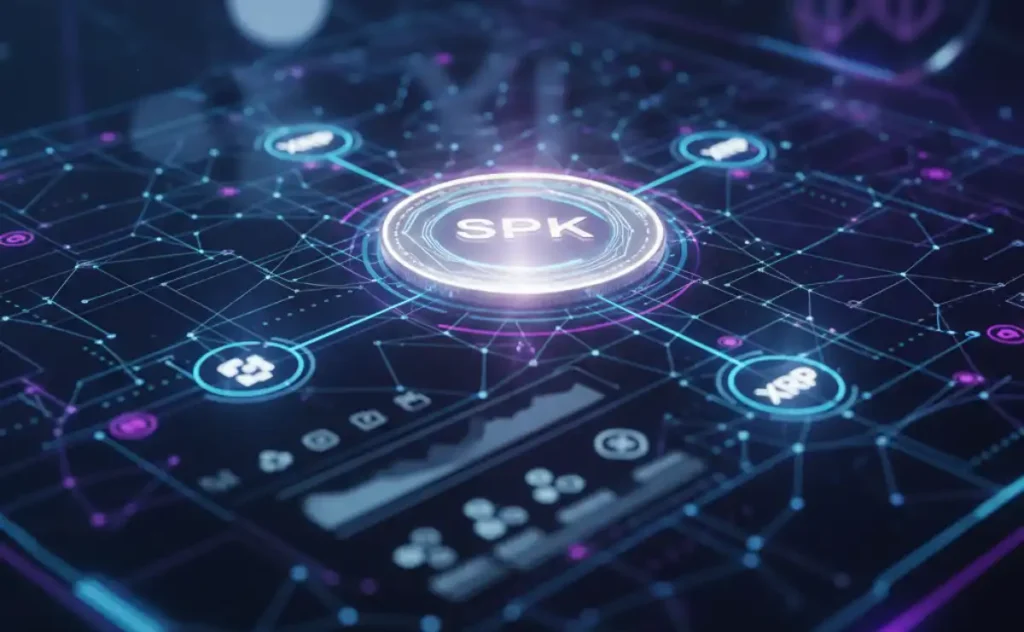
Spark (SPK) is a stablecoin-focused, multi-chain, and full-stack Decentralized Finance (DeFi) protocol designed by the Sky ecosystem. Essentially, it acts as a capital allocator, aiming to optimise liquidity and create stable, optimised returns by channeling large-scale, idle stablecoin capital (especially Sky’s reserves) into broader DeFi markets.





SPK is the native governance and staking token of this protocol. SPK holders have a say in vital matters such as the protocol’s future, risk parameters, fee structures, and cross-chain strategies, thus forming the backbone of the decentralized decision-making mechanism.
B. The Core Value Proposition and Mission
The emergence of Spark addresses three fundamental challenges faced by the DeFi market:
- Fragmented Liquidity: Stablecoin capital is scattered across various protocols and chains.
- Idle Capital: Billions of dollars in stablecoin reserves held in large ecosystems like Sky (MakerDAO) are not being utilised efficiently enough.
- Unstable Yield Rates: High volatility in interest rates within DeFi lending markets.
To solve these issues, Spark leverages its access to Sky’s massive stablecoin reserves (particularly stablecoins like USDS) and automatically and optimally routes this capital to liquidity pools like Aave and Morpho, and even to tokenised traditional finance products (Real-World Assets – RWA), such as BlackRock’s BUIDL fund.
How the Spark Protocol Works: Architecture and Products
Spark’s operation is structured around three main components. These components manage capital flow, yield optimisation, and liquidity management in a decentralized manner.
A. SparkLend: The Money Market Protocol
SparkLend is the core lending and borrowing market within the Spark ecosystem.
- Lending: Users can deposit various crypto assets (primarily stablecoins) into SparkLend pools to earn interest income.
- Borrowing: Users can borrow crypto assets from these pools by providing collateral (locking up their crypto holdings).
- Sky Integration: Because SparkLend directly integrates Sky’s liquidity, it offers much deeper and more stable liquidity compared to other independent lending protocols. This translates to less slippage risk for large volume transactions.
B. Spark Liquidity Layer (SLL)
The SLL is the intelligent engine and yield optimisation core of the Spark Protocol.
- Automated Capital Allocation: The SLL’s primary task is to automatically distribute Sky’s stablecoin reserves and other liquidity within the protocol across multiple chains and protocols to secure the highest yield.
- Yield Optimisation: Instead of relying solely on interest rates in SparkLend, the SLL continuously analyses lending markets and yield farms across various DeFi protocols like Aave, Curve, and Morpho. It also diversifies yield sources by directing funds to RWA solutions that tokenize traditional financial assets.
- Cross-Chain Capability: Initially developed as an ERC-20 token on Ethereum, Spark expands to Layer-2 solutions like Arbitrum and Base, enabling it to route liquidity across multiple chains.
C. The SPK Token and Governance
The SPK token is not merely a financial asset of the protocol, but also the key to its decentralized control mechanism.
- Governance: SPK holders have the right to vote on the protocol’s core parameters (lending/borrowing interest rates, collateralisation ratios, risk limits) and future strategic decisions (expansion to new chains, new asset integration, new yield strategies). This means Spark has a Decentralized Autonomous Organisation (DAO) structure, governed entirely by the community.
- Staking and Security: SPK is used in staking mechanisms to secure the protocol’s liquidity layer and cross-chain operations. SPK stakers contribute to the network’s integrity by participating in validation processes and, in return, can earn a share of protocol fees. This mechanism creates an alignment of interest between token holders and the protocol’s long-term success.
The Strong Tie to Sky (MakerDAO)
One of Spark’s most distinctive features is its genesis from the established and multi-billion-dollar powerhouse that is the Sky ecosystem (formerly MakerDAO). This integration grants Spark unique advantages:
- Access to Deep Liquidity: Spark benefits from direct access to Sky’s massive reserves of USDS (or equivalent stablecoins). This allows it to form one of the deepest liquidity pools in the market, capable of managing institutional-level fund flows.
- Institutional Trust and Reputation: Inheriting the stability and reputation forged over many years by Sky, Spark commands a high level of credibility among users and investors.
- Synergistic Growth: Spark assumes the role of a “capital allocator” for Sky, generating yield from idle capital and expanding the utility of the USDS stablecoin within the ecosystem. This creates a powerful, mutually beneficial synergy between the two platforms.
Functionality and Economics (Tokenomics) of the Spark (SPK) Token
SPK is not just an investment tool; it is a vital part of the protocol itself.
A. Governance
As mentioned earlier, SPK’s most critical utility is governance. Token holders have a direct influence on the protocol’s future, ensuring that Spark evolves in a decentralized and community-aligned manner.
B. Staking and Security
SPK is staked to manage risks within the protocol and secure the liquidity layer. Stakers contribute to the integrity of the network by participating in validation processes and, in return, may receive a share of the protocol’s fees.
C. Fee Structures and Utility Expansion
The revenue generated by the protocol (from lending, cross-chain fees, etc.) can be used to reward and incentivise SPK holders. The roadmap includes plans to expand SPK’s utility as new products are launched; this could potentially involve new staking mechanisms or innovative reward structures that align long-term incentives for all ecosystem participants.
Formerly Spark: The Context of the Flare Network (FLR)
The term “Spark” was also used for a period to refer to the native token of the Flare Network. Flare had initially announced its token would be launched under the name Spark Token (or SPARK).
- Current Name: The native token of the Flare Network was later rebranded to Flare (FLR).
- Purpose: Flare Network is a Layer-1 blockchain designed to bring smart contract functionality to cryptocurrencies that do not natively support them, most notably XRP.
- XRP Airdrop: FLR (formerly Spark) gained widespread recognition for its airdrop distribution to XRP (Ripple) holders in December 2020. This airdrop aimed to onboard the XRP community into the Flare ecosystem.
- FLR Functionality: Today, FLR is used on the Flare network for network governance, staking, data provision (via the Flare Time Series Oracle – FTSO), and spam prevention.
In Summary: The Spark (SPK) most commonly discussed in the market today, which is emerging as a DeFi protocol, is the product of the Sky (MakerDAO) ecosystem. The Flare Network’s token is now known as FLR.
Spark’s Position in the DeFi Ecosystem and Future Potential
Spark operates in a competitive market for DeFi lending and liquidity optimisation. However, its access to the multi-billion-dollar liquidity of Sky (MakerDAO) is its strongest differentiator.
A. Competitive Advantages
- Integrated Deep Liquidity: Direct access to Sky’s reserves ensures institutional-scale liquidity and stable interest rates.
- RWA-Focused Strategy: The ability to channel funds into traditional financial assets (RWA) diversifies the sources of yield, reducing reliance solely on the crypto lending market and offering a more stable, real-world backed return potential.
- Cross-Chain Flexibility: The capacity to optimise liquidity across multiple blockchains prepares Spark for the future of a multi-chain DeFi ecosystem.
B. Future Potential
Spark’s roadmap is focused on increasing token utility and expanding its reach to more chains. The growing global stablecoin liquidity and rising institutional interest in DeFi further amplify Spark’s potential. Its specific focus on RWA integration positions Spark as a leader not just within crypto but across the broader financial landscape, by bridging traditional finance with decentralised protocols.
Why Spark (SPK) Matters?
Spark (SPK) is more than just a money market protocol; it functions as an intelligent capital allocation engine for the future of Decentralized Finance. Being backed by Sky (MakerDAO), one of the largest and most trusted ecosystems in the crypto world, has provided it with deep liquidity, institutional credibility, and a solid technological foundation.
The SPK token empowers its holders with active roles in protocol governance and participation in security mechanisms, making Spark a truly decentralized and community-driven platform. With its mission to optimise liquidity, stabilise yields, and integrate with traditional financial assets, Spark is poised to play a significant role in shaping the global financial system in the coming years.
For every investor entering the crypto market or technology enthusiast seeking to maximise the efficiency of their DeFi holdings, Spark is a strategic project that warrants close attention.

























Comments are closed.