




Featured News Headlines
- 1 What is an Initial DEX Offering (IDO)?
- 2 The Rise of Decentralized Finance (DeFi) and the Birth of IDOs
- 3 Why Have IDOs Become So Popular?
- 4 How Does the IDO Process Work? A Step-by-Step Guide
- 5 Key Differences Between ICO, IEO, and IDO
- 6 What to Consider Before Investing in IDOs
- 7 What Does the Future Hold for IDOs?
What is an Initial DEX Offering (IDO)?
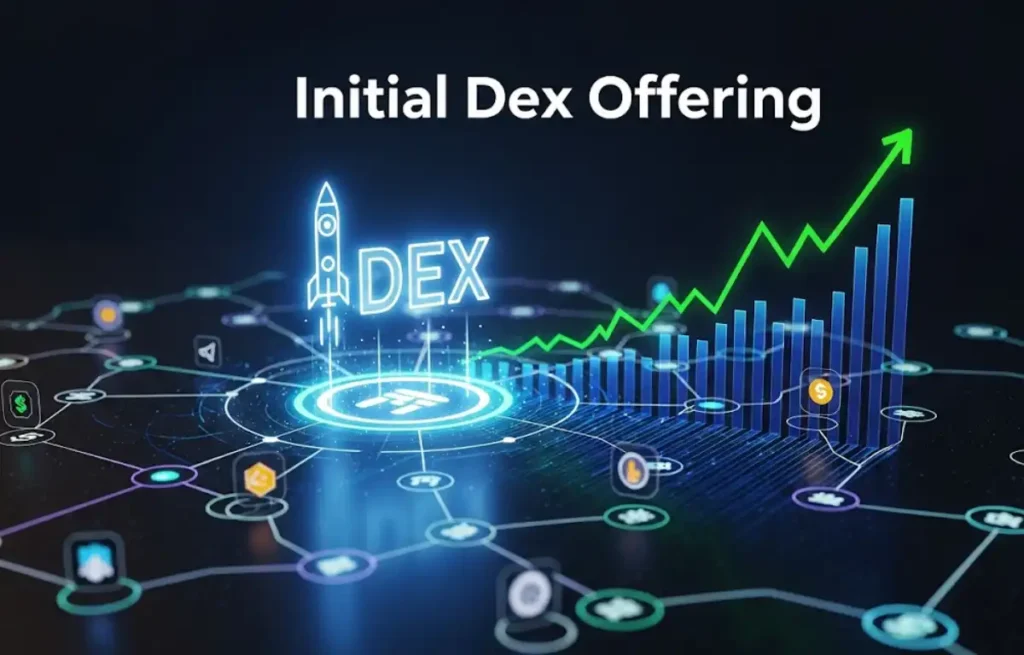
In the fast-paced world of cryptocurrencies, the methods new projects use to introduce themselves and raise funds are constantly evolving. While ICOs (Initial Coin Offerings) once dominated the space, a new model has emerged with the rise of decentralization: the Initial DEX Offering, or simply IDO. So, what exactly does this concept mean? Why has it become so popular, and how does it differ from traditional methods? This guide aims to be a comprehensive resource, delving deep into IDOs for both newcomers and experienced investors.
The Rise of Decentralized Finance (DeFi) and the Birth of IDOs
Undoubtedly, one of the most significant trends in the crypto world is the Decentralized Finance (DeFi) movement. Aiming to remove traditional financial intermediaries (banks, exchanges, etc.), DeFi creates a transparent and permissionless financial ecosystem that operates through smart contracts. The backbone of this ecosystem is Decentralized Exchanges (DEXs).
DEXs allow users to buy and sell crypto assets directly from their wallets. Without any intermediaries, transactions occur directly on the blockchain. This structure enhances the security of funds while giving users full control. This is precisely where IDOs came into the picture. A new project using a decentralized exchange platform to conduct the first public sale of its tokens is called an Initial DEX Offering (IDO).
This means a project is offering its tokens for sale for the first time via a decentralized platform. Unlike ICOs, IDOs are managed directly through smart contracts, without a central authority or intermediary.





Why Have IDOs Become So Popular?
The popularity of IDOs stems from several key advantages:
1. Lower Costs and High Accessibility: Organizing an IDO is significantly less expensive compared to ICOs. A traditional IPO or ICO requires high costs for legal advice, marketing, and listing fees. IDOs, however, substantially reduce these expenses with the help of pre-written smart contracts. Furthermore, their global accessibility allows investors from all over the world to invest in these projects without any geographical restrictions.
2. Instant Liquidity and Trading Advantage: When an IDO is completed, the tokens are immediately placed in a liquidity pool. This means investors can start buying and selling their tokens right away. With ICOs, there could be long waiting periods before tokens were listed on an exchange. IDOs eliminate this waiting period, providing great flexibility to investors. The project team adds a portion of the funds raised to a liquidity pool to ensure the token’s liquidity.
3. A More Secure and Transparent Environment: Smart contracts automate and make every step of the IDO process transparent. These contracts manage token distribution and fund collection according to pre-determined rules. This minimizes the risk of human error or malicious interference. Anyone can review the transaction history and the smart contract’s code on the blockchain.
4. Low Entry Barrier and Fair Participation: Many IDO platforms offer low entry barriers for participation. It is often enough to hold a certain amount of the platform’s tokens or complete specific tasks. This allows small investors to invest in major projects at an early stage. In addition, many IDO platforms use mechanisms like a tier system or a lottery to balance excessive demand. These systems make it difficult for large investors (whales) to acquire all the tokens, aiming to make participation fairer.
How Does the IDO Process Work? A Step-by-Step Guide
The process for an investor to participate in an IDO generally includes these steps:
Step 1: Choose an IDO Platform First, you need to select an IDO platform. Popular platforms on the market include names like DAO Maker, Polkastarter, TrustSwap, BSCPad, and GameFi. Each platform has its unique rules and participation requirements.
Step 2: Review Participation Requirements Carefully read the participation requirements of the platform you’ve chosen. These requirements often necessitate holding (staking) the platform’s native token in your wallet for a specific period. For example, to participate in an IDO on TrustSwap, you need to hold SWAP tokens. Platforms typically offer different tiers for different investment amounts.
Step 3: Prepare and Connect Your Wallet To participate in an IDO, you’ll need a popular Web3 wallet like MetaMask. After setting up this wallet, you will need to hold the native token of the network where the IDO will take place (e.g., ETH, BNB, SOL).
Step 4: Whitelist Application Many IDOs run a “whitelist” process to limit participation. In this process, investors fill out a form with their name, wallet address, and other necessary information. Those who qualify for the whitelist earn the right to a lottery or an allocation. Be careful about fake websites during this stage.
Step 5: Participate in the Token Sale On the specified day and time, investors who have been accepted into the whitelist participate in the token sale. This process usually happens through the platform’s interface. Investors can purchase tokens up to their predetermined maximum allocation amount.
Step 6: Token Distribution and Liquidity Once the IDO is complete, the tokens you purchased are automatically sent to your wallet. This process is managed by the smart contract. Simultaneously, with the liquidity provided by the project team, the token begins trading on the DEX.
Key Differences Between ICO, IEO, and IDO
These three models are methods for a new crypto project to raise funds, but there are significant differences between them:
| Features | Initial Coin Offering (ICO) | Initial Exchange Offering (IEO) | Initial DEX Offering (IDO) |
| Platform | Project’s Own Website | Centralized Exchange (Binance, OKX) | Decentralized Exchange (Uniswap, PancakeSwap) |
| Intermediary | None | Centralized Exchange | None |
| Control | Project Team | Audited by the Exchange | Automated by Smart Contract |
| Security | Low – High Scam Risk | High – Strict Auditing by the Exchange | High – Smart Contract Transparency |
| Liquidity | Acquired After ICO | Instant Exchange Listing | Instant DEX Liquidity Pool |
| Participation | Mostly Whitelist and Fund Transfer | Exchange Account Requirement | Token Staking and Whitelist |
- ICO (Initial Coin Offering): Popular in the 2017-2018 period, this model involved projects raising funds via their own websites. It eventually lost popularity due to high scam risk and a lack of investor protection.
- IEO (Initial Exchange Offering): It emerged as a solution to the insecure environment of ICOs. The project handed over the fundraising and token sale process to a centralized exchange (Binance, Huobi, etc.). The exchange would vet the project and list it, providing more trust to investors. However, it was criticized for high listing fees and its centralized structure.
- IDO (Initial DEX Offering): In line with the spirit of DeFi, it offers a fully decentralized structure. Trust is based on the transparency of smart contracts rather than a central authority. This model has become the most widely adopted method within the crypto community.
What to Consider Before Investing in IDOs
While IDOs offer attractive potential returns, they also involve high risk. To invest wisely, you should pay attention to the following points:
1. Research the Project Team: Who is the team behind the project? Have they successfully completed projects before? Check the professional backgrounds and experience of the team members. It is generally safer to avoid anonymous teams.
2. Understand the Project’s Goal and Roadmap: What problem does the project aim to solve? Does it offer a solution to a real-world problem? Read the whitepaper and thoroughly understand the project’s goal, technology, and roadmap. Avoid vague or overly ambitious promises.
3. Examine the Tokenomics: What is the total supply, circulating supply, locked tokens, and distribution plan? Is it inflationary or deflationary? What are the token’s use cases (utility)? Tokenomics are critical for the project’s long-term success.
4. Evaluate the Community and Marketing Activities: Follow the project’s social media channels (Twitter, Telegram, Discord). How active and engaged is the community? How transparently does the project team communicate with the community? A vibrant and supportive community is a positive sign for the project’s future.
5. Consider the Risk of Rug Pulls: Even though IDOs are generally safer, they still carry the risk of scams. A rug pull is when a project team disappears with the funds after the token sale. To mitigate this risk, check how long the liquidity pools are locked (locked liquidity). Reputable platforms provide more transparent information on this matter.
What Does the Future Hold for IDOs?
IDOs are seen as the future of crypto fundraising. The growing interest in decentralization and the expansion of the DeFi ecosystem will lead to further development of this model. Next-generation IDO platforms are constantly developing new mechanisms to provide greater security, fairness, and efficiency.
In the future, it is anticipated that IDOs will not just be about token sales but will also offer an opportunity to build a new community and contribute to a project’s governance at an early stage. This model, which democratizes project financing, will continue to be a strong alternative to traditional capital markets. However, as always, the most important rule in the crypto world is to do your own research (DYOR). While IDOs can offer potentially large gains, you must remember that this potential comes with high risk. Carefully evaluating these risks in every investment decision is vital for your financial security.




























Comments are closed.