




Featured News Headlines
Nvidia Stock – Nvidia Prepares for Q2 Earnings as AI Market Expands
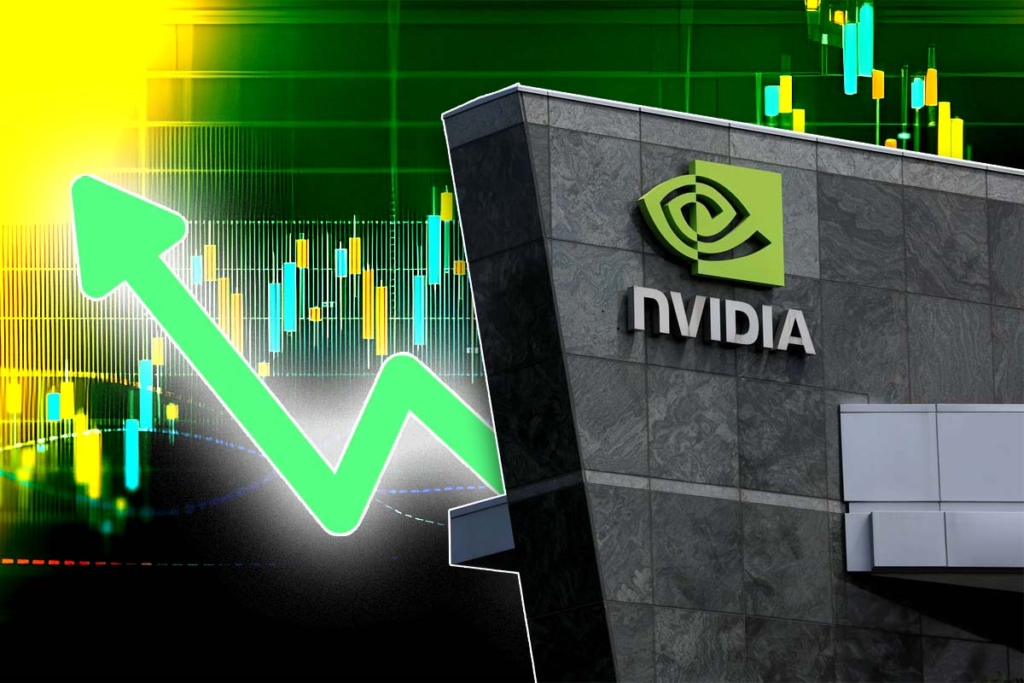
Nvidia Stock – It has been two years since the explosion of generative artificial intelligence (AI) began reshaping Nvidia’s business, transforming it from a gaming chip manufacturer into a cornerstone of the global technology industry. Since the launch of OpenAI’s ChatGPT and the AI boom at the end of 2022, Nvidia’s stock price has surged twelvefold, reflecting the massive market enthusiasm surrounding AI.
Record Market Cap and Revenue Milestones
Last month, Nvidia became the first company to hit a $4 trillion market capitalization, further cementing its dominance in the tech sector. The company’s revenue has more than tripled over the past two years, with profits quadrupling in the same period. Its fiscal second-quarter earnings report, scheduled for Wednesday, marks the two-year anniversary of this transformative growth.
Despite this extraordinary performance, growth has shown signs of slowing. After five consecutive quarters of triple-digit expansion in 2023 and 2024, revenue growth fell to 69% in the fiscal first quarter of 2025. Analysts estimate that the second-quarter revenue will jump 53% year-over-year to $45.9 billion, according to LSEG consensus data.
Data Centers: The Core of AI Revenue
The significance of AI to Nvidia’s business model is evident in its data center revenue, which accounted for 88% of total sales in Q1 2025. Last year, 34% of total revenue came from just three unnamed major clients, likely Microsoft, Google, Amazon, and Meta. These “hyperscalers” remain critical to Nvidia’s growth, though their concentration also leaves the company exposed to macro and AI industry shifts.



Melissa Otto, head of Visible Alpha Research at S&P Global, notes, “Nvidia’s performance dictates market expectations for the AI trade, which has been driving the market this past year.” Nvidia itself represents about 7.5% of the S&P 500, highlighting its outsized influence on broader market trends.
Blackwell Line: Driving Technological Leadership
Nvidia’s most important offering is its Blackwell line, which includes individual GPUs and systems linking up to 72 GPUs. Recent reports show that Blackwell reached $27 billion in sales, making up roughly 70% of data center revenue, a substantial increase from $11 billion in the previous quarter. Strong Blackwell numbers confirm Nvidia’s technological lead and solidify its position among key enterprise clients, according to analysts like Ryuta Makino of Gamco Investors.
The superior computing power of Blackwell chips is expected to support more capable AI models for companies such as OpenAI and Anthropic, although GPT-5 was trained on the previous generation Hopper chips. Nvidia has indicated that Blackwell supply, not demand, will limit its rollout, with Blackwell Ultra expected to ship in the second half of 2025.
U.S.-China Tensions and the H20 Chip
Geopolitical considerations also impact Nvidia’s growth. CEO Jensen Huang recently negotiated with President Donald Trump to regain access to the Chinese market. Nvidia will pay 15% of China-focused H20 chip revenue to the U.S. government in exchange for export licenses. The H20 chip, initially projected to contribute $8 billion in Q2 sales, was excluded from Nvidia’s second-quarter guidance due to licensing restrictions and pressure from Chinese authorities to use domestic AI chips like Huawei’s.
Analysts at KeyBanc predict that excluding H20 from guidance could lower revenue forecasts by $2–3 billion, emphasizing Nvidia’s cautious approach amid regulatory and geopolitical pressures. The company is reportedly developing a new China AI chip based on Blackwell, which will also require government approval.
Market Outlook and Analyst Expectations
Investors and analysts are closely watching Nvidia’s guidance and forward-looking commentary, particularly regarding revenue growth for the fiscal third quarter, expected at 50% to $52.7 billion. Nvidia’s ability to “beat and raise” estimates could further fuel market optimism about AI’s potential.
OpenAI, still private but valued in the hundreds of billions, plans to spend $500 billion over four years with partners SoftBank and Oracle on the Stargate project. Analysts estimate that half of AI capital spending flows to Nvidia, underlining the company’s central role in the AI ecosystem.
Huang’s Global Influence
Beyond financials, Jensen Huang’s global stature has become a symbol of Nvidia’s rise. He has been recognized by world leaders and former President Trump, while traveling to Taiwan, China, Germany, England, and Saudi Arabia to meet with business officials. This visibility underscores Nvidia’s strategic importance not only in AI but also in global technology leadership.
Two years into the generative AI boom, Nvidia’s transformation from a gaming chipmaker to a technology powerhouse is undeniable. With Blackwell GPUs, strategic global negotiations, and deep ties to major hyperscalers, the company continues to shape the AI market. Investors and analysts alike are watching its every move, aware that Nvidia remains a central player in AI innovation and revenue growth.



























Comments are closed.