



Featured News Headlines
- 1 LVMH Q3 Sales Rise 1% Amid Signs of Luxury Market Revival in China
- 1.1 Chinese Market Leads Recovery: Mainland China Turns Positive in Q3
- 1.2 Fashion & Leather Goods Division Remains Under Pressure but Shows Improvement
- 1.3 LVMH’s Robust Portfolio Fuels Stability Amid Market Challenges
- 1.4 Investor Sentiment Shifts Positive on Luxury Sector Outlook
- 1.5 Strategic Leadership Changes Signal Adaptation to New Market Realities
- 1.6 LVMH Stock Surges on Positive Earnings Momentum
- 1.7 What Lies Ahead for LVMH and the Luxury Market?
LVMH Q3 Sales Rise 1% Amid Signs of Luxury Market Revival in China
LVMH Shares – Global luxury powerhouse LVMH (LVMH.PA) reported a modest but meaningful 1% increase in sales for the third quarter of 2025, marking its first quarterly growth of the year. This uptick provides a much-needed boost for the luxury goods industry, which has been grappling with a prolonged slowdown following the post-pandemic boom.
The increase, announced Tuesday, was largely driven by strengthening demand in Mainland China, a critical market for the luxury conglomerate that operates across fashion, leather goods, alcohol, jewelry, and beauty retail sectors. LVMH’s Chief Financial Officer Cecile Cabanis confirmed the positive turn during an analyst call, emphasizing a “noticeable” improvement in Asia ex-Japan — a region dominated by China’s market dynamics.
Chinese Market Leads Recovery: Mainland China Turns Positive in Q3
For much of 2025, China’s luxury consumption has been muted, impacted by economic headwinds, geopolitical tensions, and real estate turmoil. However, the latest quarter shows encouraging signs of revival. Cabanis stated, “Mainland China turned positive in Q3,” indicating a potential U-shaped recovery trajectory for the luxury sector.
Bernstein analysts noted the results signal a combination of self-help strategies within LVMH and a cautiously optimistic bounce in Chinese consumer demand. This combination was credited for the better-than-expected performance, highlighting how pivotal China remains to LVMH’s overall outlook.





Fashion & Leather Goods Division Remains Under Pressure but Shows Improvement
The fashion and leather goods division, home to iconic brands such as Louis Vuitton and Dior, continues to face challenges, posting a 2% decline in sales year-on-year during Q3. This segment, which contributes over two-thirds of LVMH’s profits, is the bellwether for the group’s financial health.
While the decline persists, it represents a marked improvement from the 9% drop reported in the second quarter, suggesting the worst may be behind the division, even as broader economic uncertainties linger.
The quarterly sales update notably exceeded market expectations. HSBC analysts had forecasted flat overall sales and a 4% drop for the fashion and leather division, underscoring the strength of LVMH’s latest results.
LVMH’s Robust Portfolio Fuels Stability Amid Market Challenges
LVMH’s diverse brand portfolio also includes Tiffany & Co., Moët & Chandon champagne, and beauty giant Sephora — all contributing to the group’s resilience. The conglomerate reported Q3 sales of €18.28 billion ($21.17 billion), reflecting a 1% rise despite a challenging global environment marked by currency headwinds and ongoing economic uncertainty.
Despite these obstacles, Cabanis expressed confidence in the company’s new creative direction and strategic initiatives, signaling a patient approach to sustained financial improvement with “gradual sequential improvement” expected over time.
Investor Sentiment Shifts Positive on Luxury Sector Outlook
The luxury sector’s extended slump since the post-pandemic boom has been driven by several headwinds — including inflationary pressures, tariff impacts (notably from the US), rising production costs due to surging gold and silver prices, and China’s real estate crisis.
These factors have dampened demand, especially among less affluent customers, who are more sensitive to price hikes in luxury handbags and other goods.
However, LVMH’s quarterly update marks a turning point for investor sentiment. Several analysts have turned more optimistic, pointing to brands’ push towards more accessible product lines and a “burst of creativity” from new designers at key luxury houses as catalysts for renewed growth.
Morgan Stanley and other market watchers believe these dynamics may herald the end of the luxury downturn, offering hope for a sustained recovery.
Strategic Leadership Changes Signal Adaptation to New Market Realities
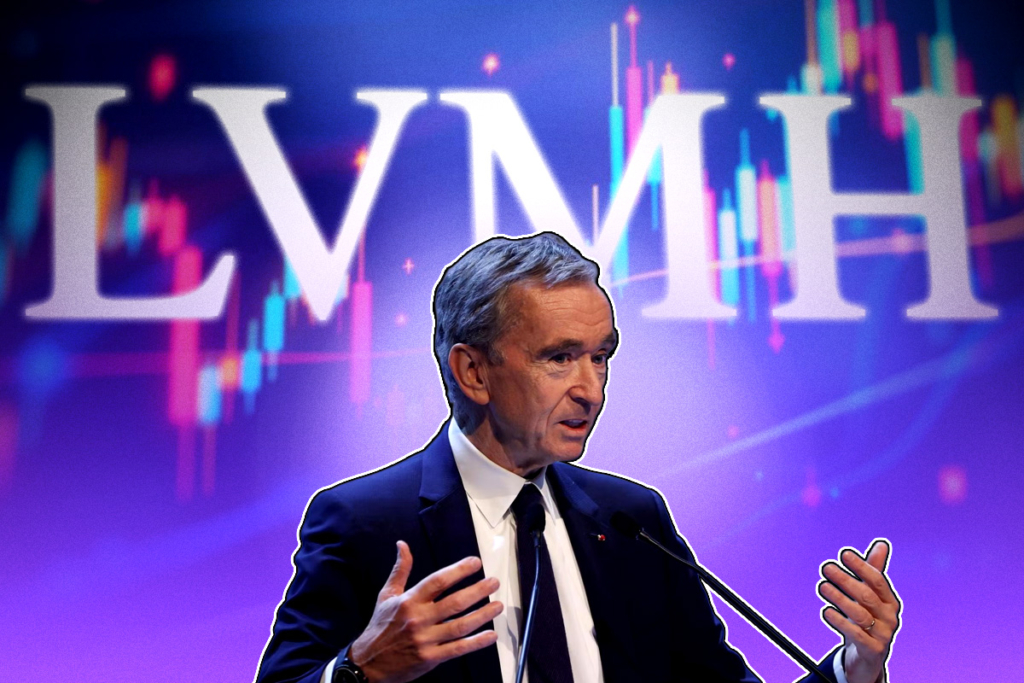
In response to the challenging landscape, Bernard Arnault, LVMH’s controlling shareholder and France’s richest billionaire, has overseen a series of personnel shifts across the group’s flagship brands, including Dior, Celine, Loewe, and most recently Fendi. These moves aim to align creative and operational leadership with evolving consumer preferences and market conditions.
LVMH Stock Surges on Positive Earnings Momentum
Following the upbeat trading update, LVMH’s shares in the U.S. jumped 7.5% on Tuesday, lifting the stock’s gains to 13% since the previous update in late July. This resurgence helped LVMH reclaim its position as France’s most valuable company, overtaking rival Hermès briefly.
Market analysts are increasingly optimistic that growth in luxury sales will extend beyond ultra-high-end segments, signaling broader consumer appetite and a healthier overall industry outlook.
What Lies Ahead for LVMH and the Luxury Market?
Looking forward, LVMH faces several near-term challenges, including currency fluctuations and continued global economic uncertainty, as Cabanis cautioned. Nevertheless, the company’s confidence in its creative direction and evolving market approach could well set the stage for a more durable turnaround.
With Asia — especially Mainland China — showing signs of recovery and brands adapting through innovation and strategic leadership, the luxury giant appears well-positioned to navigate the evolving landscape in the remainder of 2025.